The Fence is Claire Denis’ isolated adaptation of Bernard-Marie Koltès’s play Black Battles with Dogs, which subtly explores masculinity and colonialism. Set predominantly in one location over one night, The Fence never loses its stage show sensibilities, even if that forces Denis to reject her trademark visual lyricism.
Set on a construction site in West Africa overseen by Horn (Matt Dillon), The Fence follows the foreman as he deals with a possible murder cover-up on the same night his young British wife arrives on site. An acquired taste of a movie, The Fence is a slow but tense character study that forces its players to confront their own morals.
Events Unfold Over One Hellish Night
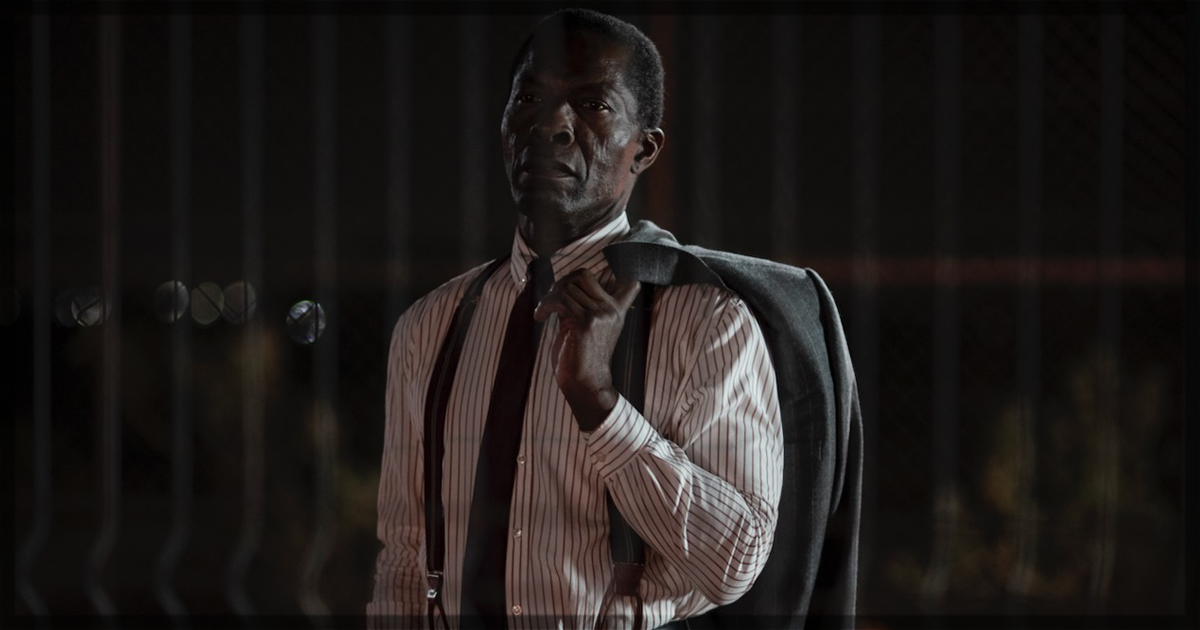
Horn’s night from hell starts when local man Alboury (Isaach De Bankolé) arrives at the edge of the fence, which encircles the compound, and demands the return of his brother’s body. He claims his brother lost his life during a moment of malpractice on the construction site. The stoic, African man speaks calmly despite the subject matter, even when Horn becomes increasingly boorish. Initially, it’s not clear why Horn can’t just release the body, but it soon becomes more obvious why he wants to delay it.
Just as this interaction escalates, Horn’s naïve young wife Leonie (Mia McKenna-Bruce) is brought on-site by the cocky second in command (Tom Blyth). She arrives with more luggage than the entire crew put together, wearing clothing better suited to a nightclub than a compound in the desert. Leonie’s place in the greater scheme of the story gets muddled, other than her acting as a catalyst for the men’s inner turmoil.
The film throws you straight into this world, never giving the audience more information than they need. Apart from the short conversations between each other, there is no explanation of who these people are. Denis forces the audience to concentrate rather than be spoon-fed character arcs through monologues and flashbacks. But everything you need to understand the plot and the people and be horrified by it all is there.
The plot is relatively straightforward and the cast is predominantly four people, but the film isn’t as simple as it seems. Denis punctuates the dialogue with a sense of uneasiness, reminding the audience how the compound’s presence is costing both local resources and human lives.
Claire Denis Examines Post-Colonialism With Stage Play Adaptation
On paper, The Fence is a quiet drama about an accident on a white-run African construction site. It doesn’t take much digging to realise this film is rich with allegories and metaphors.
French filmmaker Claire Denis was raised in colonial French Africa, which has a strong influence on how her films have dealt with colonialism and post-colonialism in Africa. The fence of the film is a not-so-subtle metaphor for colonialism on the continent. While the days of plantation owners and the empire are technically over, Europeans are still treating local workers as disposable in their search for profits.
The Fence is an acting showcase, especially for Dillon and Blyth. McKenna-Bruce gets less to work with as a ditsy, child-like woman wandering around the desert in stilettos. Her character suffers from the lack of development, used as a pawn to push the two men to new levels of machismo. McKenna-Bruce does more with the role than many other young actors would normally do. She hardens as she is left to her own devices in the new, scary place.
Denis regular Isaach De Bankolé, in one of his largest roles, is eloquent as the proud African man. He is the film’s emotional heart, and without his performance, The Fence could have gone very wrong. Dillon, in comparison, is slightly out of his depth, but his nice asshole act carries him through proceedings. Blyth adds to his year of star turns (Wasteman, Plainclothes) with a scene-stealing performance of a man who has never been told no before.
Leonie, Horn, and Cal all fizzle together with sexual energy. Cal and Leonie seem a much better fit together than her marriage to Horn, their chemistry palpable from the moment her stilettos touch the tarmac. Cal and Horn also simmer with homoerotic tones as their jealousy spills into the already tense evening.
The Fence retains the structure and dialogue of Bernard-Marie Koltès’ 1979 play, never giving in to cinematic aspirations. The monologues stay smart and the locations minimal, because Denis wants the work to speak on its own, tricking audiences with filmmakers’ gimmicks. The final act suffers from an unearned payoff as the film starts to use flashbacks and reveals to make the story a little more palatable to the audience.
Éric Gautier’s cinematography adds scale to the small-time story. His wide frame captures the large expanses of sky, earth and dust, magnifying how small the construction project is in the grand scheme of things. The world is vast, yet these characters are worried about protecting their relatively small fenced off area.
The Fence (Le Cri des Gardes) recently played at the London Film Festival.
Learn more about the film at the IMDB site for the title.
You might also like…