It’s fascinating to see how many cultures in all different parts of the world come to the same conclusion for all their different problems: it’s a woman to blame. The first movie from Chad to ever play the Berlinale, Soumsoum, The Night of the Stars is a fascinating picture of how more traditional and isolated cultures are coping with immigration, climate change and the changing roles for women. There are also some footage of the Ennedi cave paintings that on its own justifies the film. But the core of the story is solidarity between women, and seeing something both so specific and so universal is a fascinating experience.
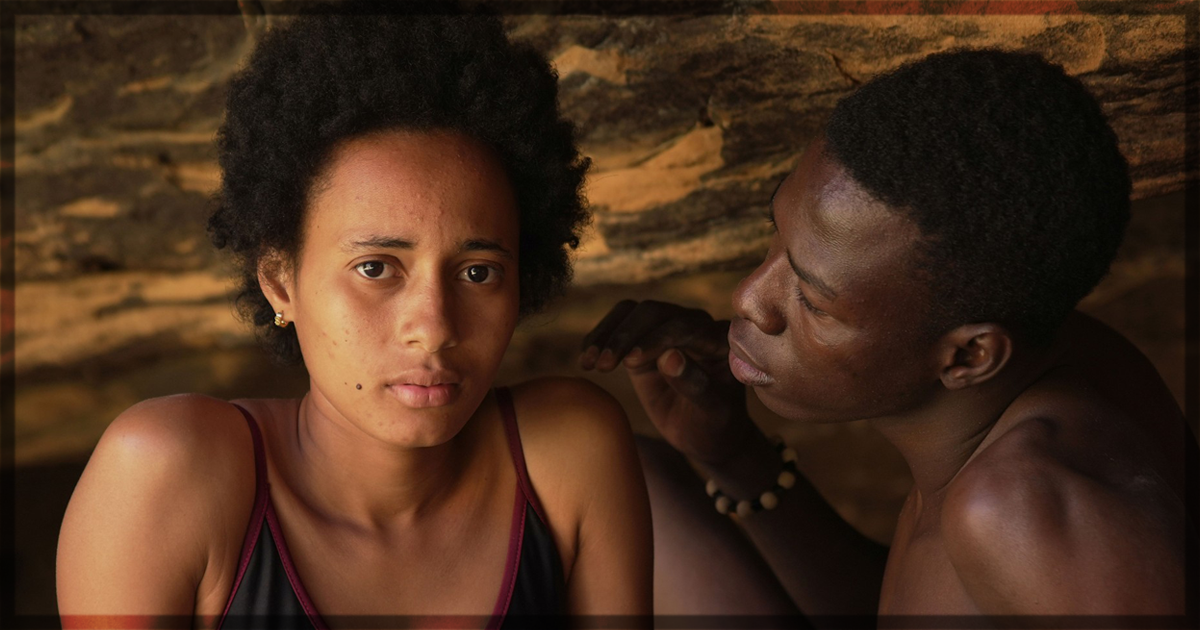
Kellou (Maïmouna Miawama) is in her late teens and when not in school sneaks around with her slightly older boyfriend Baba (the wonderfully named Christ Assidjim Maihornom). In other circumstances their future together would be assured, but Kellou’s father Garda (Ériq Ebounaney) was an immigrant to the village. His people are therefore unknown to the village elders, making them all sus even after twenty years. While Garda has been able to start a new family with a new wife, Aïcha (Brigitte Tchanégué), after the death of Kellou’s mother, Baba’s family are prepared to get violent to keep the kids apart. Overall the village has been having a tough time lately. Some years ago there was a flood that killed several people and swept away many cattle, and there’s never been the money to repair the damaged houses. Now the changing weather is making it harder to harvest food and take care of the animals. When some babies get sick and die it’s clear this is witchcraft. Kellou has started seeing spirits walking so it’s a genuine issue. But the big local news is the return of Aya (Achouackh Abakar Souleymane), a nurse and midwife who’s been away working elsewhere. Since the deaths happened after her return it’s obvious she is responsible. But Kellou has befriended Aya, who was friends with her mother, and present at her own birth. Aya’s stories and memories open up a whole new part of the world for Kellou. The question is whether that will be allowed.
Director Mahamat-Saleh Haroun, who co-wrote the script with Laurent Gaudé and who made the film with a largely European crew, clearly ticked all the possible boxes for appealing to a global audience. Female empowerment? Climate change worries? Exotic mysticism? Check, check, check. There’s nothing particularly wrong with that but it’s kind of cynical to see a movie so grounded in ordinary life allow itself to be swept away by the divine. We should all be open to the possibility of course, but it would have been much more interesting if the strands of female solidarity – not empowerment – had been teased out more fully. Aïcha standing up to Garda on Kellou’s behalf is not typical stepmother behaviour, especially when Kellou spends so much time being a typical teenager. The ways in which Aya at first holds her distance from Kellou, only gradually allowing them to become closer, and all without the needy Kellou noticing, are another gentle masterclass in maturity and kindness unappreciated by the person benefitting from them. Unhappily Miss Miawama never quite gets the needed subtleties of feeling across that would have helped carry the film. Ms. Abakar Souleymane, who has worked repeatedly with Mr. Haroun, grounds the movie instantly and does curious, empathetic work in a part much smaller than it should have been.
The title is a reference to an annual ceremony on a night when (like Halloween) the world is thin, the spirits walk amongst the people, and spirits and humans alike don animal masks and dance. If any children are born nine months afterwards they are considered children of the spirits, a special status that doesn’t mark them illegitimate. Such things have happened for a very long time, as the rock formations that used to be women out in the desert make very clear. If Kellou doesn’t figure out how to manage the world only she can see with the world everybody lives in, she’ll really be in trouble. It’s a shame the movie wasn’t made from Aya’s perspective instead, one which would have more expertly braided all the threads here together. On the other hand, thanks to the footage of the Ennedi cave paintings and rock art, it doesn’t matter. People have been trying to make sense of their lives and leave a trace of themselves behind for thousands of years. Soumsoum, The Night of the Stars has an enormous amount of sympathy for how people do their best to achieve that. It might not be perfect, but its perspective is so unusual and so startling that it’s worth the watch.
Soumsoum, The Night of the Stars (Soumsoum, la nuit des astres) is now in limited theaters.
Learn more about the film at the IMDB site for the title.
You might also like…