The baby horror film hasn’t really evolved since Roman Polanski’s Rosemary’s Baby. While still an influential text for many burgeoning filmmakers – despite Polanski’s persona non grata status within the creative community these days (and for good reason) – they seem only interested in ripping it off or creating their own variations on the material without ever fully committing to their own identities as singular artists. Such is the case with Johanna Moder’s Mother’s Baby, a movie that looms large in the shadow of Polanski’s masterpiece, despite many differences that attempt to set it apart from the pack of its fraudulent reinterpretations.
Instead of a community of Satanic worshippers, Moder presents a private clinic with ulterior motives, and a doctor who may or may not be the person Julia Bode (Marie Leuenberger) needs to finally have a baby with her husband, Georg (Hans Löw). Does this premise of a couple desperately trying – and failing – to conceive, only to resort to a (potentially evil) doctor to make their dreams come true, remind you of a similar one from another psychological horror movie that came out a few years ago?
If you (like me) forgot the existence of John Lee’s False Positive (starring Ilana Glazer, Justin Theroux, and Pierce Brosnan!), I wouldn’t blame you, but the similarities between this one (a quasi-Rosemary’s Baby ripoff, too) and Mother’s Baby are flagrantly staggering. For instance, when Julia seeks the help of Dr. Vilfort (Claes Bang) to conceive and finally becomes pregnant, something isn’t sitting well when she goes into labor, and backroom conversations occur between the doctor and his team of nurses. What happened, and what are Vilfort’s true motives? Who knows, but Julia does give birth to a healthy baby, in perfectly normal condition.
However, the 40-year-old conductor, now on maternity leave, believes this baby isn’t hers. He rarely cries, doesn’t feel pain, and has been chewing on inedible objects. Of course, Georg believes all is well because their gynecologist states everything they’re experiencing is totally fine, and there’s nothing to be concerned about. As the adage says, though, “mother knows best,” and her suspicions about Vilfort’s clinic may prove correct once she begins to dig deeper into his practice.
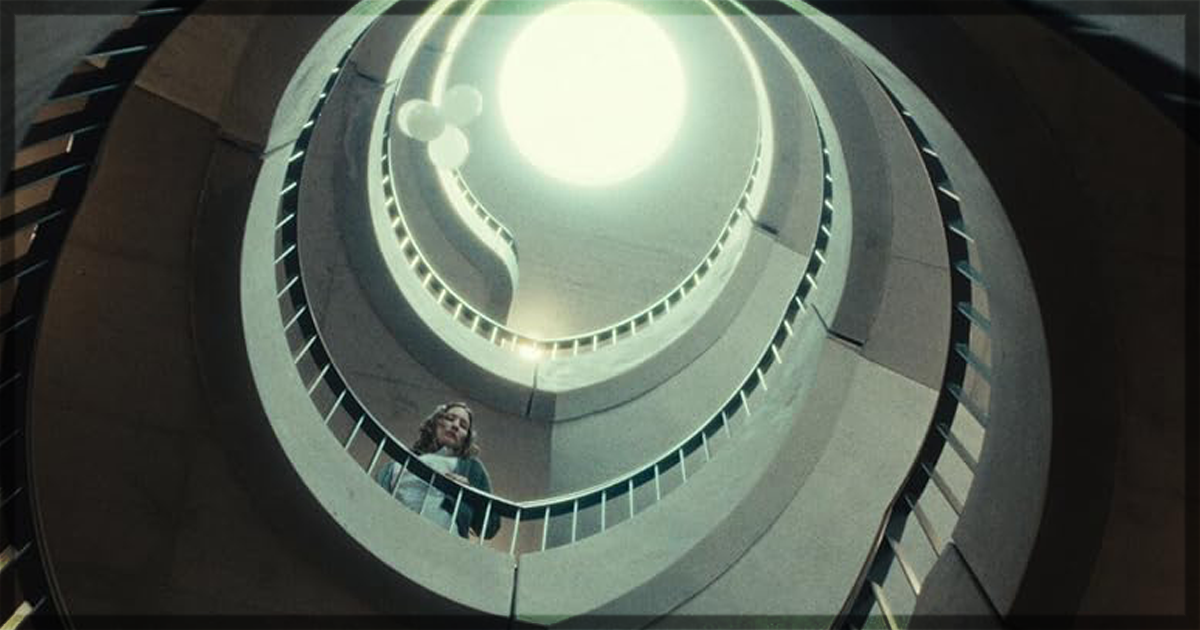
Such a movie that builds audience anticipation automatically requires a payoff. In the first half of Mother’s Baby, Moder stages an unbroken circular pregnancy scene in which the camera, in one continuous take, careens around the delivery table and examines something not quite squeaky-clean in Vilfort’s operations. We half-expect the movie to deliver on the answers it has been patiently building towards as Julia obtains more information about who Vilfort might be and whether the baby she’s taking care of is truly her own.
Of course, it doesn’t need to spell everything out in front of us, nor should Moder feel obliged to tell people exactly what her entire movie is about. However, when you’re telling audiences that answers will be revealed as you peel back the curtain on Vilfort’s clinic from one scene to the next, they expect massive revelations. When it ultimately arrives, the reveal is obvious but feels oddly unsatisfying. Julia has the answers she’s been searching for, but it seems far too facile for the movie to build itself up the way Moder does.
One might not obviously expect a twist on the same level as Rosemary’s Baby. That said, Moder stages her scene in such a terribly unengaging way that we begin to wonder if our time spent in front of Mother’s Baby was truly worth it. It’s a movie that teases massive ideas and fully delves into the tormented (often unreliable) psyche of a protagonist in (potential) postpartum depression, but never actively explores them within its 108-minute runtime. Julia is nothing more than an archetypal character we’ve seen since Polanski conceptualized its tropes with Mia Farrow, and there’s very little work done by Moder’s screenplay to surpass a character who’s much smarter than her male counterparts, who continuously gaslight her into thinking everything’s fine.
It also never fully gives her the agency she needs to take back her story and stand up to the people who might know what happened during her pregnancy. She collects clues, consults with people, and even breaks the law to reach her ultimate goal, but it never feels urgent to the viewer. Only Robert Oberrainer’s striking photography, which gets (purposefully) blurrier as Moder smudges the lines between dreams and reality, grabs our attention. Then again, her parallels are never fully constructed, just barely introduced, and never heard from again after a quasi-juxtaposition is made.
Moder makes a big deal out of paralleling Julia’s story to the lifecycle of the Axolotl, an aquatic salamander that must do whatever is necessary to survive in such a hostile environment. Such a thematic thread sounds intriguing, but it never goes beyond the introductory stage. It’s a movie that presents well-intentioned ideas, but rarely does anything of note with them—a genre exercise without purpose.
If it weren’t for the thrilling performances of Marie Leuenberger and Claes Bang (who remains a highly underrated presence), Mother’s Baby would be a complete loss. Bang is so calculated and chilling in his portrayal of Dr. Vilfort that we’re immediately on edge as soon as he appears. His menacing stare, coupled with Zen-calm line delivery, creates a terrifying contrast that makes it clear something is up with this dude before Julia begins exploring his clinic.
In the film’s quieter moments, Leuenberger gives a turn of such rare intensity that it feels in complete opposition to the moments when she lashes out at the figures of her life. These scenes are obviously well-played, but her facial expressions convey far more anguish than when she snaps at her husband or doctor. It all culminates in a concert scene that rivals what we saw a few years ago from Cate Blanchett in Todd Field’s Tár, where Julia’s entire emotional spectrum is highlighted as she conducts her orchestra to the music’s final crescendo.
Unfortunately, such a scene arrives far too late, and the immediate thought one has in watching it unfold isn’t “Well, that was a missed opportunity,” but “If only Mother’s Baby were as strong as Field’s masterpiece.” If that were the case, it might’ve been one of the best films playing in competition at last year’s Berlin Film Festival. Sadly, this is not the case, and will only be remembered as yet another terrible misfire from a festival that was once one of the most culturally relevant events of the year, but no longer holds the same weight as Cannes or Venice. Someone had to say it, but the Berlinale has been in shambles for quite some time, and who knows if they will ever regain their luster after such a cowardly 76th edition, where no one could talk about politics, despite political cinema being once again a major part of its lineup…
Mother’s Baby is now on digital and demand.
Learn more about the film at the IMDB site for the title.
You might also like…