In the inception of filmmaking, cinema was similar to magic. It is the illusionism of the images that impressed dozens of people gathered in a room watching a machine that projects photos. In that first showing in Paris, filmmaking was a new form of witchcraft, the combination of chemical processes that moved the pictures. Throughout the understanding and study of film as its own artistry, theorists noticed how cinema became about the textual substance and lost the impact of its images. One of the founders of Cahiers du Cinema, André Bazin, stated that film would suffer contamination from literature and theater, emulating the structure on the screens, drifting away from the realism that justified its existence. The post-modern cinema would organize the story throughout the text and acting, with less importance given to the images. That duty became a task for experimental filmmaking, which tested the limits of the artistry throughout the experimentation with sound and visuals, the two pillars of film. The young director Josef Gatti understood that in Phenomena, a short expanded into his first feature film, he experimented with the phenomenon of materials on the screen.
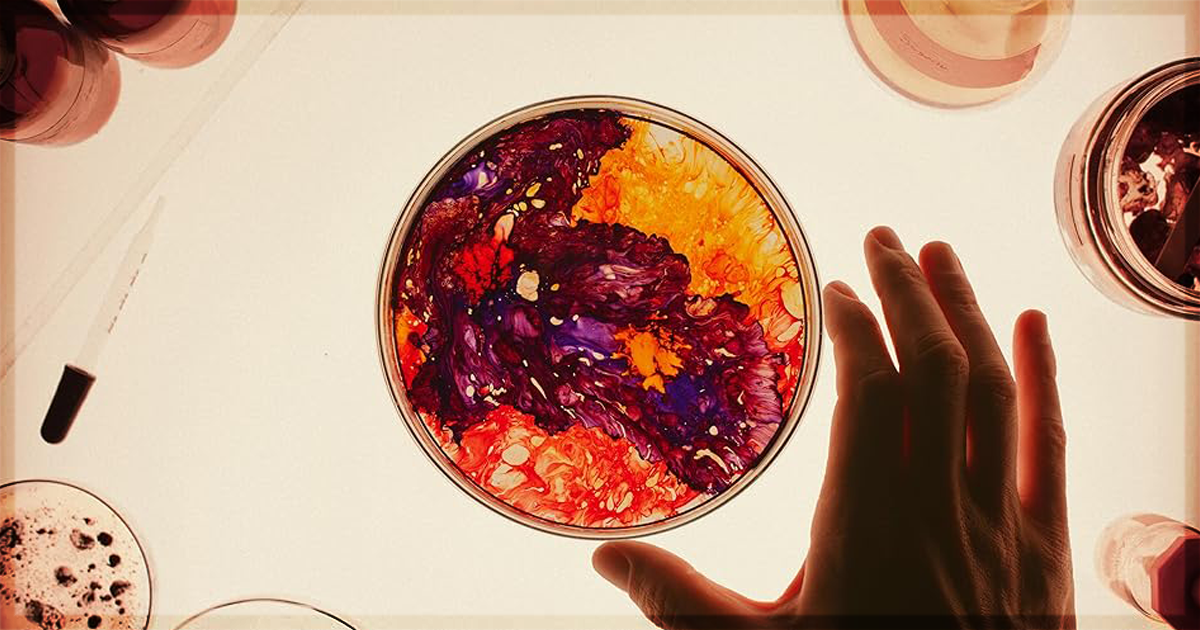
At first, the images that introduce us to the universe crafted by Gatti explore the artistic possibilities of motion pictures. Similar to a curious child, the young director utilizes the camera as a canvas for his discoveries. We have shots of nature and landscapes, but the central focus of his film is to capture the mixture of materials, chemicals, and components that produce colors, senses, and new artistic works. Therefore, throughout the combination of chemical A with solid B, we might access a current of color that behaves differently. His objective is to provide a look into an experience that guides us through color, form, and sound.
Naturally, there is an oddness in the format of the film. The documentary is a combination of experiments that function individually and only glue together because of the figure of Gatti, as a curious actor in those transformations. In a sense, watching Phenomena is similar to experiencing a video installation in a museum. Despite the collages of them together, all of the results alone would work in different exhibitions in multiple art galleries throughout the world. There is a multidisciplinary nature to Gatti’s work that expands beyond the labeling of a sensorial film. It is an experience that demands attention from the audience, which, in the current state of cinema and the world, is a lot. Humans have gotten conditioned to the fast-paced endorphin from fast cuts, TikToks, and shorter videos, diminishing our capacity to pay attention. Hence, Phenomena is a work that reminds one of an Art Attack episode, the traditional children’s program that asks the child to pay attention, follow the steps, and admire the final result. Similarly, Gatti showcases his weird and fascinating discoveries to us, although they are not as interactive as the Neil Buchanan show, but equally fascinating to observe.
We could argue that Phenomena is a showcase of the experimentations of its director, producing images through chemically processed experiments. Yet, the film is a welcome connection to experimental filmmaking, radically formal films that followed the style rather than the substance. In a recent review of the film criticism and the state of filmmaking, critics and directors pay excessive attention to narrative structure and plot development. It is the result of years of films and TV shows that focused on the screenplay rather than the mise en scene. Works like Phenomena, selected to festivals like CPH: DOX and True/False, which program more narrative non-fiction works, is a testament to the importance of films that challenge the audience of the usual documentary project. Over the last 125 years of filmmaking, films overly focused on the narrative development were important in developing a complex sense of dramaturgy. However, filmmakers like Maya Deren, Michael Snow, and Stan Brakhage are equally crucial to the advancement of film as an art form, focused on the visual and sonic aspects.
Thus, the first feature by Josef Gatti, Phenomena, is a crucial reminder of the necessity to expand our repertoire and sensibilities toward the non-commercial filmmaking. There is space for hours of experiments with materials and chemicals that emulate a psychedelic experience guided by music and sound design. Filmmaking welcomes a young individual like Gatti to position his cameras in a space and record him experimenting with paints and materials to create lines, shapes, and sounds. It is a sensorial film that teases a fascinating career ahead of the young director, who commands experiments to instigate emotion in us.
Phenomena recently premiered at the True/False Film Festival.
Learn more about the film at the IMDB site for the title.
You might also like…
‘Same Same But Different’ Film Review: The Complexities of Arranged Marriage