Sometimes it feels like modern technology has given us the worst of both worlds. We have the capacity to be constantly connected with our loved ones no matter where in the world we may be. This can provide the illusion that we are in the same place as those we love, thus dividing our attention in ways that can damage both real-world and virtual connections. But it causes trouble when people feel that their virtual knowledge is as good as the real thing. And it’s not, not even a little. In the same way that you can’t judge someone until you’ve walked a mile in their shoes, to understand a house you have to have lived in it. House of the Wind is about the distance that grows between people when they are not sharing the same space – and about the distance that grows because they do. It’s a fascinating film.
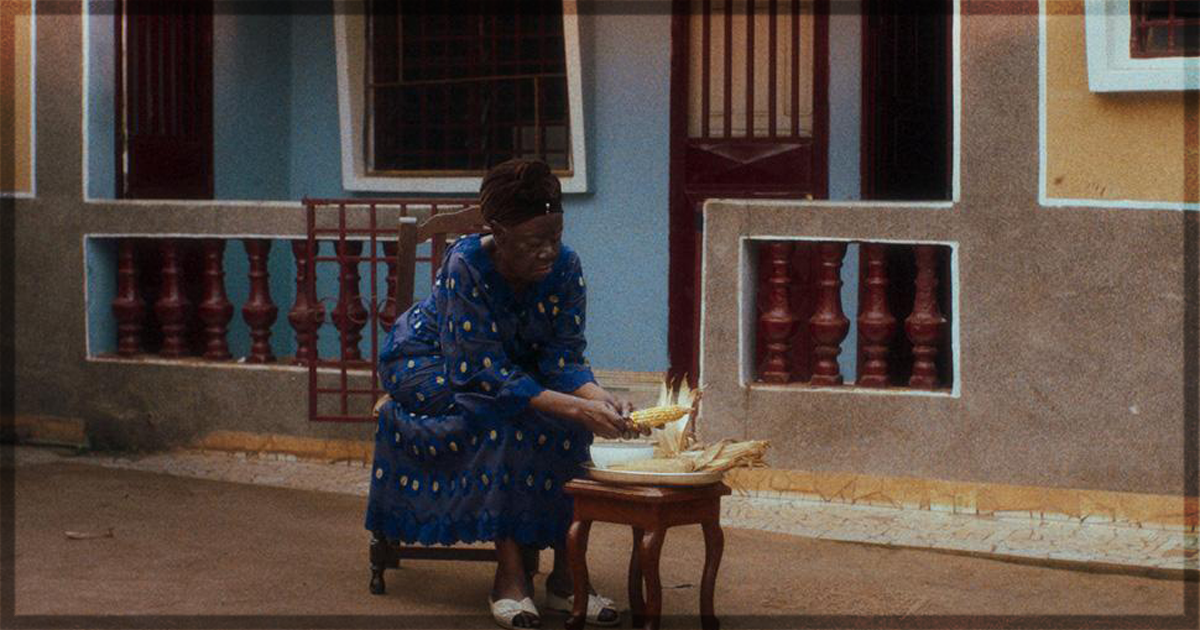
Josette (Josette Kwanya, the director’s mother) is in her eighth decade and rattling around her enormous home in Yaoundé, Cameroon which is still full of everybody’s stuff. Her husband passed years ago and all six of her children have emigrated elsewhere, though they keep in contact through videocalls, individually and as a group. The kids – all full adults, some with teenage children of their own – worry about their mother, but they are not really paying attention to her, only their worry about her. Besides, what Josette wants – everyone to visit in person – is impractical and complicated and expensive and well, it’s easy to find excuses. Josette understands that, and while age has slowed her down of course she remains perfectly capable of taking care of herself. She’s just lonely. At least she has a project: to supervise the construction of a house so her children have somewhere of their own to live when they come back. She does this with aplomb, keeping all the workmen in line with the kind of managerial skill that could have run a hospital, if anyone had let her.
Then she misplaces her government ID, which will take forever to replace. This means she cannot collect a cash transfer needed to pay for the next stage of building works. So she asks the friendly and chatty young woman who works at one of the neighbourhood stores to bring her own ID and collect it instead. Sarah (Moudjeu Pouadeu) is happy to help (of course for a small fee), so all delays to the construction are avoided. But then Sarah asks Josette for something in return. Her own parents disapprove, to the level of physically attacking her in public, of the fact that she is in love with a white Frenchman called Adrien (Adrien Jolivet). They have been long-distance for a while – videocalls saving the day here again – but he’s returning to Yaoundé soon so they can get married and begin the visa process for Sarah to move to France with him. Rather than risk Adrien meeting her parents, Sarah would like to move in with Josette, who will pose as her mother until the visa comes through. It’s not really a surprise that Josette says yes. She is that lonely, she has plenty of space, she likes Sarah, and she is good at being a mom. The surprise is how seriously both of them take their pretend arrangement, and therefore how seriously things go wrong.
Writer-director Auguste Bernard Kouemo Yanghu has been open that this is based on his mother’s life, but he is a smart enough filmmaker not to have done so directly. What he’s made here is not so much a portrait of a person but of an archetype. Josette is very much a symbol for all the mothers who have had to watch their families vanish thanks to emigration, and whose elderly lives are therefore much emptier than they should be. Meanwhile Sarah is a symbol of all the young people who have decided to gamble on better opportunities in foreign lands rather than the known but disappointing living at home. The lack of opportunities for young people in Cameroon is drummed into everyone’s heads all the time, via news bulletins and radio discussions or just by looking around at all the old people in the neighbourhood. Of course Sarah wants to do as well as she can for herself. Since she’s had the luck to do so via love, why wouldn’t she leap at the chance?
So everything in House of the Wind is real-world, real life problems that there’s just no way of solving without someone getting hurt. And that makes it watching it fascinating, even for people who couldn’t find Cameroon on a map. Worrying about your parents as they age is a universal experience and one which modern life makes very difficult to manage. It’s impossible to know what are the best decisions you can make for yourself and it’s impossible to manage how your choices will impact other people. But all these decisions must be made regardless; we all have to go on living and taking care of each other. Eva Sehet’s camera never falls into the nostalgie de la boue trap common to an outsider’s eye; we really feel like we are inhabiting Josette’s world of ordinary beauty and ugliness as she herself experiences it. And possibly the freshest thing about Mr Kouemo Yanghu’s choices is that we always know Josette is safe. Sarah’s parents are totally wrong and no one normal here would ever dream of hurting anybody else to get what they want, which is not an attitude those of us in the west always enjoy. But as House of the Wind knows, despite all the good intentions in the world, dreams don’t always come true.
House of the Wind recently played at the Venice Film Festival.
Learn more about the film at the IMDB site for the title.
You might also like…