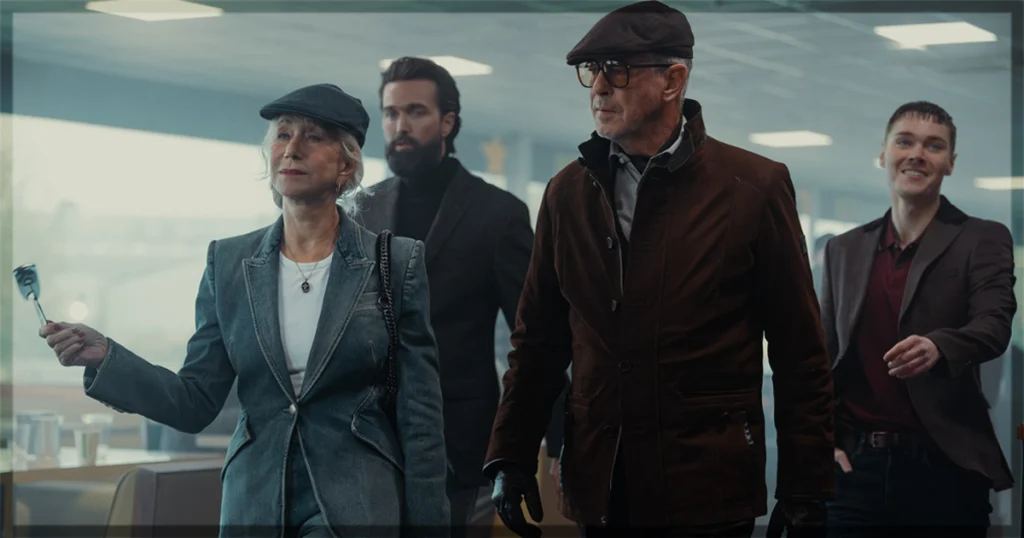
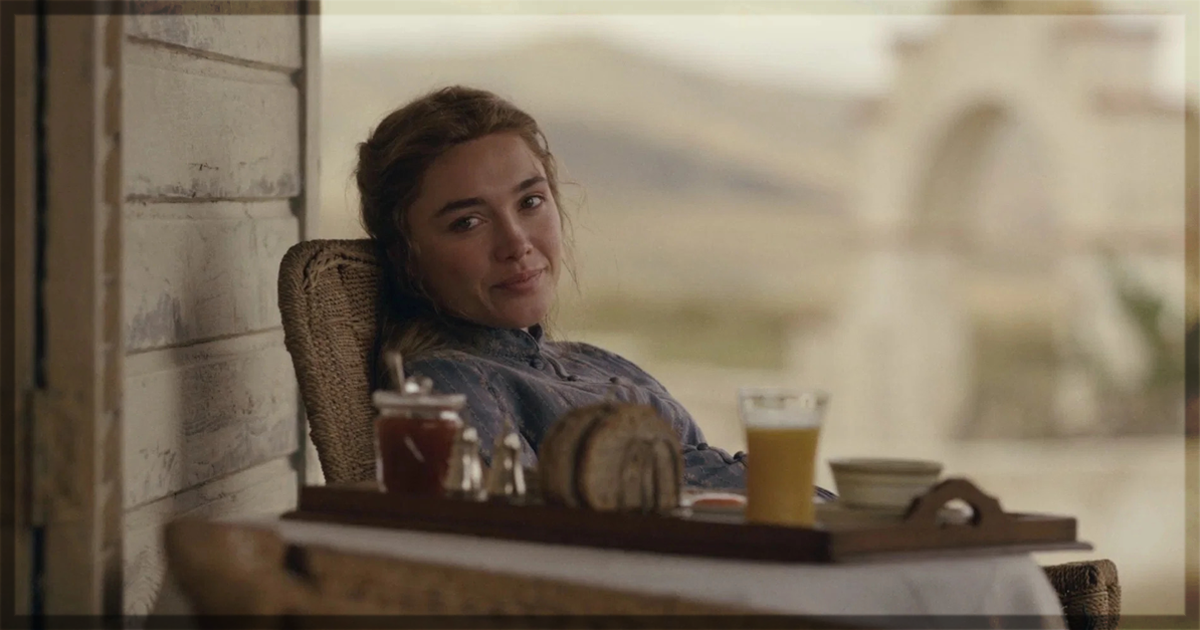
Before this Netflix series, my knowledge on East of Eden was non-existent. The John Steinbeck novel was never in my reader-loving orbit, making this Netflix series feel like a gamble of enjoyment. That said, with this cast, the results prove to be more satisfactory than I expected. East of Eden follows a generational story going from the Civil War to World War I. This involves both Trask (Christopher Abbott, Mike Faist) and Hamilton (Ciaran Hinds) families. When a stranger shows up at the Trasks door (Florence Pugh) both of these families’ lives become intertwined for years to come.
Family and legacy are themes that pulsate more from just the show itself. It also exists amongst the show’s creator Zoe Kazan and her grandfather, acclaimed playwright and director Elia Kazan. That familial connection outside of the narrative offers something interesting in the finished product. In the seven episodes, each one offers this sense of finality, as you can feel Zoe Kazan closing the chapter on this story. While simultaneously making the Hamiltons (important characters from the original material) into supporting voices. Which modernizes the story in aspects and honors her family history. This is particularly done in the writing by Kazan (and a co-writing credit for episode five with Alexander Chee.)
Florence Pugh and the Trask Brothers Anchor the Drama
It is easy to tell that Kazan feels a sense of importance, particularly in the story of Cathy (Pugh). As the series progresses, it’s easy to see her as a chameleon bending to the whims of those around her. That is not as a passive character, but something else that would spoil the fun. What can be said about the performance is the alluring nature Pugh gives. Cathy exists as a type of infection, but one that happens gradually to those around her. While effortlessly meek and charming at first, the role morphs over time. Watching that transference is incredibly engaging, even when the darker aspects center stage
Pugh’s performance is interesting in comparison to both Adam (Christopher Abbott) and Charles (Mike Faist) Trask. Both characters serve as an interesting contrast to Cathy, and yet are mirrors to each other. Compared to the charm and mystery of Cathy, both the Trasks exist as the idealist and skeptic. Abbott lives as someone who believes he can save Cathy, with Faist questioning their (Adam and Cathy’s) motivations. Such character motivations make the Trasks easily the most understandable characters in the series. Yet, they’re arguably the most emotionally immature throughout the story. Both Abbott and Faist play that balance with beautiful grace notes, making their naivety incredibly sympathetic.
Hoon Lee Steals the Show as the Voice of Wisdom
The three central performances are quite strong, but there is one I would like to give particular credit to. Hoon Lee (Your Friends & Neighbors) is a scene-stealer as Lee, the servant of the Trask family. Not only is Lee the voice of wisdom in the series, but a character who says so much in a subtle way. He is able to note what the audience is thinking, without ever spelling out the obvious. That includes the sociocultural challenges someone of Asian-descent would face in that time. The performance is incredibly nuanced, divulging the most thought-provoking ideas in the story.
Pacing Woes and an Overcrowded Narrative
With performances this strong, Zoe Kazan gives audiences enough narrative to chew on. The problem is that there is simply too much narrative even in a mere seven episodes. That does not mean ten episodes of East of Eden would make things better. Though more time to spent with these characters (even in bottle episodes) could’ve made a difference. The performances of Joseph Zada and Joe Anders are particularly evident of this very thing. Not so much in the roles, but the material they’re given to work with.
Fans of the original film and novel will understand that both Caleb “Cal” and Aron live as the Cain and Abel of this story. Such a parable unfortunately serves as the weakest link in this interpretation. Both Cal and Aron serve the tale as heavy-handed archetypes, then fully fleshed out characters. To be clear, that should not be considered a flaw of the performances. Anders is unfortunately underserved, with Zada given moments of emotional shading. The problem involves the writing sending both characters on a predetermined path. Which for most audiences, can find their journey often predictable. That choice is a disservice, with both the Trask children making up the back half of the series.
Both Pugh and Abbott unfortunately are reduced to background characters, with big moments. It’s noticeable anytime either performer is not on-screen in this section of the story. Henceforth ruining the early emotionally rich drama, and metamorphosing into a soap opera. Which is what makes the finished product significantly less interesting. Thankfully there are moments with Abbott, Zada, and especially Lee that keep this section from being a complete disaster.
An Engaging but Overstuffed Adaptation
As a gateway into the material, this version of East of Eden is quite effective. It has engaging performances, a sweep epic aesthetic, and more than enough plot strands to keep viewers engaged. The problem is that the finished product is essentially an overstuffed souffle. The ingredients are all tasty, but are quite filling by the halfway point of the series. That will not be an issue for some, but can severely hinder the experience of others. The gamble makes the show feel like it spins its wheels, versus reaching the emotional crescendo it aspires for. Granted, with actors like Pugh, Abbott, Faist, and a few surprise character actor appearances East of Eden is anything but dull.
East of Eden is now streaming on Netflix.
Learn more about the series at the IMDB site for the title.
You might also like…