
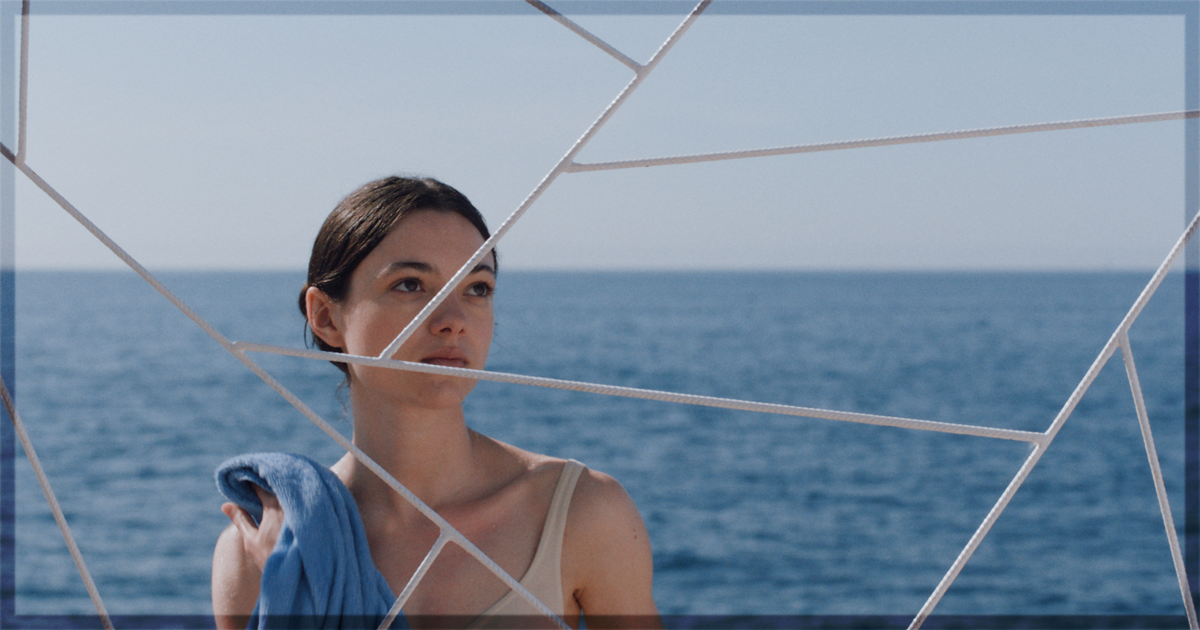
Already the second film adaptation of Françoise Sagan’s 1954 coming-of-age novel of the same name, Bonjour Tristesse, a debut feature by Canadian director Durga Chew-Bose, offers a modern, feminist spin on the original material, which was an overnight sensation written by the French novelist at age 18. Remakes can become particularly tricky, especially when it’s already been done, in that its integrity is put into question in relation to its predecessor. Chew-Bose’s retelling, though, has got strong enough reasons to warrant its existence, chief of all, letting us experience Sagan’s once-controversial text in a new light, now grounded in the lived experience of a woman, not least because of the allegations of misogyny and abusive directing method hurled at Otto Preminger, including those from Jean Seberg, who played the protagonist Cécile in the 1958 version of the film.
The starkest difference in this latest version is that Chew-Bose never once resorted to the black-and-white aesthetic and the flashback structure heavily utilized in the Preminger adaptation. Instead, she reliably sublimates the tension at the narrative’s center and keeps it at bay, at least for some time, as she invites us to bask in the stunning, sun-drenched vistas of the French Riviera, where mercurial teenager Cécile, played by Lily McInerny, spends her days lazing around and making out with her hot boyfriend Cyril (Aliocha Schneider), while her widowed father Raymond (a dashing Claes Bang) pursues a new girl, dancer Elsa (Naïlia Harzoune), who joins them in the luxurious resthouse.
Whereas the 1958 iteration is clearly a morality tale, what we have here is a mesmerizing mood piece full of languor and static. It might feel like nothing really happens and no one seems to think what might happen outside of this wonderful vacation, and that’s because the film functions more as a hazy recollection of a summer well spent, akin to Charlotte Wells’s Aftersun, than a summer happening in the moment. And there is a glowing warmth in the manner in which it unspools through perfect lighting, keenly observed soundscape, and beautifully calibrated frames. Filming alongside cinematographer Maximilian Pittner, Chew-Bose is deeply attuned to immersing us in that very feeling, capturing her characters in idle, almost boring moments: reading a book on the patio, resting on healthy grass, remembering a vague dream over a nice lunch, and never running out of topics to ponder on (which gives the film the allure of every talking French picture that might as well feel completely vintage, were it not for the presence of an iPhone).
It’s not that the film is a lot less concerned with the drama of its material and the sorrows and traumas of remembered pasts haunting its characters, it’s more to do with reminding us that “everything is about listening,” or paying more closely to the finer details. The blissful dynamic among the people in the beach house gets slowly but gradually disrupted by the arrival of the enigmatic Anne (Chloë Sevigny), who works as a fashion designer in Paris. She was a very close friend of Cécile’s mother, who died over a decade ago; she had an interesting history with Raymond; and the three of them explored so many fun things together.
The romance between Anne and Raymond is unspeakably palpable that they almost immediately decide to get married, which stirs something in Cécile to hatch a plan to end their relationship by convincing Cyril and Elsa to pretend as a couple and make Raymond jealous, resulting in a tragic ending. Is she afraid that Anne will replace her long-dead mother? Does she really believe that her father is better off with Elsa? Or is she simply jealous of the attention that he gives her, anxious that she might have no place in their relationship? We can never tell for sure. And one might expect that the friction between Cécile and Anne will tersely feel volcanic, but instead Chew-Bose opts to play it so mutedly and lets the tension accumulate until the coda, in which the feeling of regret fully settles in, though somehow at the risk of making the looming tragedy feel unearned; it’s understandable why some viewers might feel differently about the way the director handles the film’s dramatic specifics.
At its best, Bonjour Tristesse is a gorgeously photographed film that knows it’s photographing gorgeously looking actors — a vacation movie that, for obvious reasons, reminds me of Éric Rohmer’s A Summer’s Tale. Its visual luminosity only heightens the teenage ennui that emotionally holds its story together.
Bonjour Tristesse is now available to rent or purchase at your retailer of choice.
Learn more about the film at the official website for the title.
You might also like…
‘Don’t Let Me Die’ Film Review: Andrei Epure Doubles Down on the Absurdity of Death