This November, Pixar’s Toy Story turns 30. That number feels impossible to me. Released on November 22, 1995, just twelve days before I was born, the film became a fixture of my childhood, then my adolescence, and, honestly, my entire life. For years, I watched it nearly every day. It was my comfort food, my background noise, my way of starting or ending the day. By the time I slowed down around 2013 or 2014, I’d probably clocked close to 12,000 viewings.
And yet, even after that streak broke, I still found myself returning: twice in 2017, twice in 2018, once in 2019, and once more in 2020. Most recently, I revisited it again in preparation for its theatrical re-release on September 12, 2025. What I found is that Toy Story hasn’t aged out of my life. It’s grown with me. Each rewatch reveals something new, and the magic never wears off.
Story magic
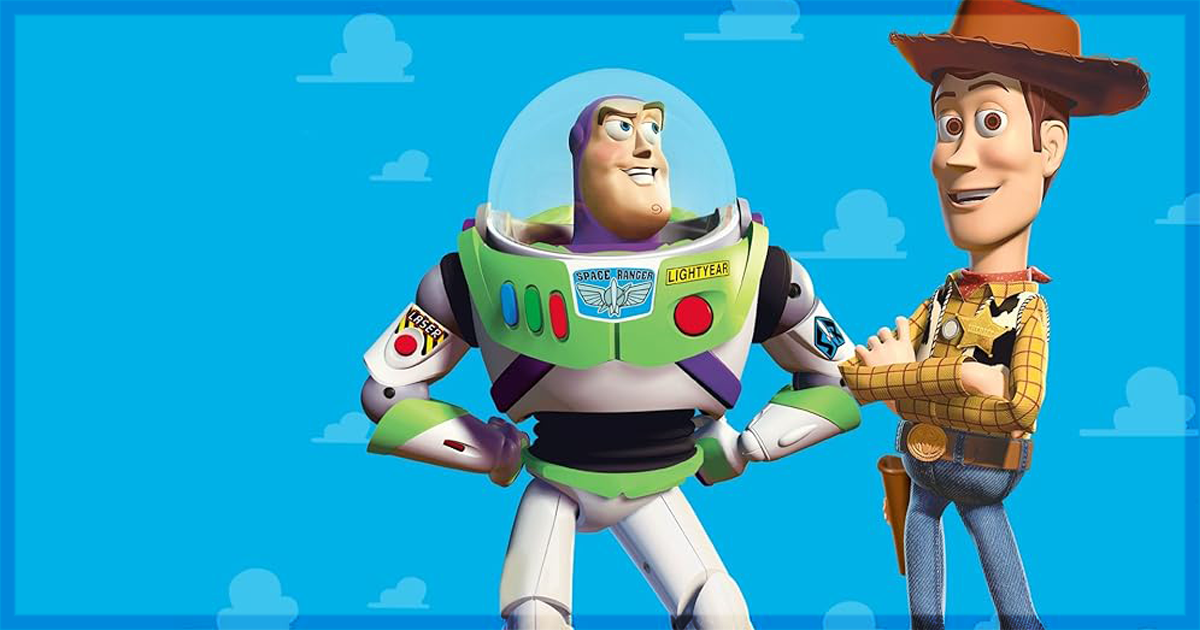
On the surface, Toy Story is a simple story about Woody (Tom Hanks), Andy’s loyal cowboy doll, who rules the toy box until Andy’s birthday introduces a flashy rival, Buzz Lightyear (Tim Allen), a space ranger with a light bulb that blinks, pop-out wings, and a heroic sense of destiny.
What follows is part adventure, part identity crisis. Woody’s jealousy drives him to mistakes, Buzz’s delusions complicate everything, and the two are forced into one escalating misadventure after another. They end up in the chaos of Pizza Planet, the nightmare workshop of Sid’s bedroom, and finally, a desperate chase to reunite with Andy’s moving truck.
As a kid, I saw it as pure fun. The toys talk, each joke gets big laughs, and the stakes are enormous for these two toys. As an adult, the themes run deeper: jealousy, insecurity, and a fear of being replaced. Pixar managed to weave those ideas into a children’s film without ever making it feel heavy-handed.
Performances
Casting is one of Toy Story‘s masterstrokes. Tom Hanks makes Woody relatable even at his worst, balancing panic, humor, and deep loyalty. Tim Allen is equally strong, turning Buzz’s absurd bravado into something both funny and endearing. Together, they create one of cinema’s best odd couples.
The supporting cast is a gallery of comic gems: Don Rickles as the ever-sarcastic Mr. Potato Head, Wallace Shawn as anxious Rex, John Ratzenberger as Hamm, Jim Varney as the dependable Slinky Dog, and Annie Potts as Bo Peep. Each voice adds flavor and personality, transforming Andy’s toy box into a believable community.
Direction
John Lasseter’s direction ensured Toy Story was more than a technical novelty. In 1995, a fully computer-animated film was unheard of. Pixar could have coasted on visuals alone, but Lasseter pushed for story first.
That choice is why the film still works today. Action sequences like the Pizza Planet escape or the rocket chase are thrilling, but they’re grounded in character stakes. Even quiet moments like Andy playing with his toys, Woody and Buzz confronting each other, feel cinematic because Lasseter treated the digital camera like a real one.
Writing
The screenplay, credited to Joss Whedon, Andrew Stanton, Joel Cohen, and Alec Sokolow, is tight, witty, and emotionally layered. Early drafts famously painted Woody as cruel and unlikeable, but revisions gave him depth: insecure, jealous, but still good-hearted.
The dialogue is endlessly quotable. Woody’s exasperated “You are a toy!” and Buzz’s iconic “You are a sad, strange little man” are lines that have lived rent-free in my head for decades. The writing never talks down to kids, which is why adults can revisit it without irony.
Music and sound
Randy Newman’s score and songs are inseparable from Toy Story’s DNA. “You’ve Got a Friend in Me” is the film’s thesis on loyalty and connection. It also doesn’t hurt that it’s an absolute banger.
Other tracks elevate key moments: “Strange Things” underscores Woody’s dread of being replaced, while “I Will Go Sailing No More” captures Buzz’s heartbreaking realization of his limitations. Newman’s music deepens each scene and every motivation behind it.
Sound design often gets overlooked, but it’s crucial here. Woody’s pull-string, Buzz’s laser, Rex’s squeaky feet, the clatter of plastic and springs — these details make the toys feel real. Ben Burtt, the legendary designer behind Star Wars, contributed to Pixar’s sound library. That pedigree shows. Even today, the sound design holds up beautifully.
Cinematography and editing
Though digital, Toy Story pioneered visual storytelling that treated CGI as film rather than gimmick. Director of photography Sharon Calahan framed shots with the same care as live-action: dramatic close-ups, sweeping pans, and inventive perspectives.That approach is why the film still feels cinematic rather than like a dated tech demo.
At just 81 minutes, Toy Story moves with precision. Editors Robert Gordon and Lee Unkrich kept the pacing lean while leaving room for character beats. The finale, where Woody, Buzz, and RC chase Andy’s moving truck, is a textbook lesson in building momentum. Each cut escalates tension until the payoff feels both inevitable and exhilarating.
Production design
Ralph Eggleston’s art direction grounds the film in reality while leaving space for imagination. Andy’s room is bright and comforting, Pizza Planet is chaotic fun, and Sid’s house is a warped mirror of childhood creativity gone wrong.
Even the small touches matter: the familiar wallpaper clouds, the arcade grime, the scratches on Buzz’s helmet. These details sell the world. In animation, costume and makeup live in character design. Woody’s stitched vest and cowboy hat instantly mark him as a classic toy. Buzz’s glossy suit screams “new toy smell.” Sid’s mutant creations — Babyface, Roller Bob, Legs — are equal parts grotesque and ingenious. They’re the visual embodiment of childhood mischief, and they stick in your memory decades later.
Why it endures
What makes Toy Story timeless isn’t just the innovation. It’s the friendship at its core. Woody and Buzz begin as rivals, clash as opposites, and grow into partners. Their arc mirrors the great buddy cop pairings: conflict, reluctant cooperation, mutual respect.
That emotional honesty is why the film continues to resonate. Woody’s fear of irrelevance, Buzz’s identity crisis, and the relief of finding common ground are universal experiences, disguised as a story about toys.
For me, each rewatch reflects where I am in life. As a kid, I saw adventure. As a teen, I noticed the humor. As an adult, I recognize the anxiety of being left behind or outshone. Woody and Buzz haven’t changed, but my relationship to them has. That’s the mark of great storytelling.
Final thoughts on the film
Thirty years later, Toy Story still holds its place as one of my favorite films of all time. The textures may look primitive next to Pixar’s later achievements, but the heart, humor, and storytelling remain untouchable.
What could have been remembered as just “the first CGI movie” became the foundation of modern animation — and, for me, a lifelong companion. I may not watch it every day anymore, but every time I do, I feel that same spark I did as a kid in Andy’s room.
Rating: ★★★★★
Toy Story is now streaming on Disney+.
Learn more about the movie, including how to watch, on the official site for the title.
You might also like…