The end credits of The Musical contain this dedication: “To all our theater teachers, who taught us the power of spite.” If you just didn’t let out a bark of laughter or maybe twist your mouth in a wry grin of acknowledgement, you will have a very hard time enjoying this film. It is indeed about the power of spite, and how that spite manifests in one middle school’s annual musical production. It manages to walk the very fine line between being howlingly funny and gaspingly inappropriate (but don’t worry, the kids aren’t harmed in any way – for once a dark comedy with plenty of kids in it has no safeguarding concerns) and does so through an unusually direct understanding of the less pretty parts of human nature. It’s much more fun than you’d expect, never loses the courage of its convictions, and even nails the ending. If you’re on its wavelength it’s a hugely fun ride.
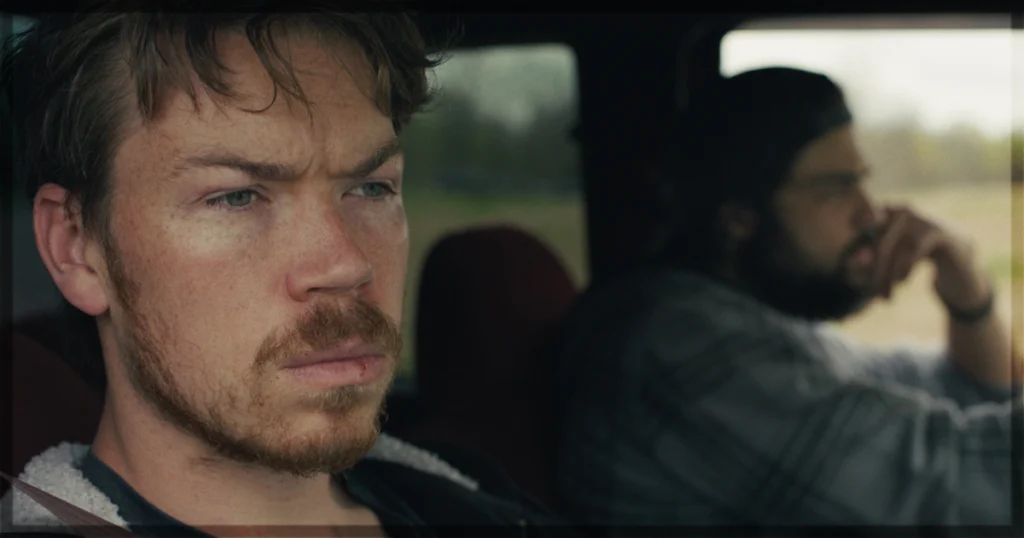
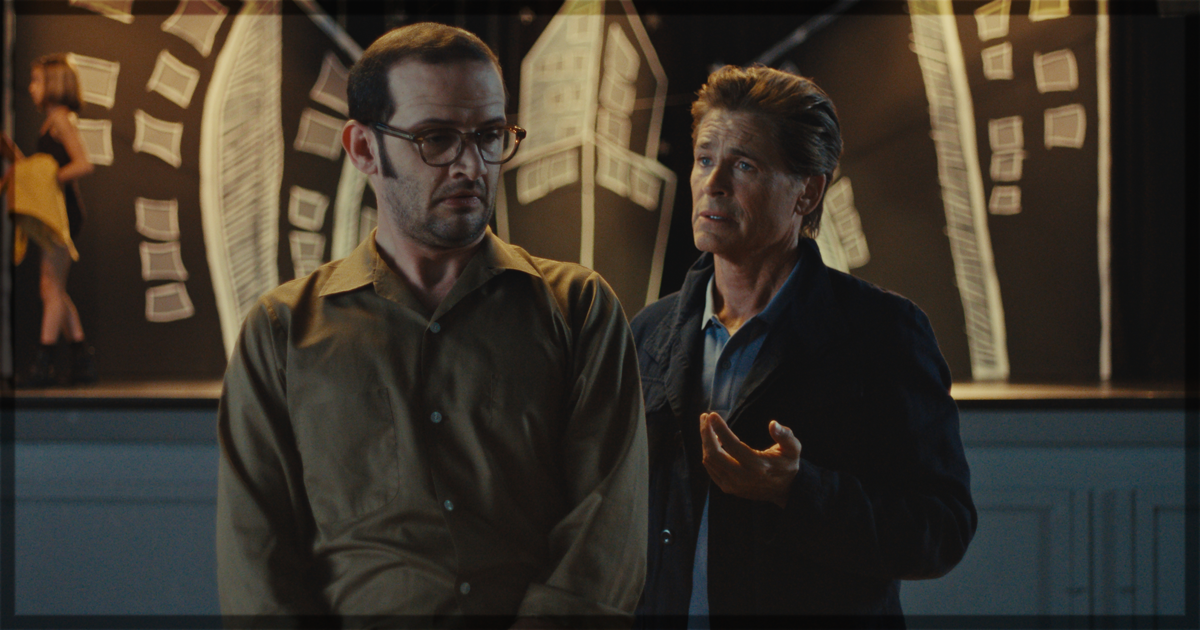
Future Pulitzer Prize-winning playwright Doug (Tony Award winner Will Brill) is currently a middle school theater teacher in southern California, and hasn’t actually ever had a play produced. The closest he’s gotten is a play that was shortlisted in a competition while he was in college, but his success is literally only around the corner despite him not writing any new material or having any professional network and living so far from New York. It’s absolutely going to happen! Unfortunately the start of the new school year brings Doug a few unhappy shocks: the pause in his relationship with the school’s art teacher Abigail (Gillian Jacobs) is actually permanent, and she has started dating the school’s principal Brady (Rob Lowe, whose cheerful willingness to weaponise his physicality adds greatly to his comic skills). Brady is a buffoon who can’t even recognise Eugene O’Neill, an irritatingly positive and well-meaning responsible adult, and who is determined for the school to achieve Blue Ribbon status. But Doug is not the kind of man to take heartbreak lying down. He will do whatever it takes to sabotage that Blue Ribbon status, which will obviously lead to Abigail breaking up with Brady and come back to him just as he deserves. And to help him undermine the system from within, he has a whole group of enthusiastic theater kids at his disposal.
If seeing eager thirteen-year-olds taking meetings about following the money in poorly-lit parking garages, or an adult man lying on choir bleachers while rubbing his head and talking about the horror doesn’t make you scream with laughter, then you really won’t be able to have a good time at this spoof of 70s conspiracy thrillers. Tu Do’s cinematography and Liz Toonkel’s production design has a great time turning a sunny middle school gymnatorium into a hotbed of intrigue. Doug’s chosen method of sabotage? His theater students might convince the world they are working on a production of “West Side Story,” but really he and they are working on a show that lays bare the greatest modern American conspiracy. Yes, that one. They really go there.
This is so incredibly funny not only because it’s so wildly inappropriate, but also because the kids involved are the right age to insist on answers to their big questions without being mature enough to understand the accuracy of the answers they’re given. But keep in mind these kids (Nevada Jose and Melanie Herrera the standouts) know all about pain and disappointment already: a few of them have parents who are divorced. Writer Alexander Heller and director Giselle Bonilla have an absolutely wonderful time making it clear Doug is a terrific teacher, with a naturally honest rapport with his students, who react to his pleas for their help and seeming honesty with the trust of childhood. And yet Doug doesn’t care about this talent of his and is perfectly happy to go right up to the edge of being a true villain thanks to his sense of spite.
The achingly sincere Run Amok, also about children processing trauma on the school stage at this year’s Sundance Film Festival, was less successful because it made no attempt to show its adults trying to teach or parent its children. But it’s clear from both of these films that America has simply no idea how to tell our children not only what we have become but also why we’re like this. Mr. Brill’s performance fearlessly lays bare Doug’s vast shortcomings through a deeply physical performance. Doug has no self-awareness, his devastating self-regard absolutely blinds him to his true nature, and Mr. Brill makes the gap between the two just so funny it carries the tastelessness all the way home. The information he provides his students about how the world works isn’t wrong exactly, but it’s the kind of nihilism no child should learn at school. And yet so many of us do and did, hence that dedication, and hence the sense of recognition in addition to the comedy that should propel The Musical into our theaters. We might not be able to improve much right now, but we can have a great time laughing at how stupid we can be about it. And sometimes that’s what you really deserve.
The Musical recently played at the Sundance Film Festival.
Learn more about the film at the IMDB site for the title.
You might also like…