
Of all the hype bubbles that form around the first reactions to a new release, One Battle After Another generated some of the most effusive of this century. And I mean that almost literally, since many of those reactions contained the pull-quote-ready taglines that marketing departments love so much — and that, unfortunately, some critics focus too much on delivering — like “the best film of the year/decade/century/of all time.” Expectations were already stratospheric due to the cast and the simple fact that it’s a new Paul Thomas Anderson movie (Phantom Thread), although I must confess that PTA is one of my blind spots as a cinephile, having only seen two of his works to date. The overwhelmingly positive reception and Oscar frontrunner status made it a genuinely difficult film to approach. Any reaction that isn’t equally over-the-top risks being interpreted by many as a political stance or the following of some nefarious agenda. I couldn’t care less about that. I just wanted to see a good movie and enjoy a new IMAX experience, free of preconceived notions.
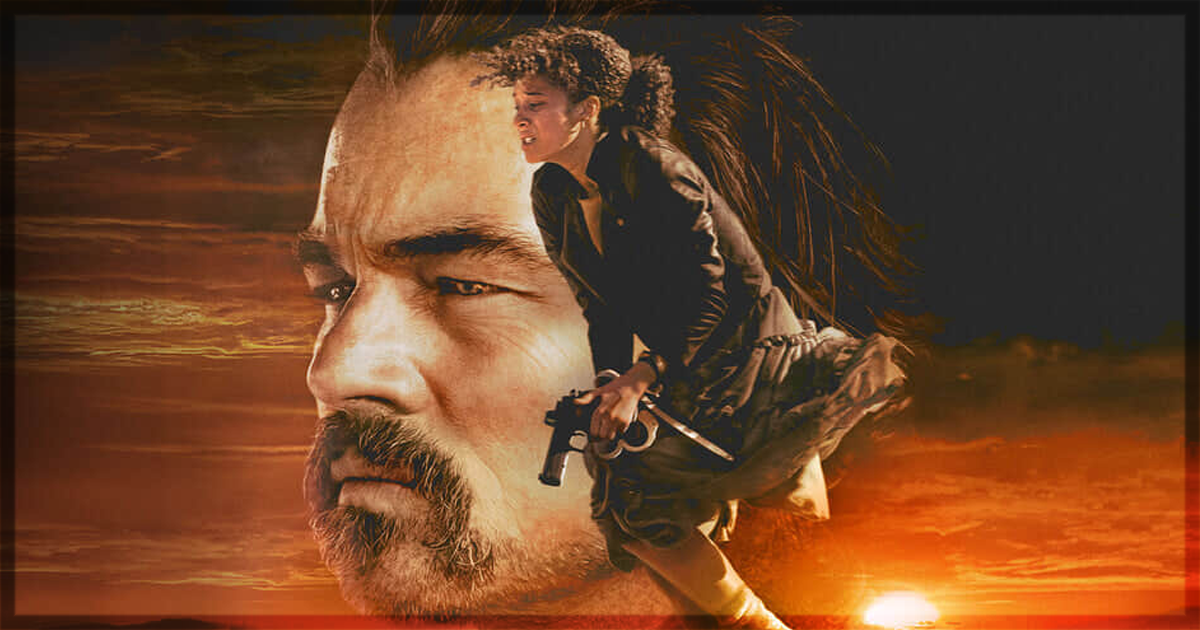
Written and directed by PTA himself, the film plunges us into the life of Bob Ferguson (Leonardo DiCaprio), a paranoid and burnt-out ex-revolutionary living in hiding from his past. His life of complacency is turned upside down when a former adversary, the sinister Col. Steven J. Lockjaw (Sean Penn), resurfaces with a personal vendetta that results in the disappearance of Bob’s teenage daughter, Willa (Chase Infiniti). Forced out of his comfort zone, Bob embarks on a desperate mission to find her, reviving old skills and confronting the ghosts of his former life with the help of figures from his past.
To get straight to the point: I tremendously enjoyed One Battle After Another. Not to the point of the collective hysteria I mentioned, but it’s, without a doubt, one of the most remarkable stories of the year. It’s a technically impressive movie on every level, with the score standing out as its most vital and memorable component. The music by composer Jonny Greenwood (The Power of the Dog), dominated by a chaotic piano — hilariously but accurately described by a colleague as “a cat trapped inside a piano” — is absolutely crucial to the tone, pacing, and intensity levels of a long but never dull story. Traversing multiple genres with outstanding fluidity, from conspiracy thriller to family drama to dark comedy, the score functions as the narrative’s nervous system, injecting a frenetic energy and palpable tension that grips you from the first minute to the last.
The cinematography is another of its strongest points. Michael Bauman (Licorice Pizza) creates an atmosphere of controlled chaos through numerous sequences with long tracking shots that move through multiple rooms, following constantly overlapping dialogue. This visual approach perfectly represents the film’s irreverent atmosphere, but it does so in a way that’s always comprehensible and rarely frustrating. These moments of dizzying movement are contrasted with beautiful, wide static shots that give us moments to breathe and absorb the desolate beauty of the landscapes depicted. The final set piece, which combines a car chase with a shootout, is incredibly inventive and extraordinarily tense, a feat of direction that demonstrates absolute control over the cinematic language. The camerawork is dynamic, sometimes crazy, but never feels shaky or confusing. A masterclass.
The performances are phenomenal across the board, but in a cast that includes DiCaprio (The Revenant), Benicio del Toro (Sicario), and Sean Penn (Mystic River), it’s feature film debutant Chase Infiniti who delivers the most captivating, fearless, and emotionally powerful performance in One Battle After Another. The truly radical statement is that I believe Infiniti deserves an Oscar nomination more than any other actor or artist involved in the movie. Her character, Willa, embodies the theme of generational hope; she’s a product of her parents’ past, but also the beacon for the future. The young actress captures this duality perfectly, transitioning between the vulnerability of a teenager and the resilience of someone forced to grow up too fast. It’s an absolutely fantastic debut.
DiCaprio continues to demonstrate an admirable dedication and commitment to his roles, and this is no exception. His Bob Ferguson is a tragicomic figure, a failed revolutionary who has sunk into complacency and substance abuse. The actor portrays his paranoia and exhaustion with impeccable humanity. His comedic dynamic with del Toro is a breath of fresh air in an otherwise heavy and intense film. There’s a long phone conversation that extends over several scenes and never loses the hilarity in each interaction and line delivery; I laughed out loud. Penn is equally brilliant. Menacing when necessary, but also unintentionally funny, from his walk to his facial expressions, it’s a truly captivating performance that personifies the obsessive and corrupt nature of power.
But it was the screenplay of One Battle After Another and its timely themes that drove everyone crazy. Honestly, I think if the movie had been released at any time in the last 25 years — or more — in the United States, it would still be incredibly relevant. That’s how long the country has been struggling with issues like immigration, gun laws, discrimination, and the rise of extremist ideologies. PTA’s script is extremely sharp and meticulously constructed. Many plot and character moments are introduced at the beginning and only find their full circle in the final act, with important revelations and answers to questions left open. Nothing is left unresolved, and PTA doesn’t hold back in what he needs to say about the current state of the USA.
The central and most omnipresent theme is the crushing weight of the past on the present. PTA argues that the ideologies, choices, and battles of yesteryear — both personal and political — never truly disappear; they continue to shape and haunt the current reality. Bob is the personification of this idea. Despite desperately trying to escape his revolutionary past, he’s dragged back into the fight when Lockjaw’s revenge, rooted in the same events, resurfaces to destroy his life. His present state as a paranoid, burnt-out man isn’t a mere personality trait; it’s the direct consequence of his actions and the dissolution of his ideals. One Battle After Another argues that the “battle” never ends; it just transforms, takes on new faces, and demands new sacrifices.
PTA establishes a stark contrast between the ultimately failed idealism of the “French 75” revolution and the new, more pragmatic generation represented by Willa. The older revolutionaries, like Bob, have been defeated, have lost their way, and live immersed in disillusionment. In contrast, Willa represents a fresh perspective, untainted by cynicism. Her journey is about self-discovery and accepting her parents’ legacy, understanding her own place in the continuous “battle” for freedom and justice. She’s the personification of the idea that new fighters will always emerge.
The entire narrative is sustained by a fundamental tension: the conflict between political ideals and human, personal relationships. Although the revolutionary struggle serves as the backdrop for One Battle After Another, the story’s emotional engine is Bob’s desperate and unconditional love for his daughter. His arc of redemption isn’t motivated by a political cause, but rather by the primal need to protect his family. This dynamic humanizes the political chaos and demonstrates how major ideological conflicts always have a deeply personal cost, forcing characters to choose what they’re truly fighting for. Bob’s storyline forces him to reclaim the skills he abandoned and confront his demons, namely his failure as a present father. His final act is proof that while he may be a failure in the eyes of the revolution, he can still succeed as a father.
The critique of the American political landscape is delivered through biting satire and sharp dark humor. The character of Lockjaw, a caricature of authoritarianism, and the shadowy “Christmas Adventurers’ Club” he tries to join, represent the enduring — and often absurd — forces that pull society’s strings. One Battle After Another suggests that these forces aren’t just a political ideology, but a form of personal obsession. Lockjaw’s revenge isn’t for a cause, but for a bruised ego, fueled by his personal humiliation at the hands of Perfidia (Teyana Taylor, A Thousand and One). His arc isn’t one of change, but of relentless, escalating evil. He’s the personification of corrupt power, making him the perfect foil to Bob: a man who cannot let go of the past versus one who’s desperately trying to escape it.
There’s just one narrative decision that leaves a bitter taste. Near the end, there’s an effort to justify the actions of a particular character, a member of the revolution who disappears from the narrative early on and never reappears. The scene in question feels like an addendum, an attempt to say: “we can’t let this character be perceived as a bad person, so let’s insert a final scene to change that perception.” I felt it was a choice that weakened the moral complexity the film had built so effectively until then, a small misstep in an otherwise self-assured work.
Final Thoughts on One Battle After Another
One Battle After Another is a technical feat, a movie with brilliant performances and a thematic density that can only be truly processed after multiple viewings over time. It’s a chaotic, intense, and surprisingly hilarious examination of the state of America, the weight of history, and how the fight for a better future is passed from one generation to the next. The entire cast is phenomenal, but newcomer Chase Infiniti is a true revelation, delivering a captivating and emotionally powerful performance that perfectly embodies the theme of generational hope. While I don’t share the hyperbole generated by the initial reactions, it’s clearly one of the most important and well-made films of the year. Driven by a masterful score and a sharp script from Paul Thomas Anderson, where every detail matters, it’s a dense story about the battles we cannot escape and the family we fight for.
Rating: A-
One Battle After Another is now playing in theaters.
Learn more about the film, including how to buy tickets, at the official website for the title.
You might also like…
