
Few national authors have the same clout and immediate recognisability as Scottish author Irvine Welsh. Paul Sng’s documentary Irvine Welsh: Reality Is Not Enough – co-written by Sng and Welsh – opens with a laundry list of ways Welsh and his work, definitions of national treasures, has reached adoring audiences in Scotland and beyond in a fast-paced 90 minutes.
There are, of course, Trainspotting and its many sequels and prequels chronicling the exploits of charismatic Edinburgh junkies in good times and bad. There are scripts Welsh wrote expressly for film, and scripts adapted by himself and others from his prolific novels. There are his autobiographical and nonfiction writings. Welsh has even made his mark on musical theatre.
But Reality Is Not Enough, as an exploration through one man’s life and works on the page and on the screen, also seeks to get at the inner driving forces behind the lines and images printed on t-shirts the world over. Here, the documentary does not quite succeed. Perhaps it is the relatively short run time and the proliferation of film clips and literary quotes from throughout his oeuvre. Perhaps it is because Welsh is so disarmingly open and unshakeable in interviews – no topic is off limits or unworthy of a lengthy, considered response. Therefore, Reality Is Not Enough does not completely reinvent popular notions of the famed author, but the documentary is one to further understandings and expressions, not break them down or challenge them.
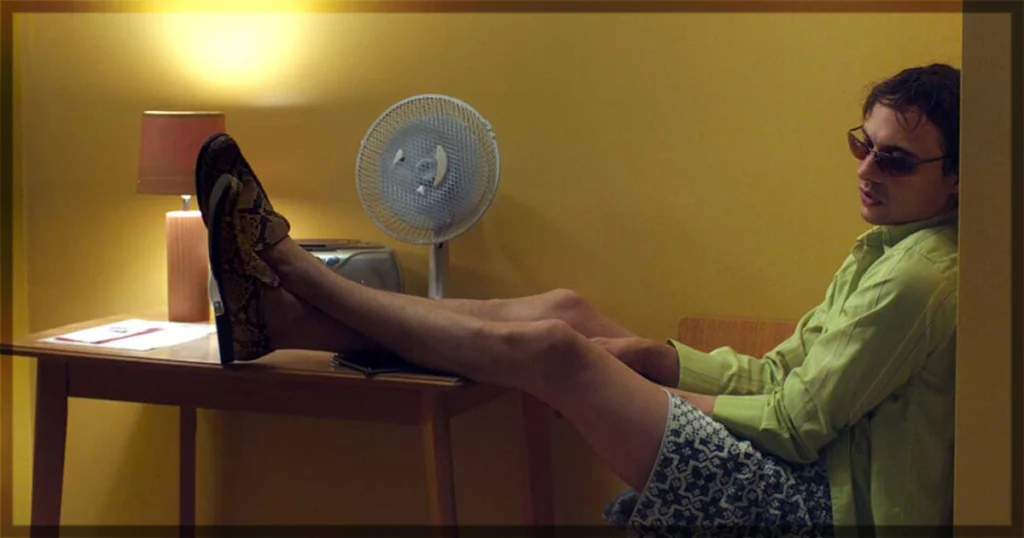
Welsh is a wonderful screen presence. He is frank, often cutting, but never cruel as he evaluates his position in pop culture and how his life experiences have impacted his fiction and worldview. He talks about being in a coma in his youth, his days surrounded by welcoming activists in London, and his experience as a heroin user – and his friends who did not survive – with a compelling, analytical dispassion. Indeed, passages from his books – notably Trainspotting and its sequels and prequels – are delivered in a way that, at first, it feels like it is Welsh himself talking before the familiar words shape themselves into recognisable quotations. Later, these quotes are delivered by actors well known in their own right including Maxine Peak, Liam Neeson, Stephen Graham, Ruth Negga, and Nick Cave. This process both begins to separate Welsh the person from Welsh the writer and cement his place in the modern British literary canon, his words fitting into these diverse actors’ mouths with ease.
But listening to Welsh speak about his past experiences and present worldview, it is clear these sentences – in their pessimism, eloquence, searing insight, and stubborn hope – all come from his mind and heart, his individual cadence stamped into his beloved characters. They are all extensions of him, but it does not take away their diversity of perspective or experience – instead, it enhances the power and persuasiveness of Welsh’s imagination. In a very interesting passage, he talks about how he lets his characters espouse hateful views or do terrible things, saying that self-censorship and mitigation of their worst impulses is not something he is interested in doing when he is telling his stories. This is a fascinating insight into Welsh’s creative process and ethos, as well as a gentle indictment of those who believe characters are always extensions of their creators rather than exercises in fiction. Fiction might mirror the world – and Welsh’s fiction does often mirror his experiences – but its power is in seeing people and situations from new perspectives.
Amidst these recollections and montages are glimpses of Welsh away from his desk. He is at ease in Scotland, London, and Los Angeles, trotting around literary and film festivals with the comfort of one long such used to the fame but still anonymous enough to avoid all but the most in-the-know autograph hunters. He gently banters with his wife Emma Currie – his third, and the other two are laughingly not mentioned. He battles with his difficult relationship with therapy while cautiously exploring new ways to examine his past and find that release he previously found through drugs. He is an avid sports and music fan, keeping fit by boxing and playing football. While these passions are only shown, not expounded on, the images are striking (and Welsh would likely hold his own in any amateur boxing ring).
Film editor Angela Slaven and director of photography Robbie Jones keep the pace snappy, alternating fly-on-the-wall documentary sections with more abstract images of Welsh within neon lights and pulsing music. It is clear Reality Is Not Enough strives to capture the 90s grunge vibe that catapulted Welsh to worldwide fame, and while it might be gimmicky, it makes for a very engaging watch.
If looking for a way to know Welsh separate from his works, Irvine Welsh: Reality Is Not Enough is not quite the film to go to – but perhaps it is futile, or unproductive, to separate an artist from his work. If, however, one seeks a 90-minute whistlestop journey through Welsh’s life as told by his works and his present-day reflections to the past, Reality Is Not Enough is a life-affirming journey. To paraphrase Trainspotting, Welsh has chosen life; it is clear through this documentary that hundreds, if not thousands, of others have done the same thanks to him.
Irvine Welsh: Reality is Not Enough is now playing in UK cinemas.
Learn more about the documentary at the IMDB site for the title.
You might also like…