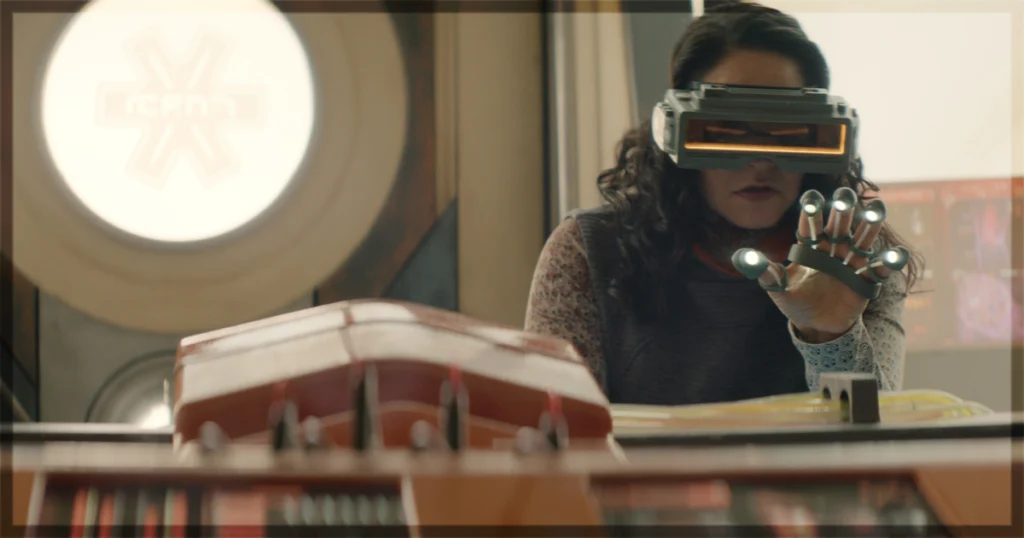
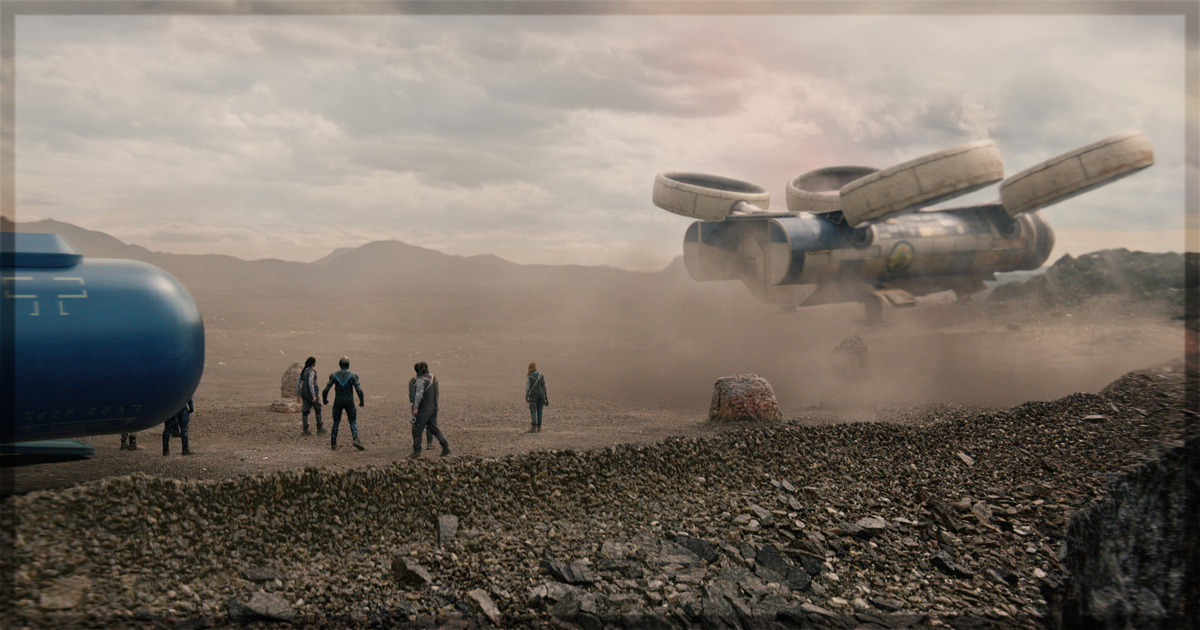
Finally we have reached the episode named after the novel from which the TV show Murderbot is adapted, although it’s only the penultimate one. The ways in which the differing plot strands twist together is incredibly impressive, not least in the amount of damage Murderbot (Alexander Skarsgård) suffers: the face plate of its helmet is smashed. It can no longer hide behind the mask. Its true face is there for the world to see, even if most of the world doesn’t know what it is looking at.
The issue continues to be whether a distress beacon can be launched, which summons help within five days, or if Murderbot’s hippie scientist clients will have to stay on the planet for another month, if they live that long. The main issue is the surprise Mensah (Noma Dumezweni) discovered under the beautiful effects shot in episode two, and what the enemy team of seven – four humans and three SecBots – are willing to do in order to get their hands on them. The answer is sadly quite a bit, and pleasingly there’s no big backstory here explaining why all this death and mayhem might be worth it. All that really matters is there’s a lot of money at stake, and human nature hasn’t changed. But regardless of the odds against them, our little gang of friends have Murderbot, each other and the reliably unreliable human nature.
It’s very pleasing that the major gunfights on this show have felt realistic in a panicky way. Everyone’s aim has been awful, mistakes are made that cannot be corrected, and luck has a huge part to play. This is unusual in art; good guys tend to have impeccable aim, people who’ve never held a gun manage to be calm killing machines under fire, and nobody freaks out. But the show has been determined to explore humanity in ways which go against cliché, beginning with the choice to make the central character not human at all.
Though Murderbot has gotten slightly more comfortable being around humans, and here actually tries to weaponise that knowledge to stall for time. It attempts small talk (without realising how appalling it is at it, of course)! Of course the plan it is stalling for did not account for their drone getting eaten by a bird, so Pin-Lee (Sabrina Wu) and Gurathin (David Dastmalchian, again doing remarkable work here) must risk their lives and improvise. Back at base Ratthi (Akshay Khanna) continues to talk too much, Arada (Tattiawna Jones) continues to be the most empathetic of the gang and Bharadwaj (Tamara Podemski) the quickest on the uptake. They are the ones who think Murderbot is plotting against them, but they are the ones who realise they have no choice but to trust it, which is fortunately the right decision. It’s hard not to think by the end that Murderbot has developed some human feelings after all, which cannot of course be the case, but the pride it expresses about “my clients” demonstrate the bond that builds between people and/or sentient constructs that comes from surviving the same manky situation. Like summer camp, or a bad internship, or being stranded on a rotten planet by a corporation which does everything on the cheap.
The casting team of Sharon Bialy, Russell Scott and Sherry Thomas have done exceptional work all series. All the people on the show have a clear and distinctive look, which is not always a compliment an actor likes to hear, but it’s extremely easy to tell everyone apart in a very natural-feeling way. The racial diversity here also feels organic, like at an elementary school in a big city, which is still not as ordinary in television as it ought to be. Futuristic TV shows have always been ahead of the pack on this as they also grapple with the changing way we live now. And yet the issues at the core of Murderbot – terrible jobs which trap and exploit their workers, the necessity of community in order to thrive, how a person might choose to “augment” themselves, and how excellent television or overly dramatic personal lives help people cope with their horrible jobs – are not nearly as futuristic as anyone might like them to be. We are in the same stupid moment, watching so-called artificial intelligence creeping into our professional and personal lives whether we want it to or not. Does it keep us safe? Can we discuss cool new shows with it? Is it going to help us or hurt us? Can it ever love us back?
A sentient construct cannot love, of course; it could only ever be the receptacle of our own human feeling. But there is also a difference in what we say, what we think and what we do, and Murderbot has learned that its actions very well may be more important than its thoughts. If its last words are in praise of the television that taught it the difference, well, it stands by them, and I’ve come to stand behind my praise of this surprisingly excellent show. It’s tapped into the zeitgeist in a profoundly entertaining way, and it’s showed us a future that is both better and worse than our current moment. There’s a lot to look forward to in how the final episode of this first season will tie it all together.
Murderbot is now streaming on Apple TV+.
Learn more about the show, including how to watch, at the Apple TV+ site for the title.
You might also like…