Šarūnas Bartas is one of the most prominent Lithuanian directors. Over three decades, the filmmaker has produced films such as Few of Us, The House, Peace to Us in Our Dreams, Frost, and In the Dusk. Those films would premiere at the world’s principal film events, such as the Cannes Film Festival, San Sebastian, and the Biennale di Venezia. Hence, each of his new works attracts the attention of programming teams at major festivals. Bartas consolidated himself as a crucial voice from the Balkans, and every new effort gets selected from the world’s central festivals. In this sense, the director released two films in 2025. The first of them is Back to the Family (Apsilankymas Namuose), which premiered at the International Film Festival Rotterdam in February. The second of the batch is Laguna, selected as a special event for the Giornate degli Autore at the Biennale di Venezia, the festival’s sidebar.
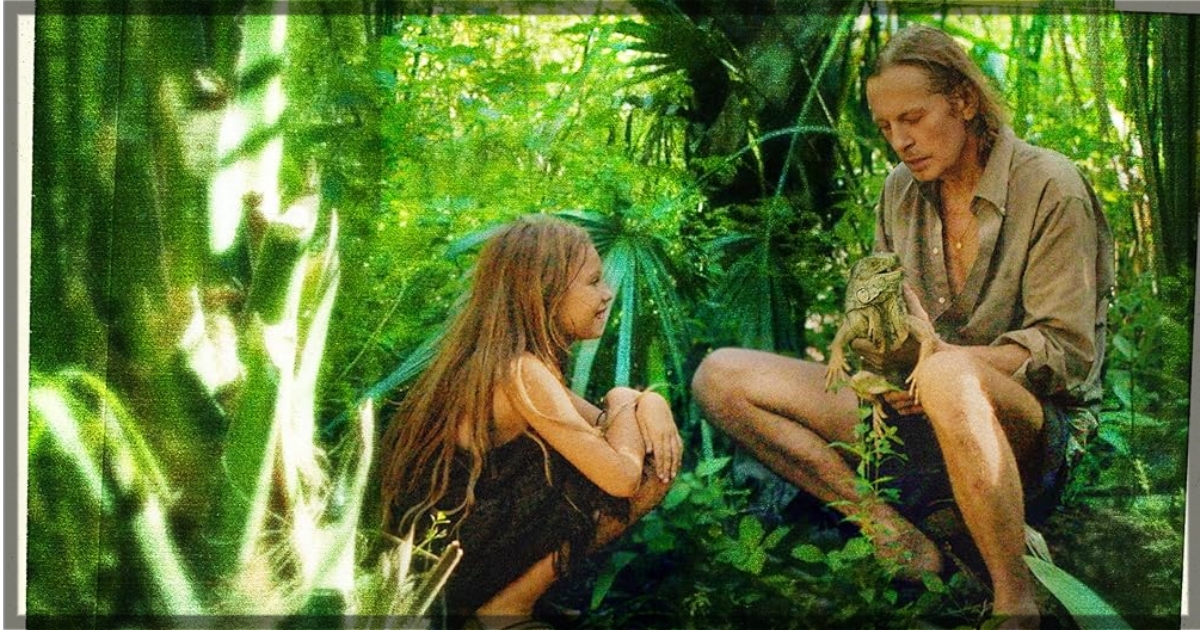
In Laguna, the director narrates the events at the Pacific coast of Mexico. Bartas follows Ina Marija, a woman living in that region. Hence, he follows her trajectory through a lagoon that is annually hit by hurricanes. Consequently, the Lithuanian filmmaker glances at the natural transformations of that era, driven by seasonal events that shift the landscape. Following Marija’s family, Laguna is a look at the resistance. Firstly, the land’s resistance, healing itself through the natural cycle; secondly, the community living there, sailing through an area that is constantly moving. In a sense, Bartas observes the constant moving of life, both from the persons, the individuals, and the environment around them. Hence, his new film is a commentary on how each part of the ecosystem they are part of.
Consequently, the documentary is a close look at how those individuals live. In a sense, it is an invitation to look at the world around us. Yet, the work from the cinematographers Lukas Karalius and Alina Lu approaches reality through the realism of nature. In a classical interpretation, they attempt to transpose the most from the material of life to the screens. Similar to any work of art, the representation of the real is a mirroring that fails to transcribe what is real. Hence, it begins as a search to diminish the interference of the means and to decrease the role of the technical in the intentions of that artwork. Therefore, Karalius and Lu seek a reflection of life through cinematic art; they attempt to capture what the subjects see as they sail in the lagoon. Finally, we observe the efforts of the subjects in living fully, enjoying the graces of the natural, the wind, the trees, and even the disgraces. Bartas represent the lifestyle of each individual who left their backgrounds to live in the Pacific portion of the Mexican Coast. The intentional choice of living “home” to find it in the unknown, filled with mud, water, and hurricanes.
Yet, the film is a slow-burning observation of that reality. The Lithuanian director does not do much to develop the reasons behind the subject’s choices. Therefore, it is a film that focuses on the necessary construction of an ambiance. It depends on the character’s relationship to the lagoon and its surrounding environment. Consequently, it is a vibey experience, an observation of their connection to nature, which is a crucial characteristic of those persons captured by the Balkanian filmmaker. Even though it is a vital documentation of someone’s association with the materiality of the natural world. The film lacks substance to pique curiosity into that journey. Yet, the cycle among the subjects, the camera, and the climate does not cohere entirely, creating an odd storytelling atmosphere that displaces the project’s tone. Bartas is a veteran filmmaker whose work is primarily fiction; hence, his imprint seems off, particularly for a director who typically does not register his stories in nonfiction. Nonetheless, not all directors achieve the same level of efficiency in fiction and documentary, as is the case with Bartas.
Finally, the well-known Lithuanian filmmaker releases his second film of the year, Laguna, a selection for a more prestigious festival than his first, Back to the Family. However, it is understandable why his second effort is a special event for the Giornate degli Autori. Despite the fascinating documentation of nature, it lacks the substance to make a more prominent impact, instead relying on the simplistic framing of their routine, which fascinates at first but tires for the rest of the film.
Laguna was selected as a special event for the Giornate degli Autore at the Biennale di Venezia.
Learn more about the film at the IMDB site for the title.
You might also like…