Documentary filmmaking is a tool for encapsulating time. Actually, all films are, but the non-fiction frames a specific portrait of an individual in a particular period. Despite the apparent manipulations, such as camera angles and editing, the documentary features a level of realism that fiction fails to reach. Therefore, we have the possibilities of the realistic events framed by the camera, understood by the interview, and thoroughly explained through voice-over in some cases. The Argentinian director Clarisa Navas experiments with the form in her first non-fiction effort, Prince of Nanawa. She directed Hoy partido a las tres and Las mil y una. Before even releasing her first work of fiction, ‘Hoy partido’, Navas began accompanying a child named Ángel. He lives on the border between Argentina and Paraguay, in a community where the ancient Guarani language is not welcome at all. Therefore, the filmmaker documents moments in his life from age nine to nineteen, spanning ten years of the children’s growth and their own trajectory.
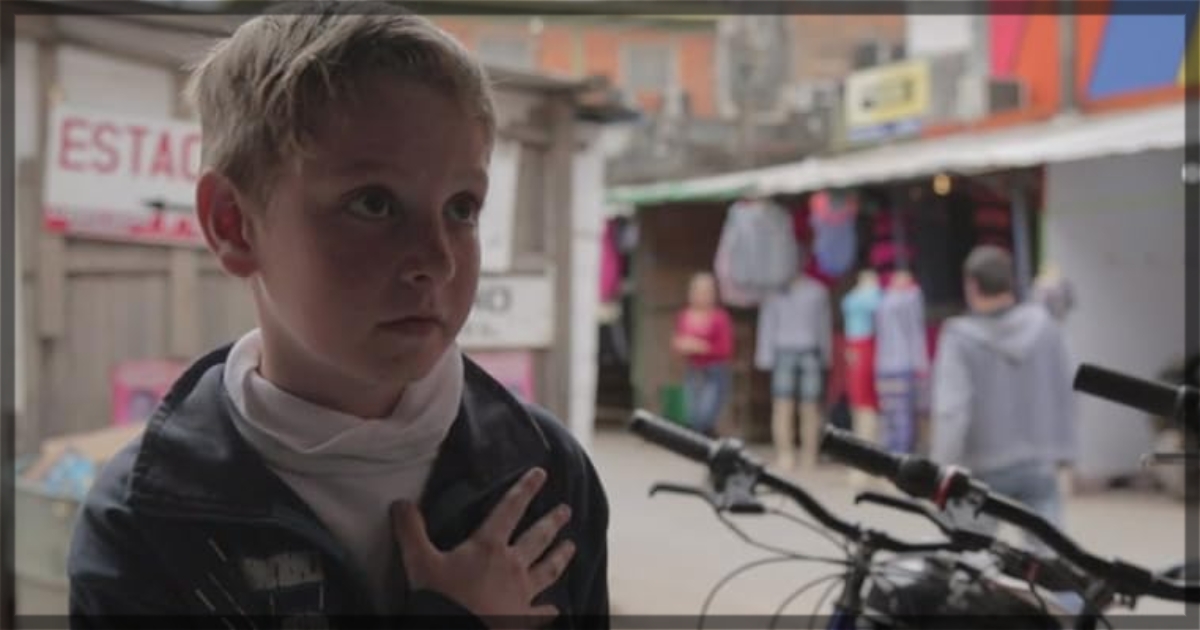
Prince of Nanawa is a filmic experiment. The young Argentinian director tackles a decade of the life of a child, who promptly appears on the screen as a lovely and charismatic individual. When he appears for the first time, after a quick introduction to the cameras, Ángel takes us for a walk, a tour of his community. He wanders through the fair that sells fruit, clothes, and sound equipment. Ángel conducts this tour of his block, walking through the stands, narrating each one, dancing to the reggaeton blasting off the jukebox. The child, as pure as he seems, is an intensely charismatic individual. He greets most of the people he encounters on the bridge that separates Argentina and Paraguay. It takes only a few seconds to fall in love with this child, who, minutes earlier, was defending the students’ study and conversation in Guarani. Ángel believes it is both a duty and a blessing to live in a country with a native language, despite colonial efforts to prevent new generations from learning it.
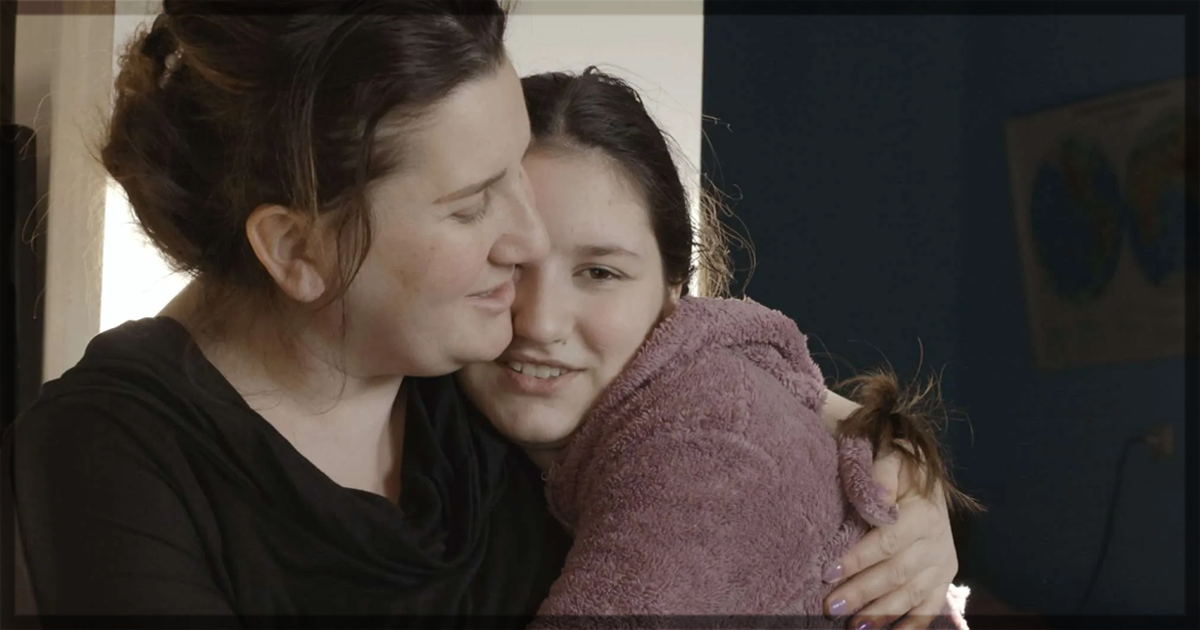
In its nearly four hours, we follow closely the life of a child who loves life. In its brief introduction, one can observe his desire for reality. Furthermore, the film assumes an episodic form. Each one documents his birthday parties, events that celebrate a new cycle. It is a beautiful moment of celebration of life, even for someone so young. Consequently, we observe that a sweet, happy, and charismatic boy is tearing up with joy. Ángel is an example of how life might be simple even though things are tough on the border, predominantly due to the economic situation in both countries. Argentina faces a seven-decade economic crisis, suffering from hyperinflation each year. On the other side of the border, Paraguay is a small country with heavy ties to the United States, serving the interests of the imperialist country. Thus, it is a life divided into two complicated economic and geopolitical contexts, even diminishing the expectations for a child’s future.
Nevertheless, Clarisa Navas’s observational diary suffers from an overabundance of material. Surely, it approaches a decade of someone’s life, particularly a child. The young Argentinian director experiments with documenting Ángel’s formative years, from age nine to nineteen. However, the result is a bloated documentation that offers little to engage with that experience. Despite being divided into two parts, the film feels like a lengthy solo piece. The repetitiveness in the structure and the documentary approach, which is a direct conversation between the subject, Ángel, and the audience. Although the boy is utterly charismatic and delivers a sweet perspective on life, it lacks a more profound thread. Consequently, the film requires an in-depth engagement from its audience, particularly because you need to be interested in a stranger’s life for three and a half hours. Hence, it has moments that transcend from Ángel’s persona, a sweet boy who wishes to become a veterinarian because he loves animals so much. Yet, there is plenty of meat around the bones; however, not all of that is good for consumption.
Finally, Prince of Nanawa delivers an extensive glimpse at a highly charismatic boy’s life. Nonetheless, it feels utterly long and has too many moments that lack a better focus on the primary narrative thread. Clarisa Navas’s first documentary effort is competent at extracting the charisma from its subject, but the diary documentary has too many lines written, and not all of them land.
Prince of Nanawa has recently played at a number of international film festivals.
Learn more about the film on the IMDb page for the title.
You might also like…