
During the Berlinale I swung by photography museum C|O Berlin to look at their exhibit of work by Mexican photographer Graciela Iturbide (running until June 2026, and recommended). Her most famous photograph, “Mujer Ángel, Sonoran Desert, 1979,” shows an indigenous woman in traditional dress on the side of a hill, alone in a desert landscape, carrying a boombox in her right hand. This image became a global classic for the same reason all classic images do: it is perfectly understood with or without context. You don’t need to know a single thing about the Seri people, or Mexico, or even Ms. Iturbide’s name to appreciate this simple picture of modernity carried into the middle of timelessness. Filipiñana will succeed for precisely the same reasons. Its aesthetic power is so strong that its visual beauty will carry it very far indeed, whether or not anyone pays the slightest attention to its viciously clever plot. Its issues of class, privilege and gender are timeless, and the specificity of its setting – a Filipino golf course – is an incredible microcosm for our whole complicated, exhausting world.
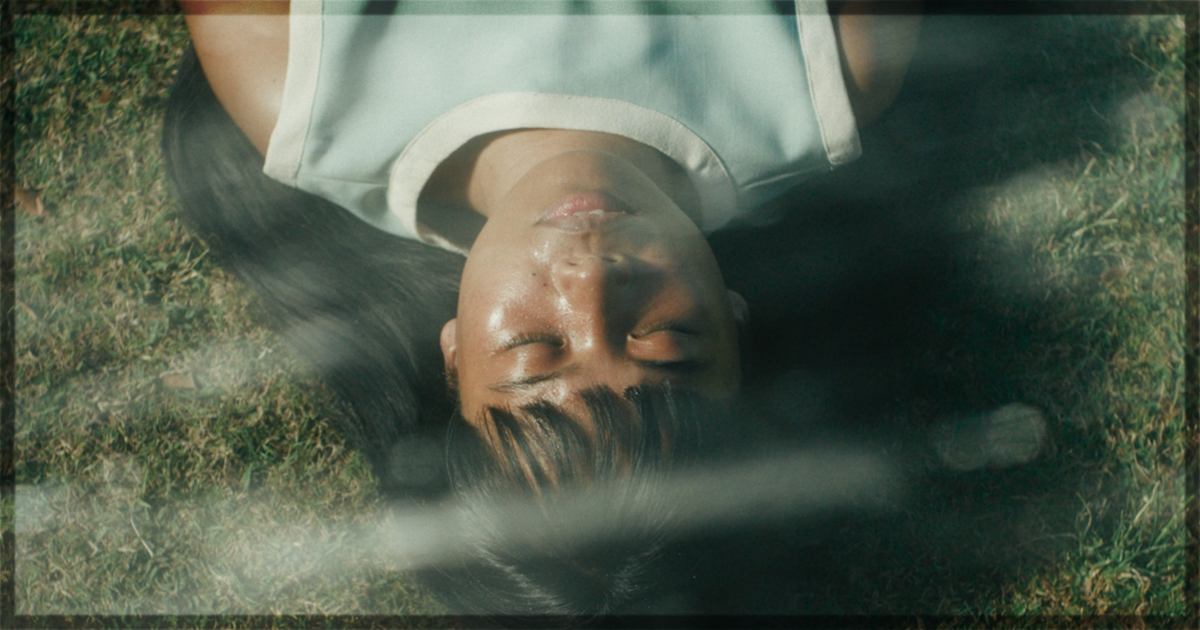
It’s the first day at work at the golf course for teenager Isabel (Jorrybell Agoto), where she has been hired as a “tee girl.” That’s a young woman in a pastel dress uniform who sits in front of golfers practicing their swing on the driving range and places golf balls onto their tees. It’s hard to think of more boring work, but a job is a job and Isabel has had to leave her home region to find even this. The weather is swelteringly hot, but unfortunately there’s very little relief to be found. There’s water rationing in Manila, but not for the golf course, and not for the (mainly Chinese) tourists here to play a few rounds. Out on the course is teenager Clara (Carmen Castellanos), who is shortly off to college in America, but is being squired around the course for the day by her uncle, who’s a member of the club. The caddies are also all women, wearing pink uniforms with unusually pointed pink sunhats, and have lots of questions for Clara about golf course culture in the states. Isabel has questions too, especially as she’s sent on an errand to find the club manager, Dr. Palanca (Teroy Guzman), and therefore must scour the place from top to bottom in order to find him. Many, many other things happen instead.
Writer-director Rafael Manuel, in his first feature film, hereby introduces himself to the world as a visual director of the first order. He understands perfectly how to compose an image and to use style to make a point. At a driving range, do all the golfers swing simultaneously? Do golf carts normally bop along like connected cars on a rollercoaster? When sweeping the steps, do the workers normally bang their brooms in unison? At an afternoon tea dance, can the dancers spontaneously burst into an error-free routine? In the real world of course they don’t, but when you are trying to demonstrate what the world here can feel like this is a wonderful way of making the reality feel that little bit extra. Cinematographer Xenia Patricia filmed Filipiñana at eight different golf courses, and the location managers found some incredible locations that combine the pastel colours beloved of beach towns with the kind of neo-brutalist concrete architecture beloved by people making a statement in the 1970s. The costumes and the various settings within the club – such as a fancy buffet table covered in petit fours sweating in the heat of an empty room, guarded by a bored woman who advises Isabel that just touching them can get you fired on the spot – have the kind of neo-futurist feeling prompted by space movies from the 1960s. Everything is in between impossibly louche and hopelessly outdated, with a sleepy, lazy feeling a world away from the cramped, noisy streets of nearby Manila.
But as Isabel explores the club from the inside, and Clara plays her round on the outside, both of them come to realise the ways money and privilege have combined to construct this playground. As entire trees are transported whole by landscaping teams, and sprinklers tchick-tchick-tchick that unrationed water in the background, no one has a bad word to say about Dr. Palanca. He is a native Ilokáno speaker, like Isabel, but both of them keep this mostly hidden. Power speaks English and then maybe Filipino/Tagalog if really necessary, and Dr. Palanca knows everything there is to know about power. Isabel doesn’t, but today is the beginning of her education. It’s also the day Clara learns just how much her privilege can buy, whether she wants it to or not. The lessons are all the more vicious for being so subtle. Even though it’s a golf course, this is not a place for big sticks. It’s a place for soft speaking and soft voices, for winks and handshakes and eye contact telling you all you need to know.
Filipiñana is so good that Mr. Manuel will be remembered even if it’s the only movie he ever makes. It’s so good you could watch it with the sound off and still be knocked over by the power of its imagery. It’s so good it will punch through film festival culture to be embraced by anyone with a keen eye And it’s so good that with or without its context Filipiñana will become a global classic, because it packs one hell of a punch.
Filipiñana recently played at the Berlin International Film Festival.
Learn more about the film at the IMDB site for the title.
You might also like…
