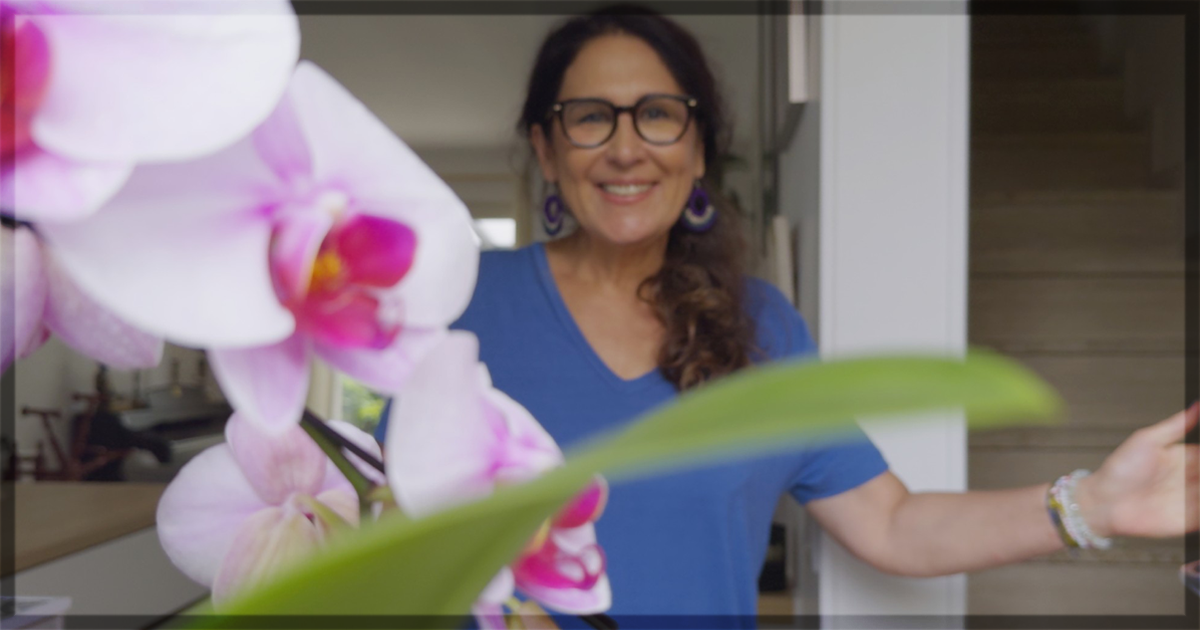
The concept behind Given Names (Prénoms) is so simple that it’s hard to believe no one has ever done it before. Filmmaker Nurith Aviv showed up at the apartments of various friends of hers with a bunch of flowers, and then listened to the friend talk about their first, or given, name. That’s it! It’s the kind of discussion that happens often in real life – just listen to any group of new mothers justify their choices, or any teenager sulk about what this label for their identity means to them – but it’s not often such a chat is captured on film.
It doesn’t work flawlessly, of course: at the Berlinale Ms. Aviv made it clear the movie was originally designed as a kind of art installation, and more reviews than were included were filmed. The opening of the film is also more of a tribute to the late French filmmaker Agnès Varda, who Ms. Aviv had worked with. (Mr. Varda’s original given name was actually Arlette, changed by her when she was a teenager.) But once we are into the direct interviews this hiccup is immediately forgotten as we get a window on some really interesting cultures and how these people’s given names have shaped their very interesting lives.
You learn so much about someone while knowing so little of them, just from the simple story of their name. One of the interviewees was born in secrecy during the Holocaust and left on the doorstep of a Polish family by his Jewish parents, where he spent the first years of his life under the name of a dead child of the Polish family. Once he was reclaimed by his parents they did not really change his name, but moving to France and beginning a new life in a new language changed it for him. Other interviewees had parents from different cultures and gave their child a name that with different connotations in each culture. It’s fascinating to hear these considerations be discussed but also how the owner of this name felt about it. One woman has a stutter, so mentions how pleased she is to have a name she can pronounce. She also has a very ordinary name from her birth culture (the Turkish name Zeynep), because her mother had a embarrassing first name that her own parents made up, and was therefore adamant her own children would not have the same problem. Some people have had different names through different stages of their lives, while others have had names for different purposes. Some have had the same name the whole way through and never liked it, others like their name so much they write poems about it. There’s a whole spectrum of humanity and history on display here through just one simple question.
The interviews were clearly rehearsed but they were not a dialogue. Instead Ms. Aviv filmed them talking directly to the camera, sharing these intimate details about this gift they were given and how that’s affected them like we’re chatting over a coffee. All the interviews were conducted in Paris and in the French language, but even amongst that there’s a global reach among the people here that is both very ordinary and highly unusual. Some people have received prejudicial treatment based on their names while others have had no problem at all. In France names are taken seriously for an additional reason: the spelling of names is legally standardised. Some people are pleased by the simplicity, while other people (or their parents) rebel. A cultural side effect is that it’s therefore not unusual for the name on your birth certificate to be used only in government contexts, while your true name is used everywhere else.
American audiences find such interference laughable, of course, but in other ways American discourse around baby names has shaped the way people around the world think about their choices. Just think how ordinary names like Luna or Lea, Liam or Luca are in preschools around the world right now. These short, easy-to-spell names travel across different cultures in ways which names like that of this movie’s editors, Nurith and Hippolyte, might not. Given Names is a fascination exploration of a cultural issue we more normally take for granted, and I am not just saying that because one of the interviewees is also named Sarah. Our given names are who we are but also who our parents thought we might be, and that’s not necessarily who we become. Hearing people discuss their feelings about this is entrancing indeed.
Given Names (Prénoms) recently played at the Berlin International Film Festival.
Learn more about the film at the IMDB site for the title.
You might also like…
‘Run Amok’ Falls Flat (Sundance 2026 Film Review)