Continuing his prolific year, the Romanian filmmaker Radu Jude releases his second high-profile work of the year, his highly anticipated Dracula. Previously known as Dracula Park, its production name has had the growing hype since Jude’s last fiction work: Do Not Expect Too Much From the End of the World. In the meantime, the director released two archival documentaries: Eight Postcards from Utopia and Sleep #2. He also filmed and premiered his Kontinental ’25 at the Berlinale and took his take on the Transylvania icon to the Locarno Film Festival. In this sense, the Romanian director subverts one of the most traditional stories in literature and its meaning to his country’s culture. Besides the adaptations by Murnau, Herzog, Browning, and Coppola, the director inserts the tendencies of his cinema into the traditional myth: the decay of capitalism, neoliberal policies in Romania, and moral corruption.
Furthermore, Jude comments on a modern concern for artistry: generative AI. In the first scene of his latest film, a director converses directly with the audience. He is at his work desk, beside his bedroom, and narrates his work situation. He got hired to produce a Dracula film; however, he did not want to develop an arthouse project. He wants a commercial success, filled with blood and sex. Hence, he uses a GenAI program, which Jude gives the most generic name possible, to develop a version of Dracula for him. Yet, it gets an awful rating from the audience screenings. Consequently, he narrates for us his ideas on the project, almost like a compilation of multiple stories about the iconic vampire. In this sense, it has an episodic structure, and the narrator is not as fascinating as the visual storytelling the director employs on the screen.
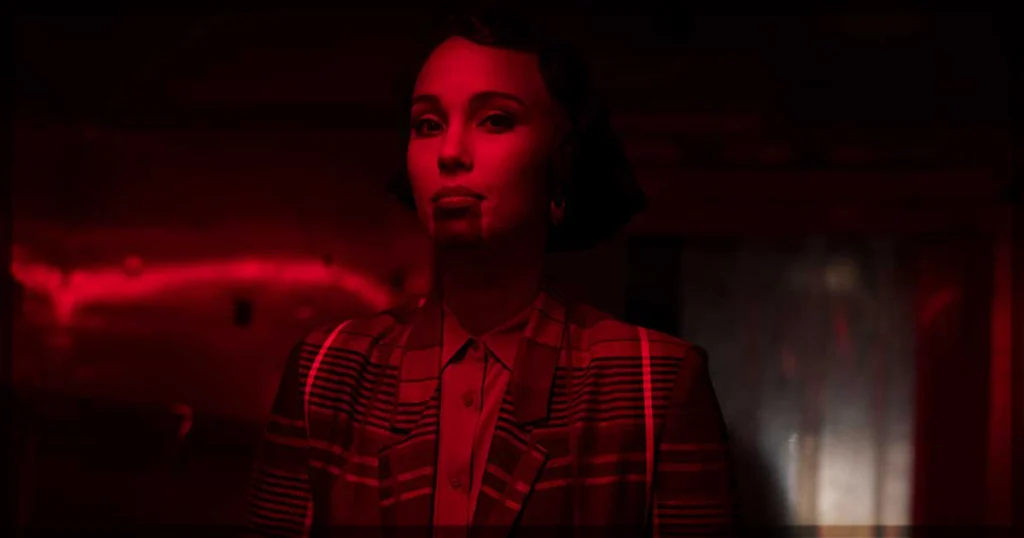
In this sense, the multiple episodes narrate about the simplistic comparison between bloodsuckers and capitalism, sexual work, decay of artistry, social persecution, and the rise of fascist ideology throughout Europe. Dividing his film into chapters, the Romanian provocateur filmmaker does not follow the order; each time, it gets a random number, similar to the stories. In one of those, we watch an erotic play of Nosferatu in a thematic restaurant, where the vampire bites the neck of its victim and rips off her dress, exposing her chest to the audience. After the highly erotic ritual of the lord of the bloodsuckers, each client gets a sharpened stick and chases the duo through the ancient streets of Transylvania to simulate the popular chasing of the vampire in the tale. The show performers consist of a washed-up actor and a sex worker, who records content for her OnlyFans profile while they hide from the show audiences in one of the buildings of the city. Jude returns to two topics he has previously discussed in his filmography: the production of pornography and the fading success of an actor.
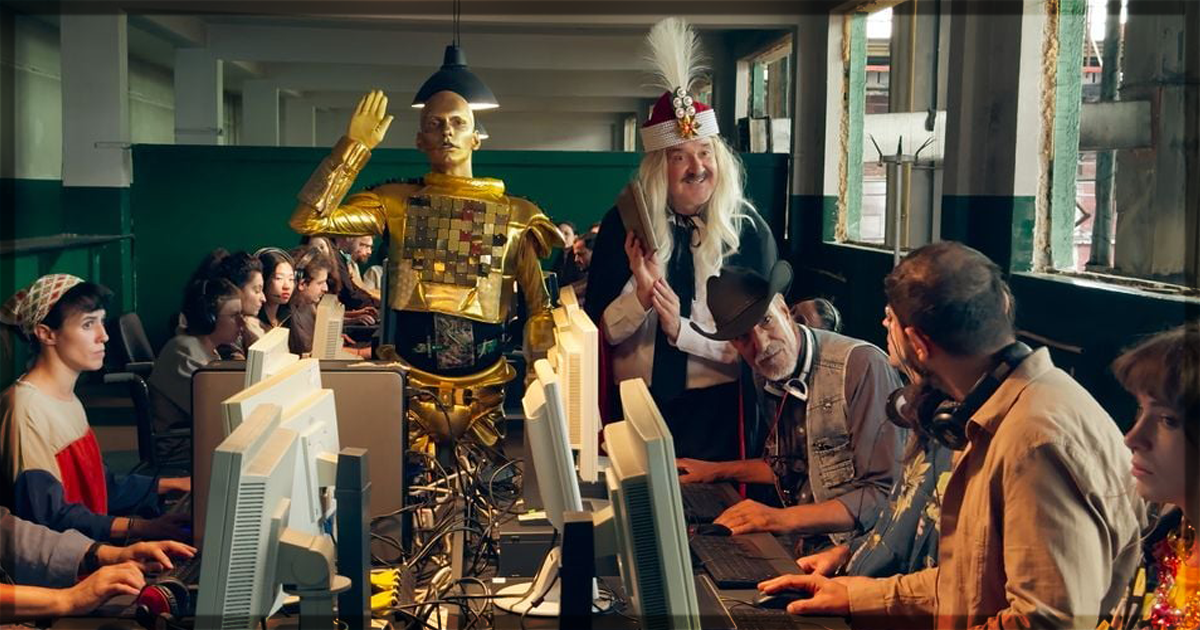
In the presence of the danger and fear of AI in artistry, the Romanian authentic filmmaker ridicules and mocks its creations, throughout absurd and terrible pieces of generative videos that recreate scenes of the past Dracula films. In one of those moments, he even jokes about the lack of the right to use Copola’s version in the GenAI. Jude is arguably the most intelligent director to utilize the tool so far; he is reluctant to assign any impressive feature to the systems that function upon stealing human creations. It is a contradiction that confronts the current state of the film industry, when film executives defend the use of AI to dwindle costs and accelerate the production. Consequently, the Eastern European genius recurs to the video slops of TikToks and Instagram reels, which are a niche of modern social media. The director is conscious of his creative choices.
Yet, the director explores the possibilities of the local myths with his episodes, which are over-the-top and utterly comedic. In a moment, he narrates a peasant who harvests penis in his farm and sells them to women in the streets. A CGI penis stimulates them, while Jude nods to the statement of his narrator: a commercial film needs blood and sex. Besides the blood, which draws from the blood thirst of its icon, and the sexual drive of the human being, the director is distant from making a commercial production. He delivers an almost three-hour film with a considerable use of GenAI slop, nudity, and a particular vulgarity towards the European literature and mythology. The director connects Dracula’s desire for blood to the sexual urge, whether through the actors who play them or the incorporation of the Transylvania legend. The result is a provocative film that has a lot to say and a lot of content, feeling bloated with its experience. However, the director wants to comment about the stories and the events around us, reaching a three-hour statement that enchants with its humour.
Despite being less effective than the simple Kontinental ’25, Radu Jude’s Dracula is a Romanian high-profile statement to the current state of artistry, social relationships, and economy. A world where GenAI mixes with classic literature and the digital universe provides slops, the OnlyFans market, and engagement. Dracula is another addition to the importance of Radu Jude in a world where filmmakers bend down to corporate norms. However, the Romanian director has as much thirst as the vampire, and certainly is going to hunt down and explore what fascinates him in the world around him.
Dracula recently played at the New York Film Festival.
Learn more about the film at the IMDB site for the title.
You might also like…