Regardless of one’s takeaway from Avatar Aang: The Last Airbender, it’s hard for any normal person not to feel sorry for the crew. First the planned cinema release was scrapped in favour of unceremonious streaming on Paramount+. Then the whole film was leaked by a hacker, which is likely why this is being released now rather than October. The creative team have been done so dirty, both by self-absorbed “fans” who eschew entitlement for love of media, and by moronic, soulless corporate executives who don’t understand, much less appreciate, art. Here’s hoping this messy affair no longer defines the film, for it is a gorgeous labour of love – a thrilling, colourful, deeply poignant continuation of one of the greatest shows of all-time.
The film is a sequel to the Nickelodeon animated show Avatar: The Last Airbender. A fantasy show set in a world where people are capable of manipulating the four elements, known as bending, it followed a Hero’s Journey story closely as 12-year-old Aang, the newest incarnation of the Avatar (a peacekeeper able to bend all four elements) and the sole survivor of a genocide against all airbenders, tries to save a planet torn apart by war. Mixing creative action and comedy with layered characters, and surprisingly mature sociopolitical themes, it’s a remarkable work of animation. It may be a kids show in the same way that Star Wars is a kids film, but that doesn’t stop it from standing toe-to-toe with the best in the television canon.
Aang (Eric Nam) is now in his early 20s. He ended the war and led the way for a world that strives for peace and equality. A new settlement – Republic City – has arisen; a city where water, earth and firebenders alike all live in harmony. But it’s also a painful reminder for Aang that he is the last airbender. A conversation with his partner Katara (Jessica Matten) underscores the emotional weight of this. She says the city is a place where all nations can live together. “All except mine.” Aang responds.
Even in these early scenes, the emotional intentions of the picture are apparent, for it is fundamentally a meditation on grief and guilt. Aang only survived his culture’s destruction because he ran away. That choice is the black mark of his life; the one mistake he struggles to fully forgive himself over. Director Lauren Montgomery was a storyboard animator for past Avatar shows, and she understands that the characters, first and foremost, are what give this franchise depth. Her choice, alongside that of writers Tim Hedrick and Christopher Yost, to focus on Aang’s grappling with existentialism, even after achieving peace, is one that adds weight to the plot and the cornucopia of luminous visuals at this film’s disposal.
Where the story kicks into gear is upon Aang’s learning of an ancient staff wielded by one of his past lives, Avatar Sonam (Frieda Pinto). During his search for this relic, Aang makes a miraculous discovery – another airbender frozen in ice, like he was at the show’s start. This airbender, Tagah (Dave Bautista), tells him that Sonam’s staff can give airbending to non-benders. Presented with an opportunity to revive his culture, Aang reunites with his old friends, Katara, Sokka (Roman Zaragoza), Toph (Dionne Quan) and Zuko (Steven Yeun). Together with Tagah they search for the staff, the perilous journey forcing Aang to confront his regret, as well as his struggle to balance that guilt with his duty as the Avatar.
A point against the film is its formulaic story. If you’ve read enough books or seen enough films, you’ll have a good idea of how this narrative will progress while watching – from key moments of conflict to the eventual twist villain. However, as with all great things, the execution is what determines quality. The film has its underwhelming aspects – a consequence of adapting an established, densely packed show into a 100-minute film – but by honing in on Aang’s character arc, the story, as familiar as it is, packs a resonant punch. It works effectively on its own, but brilliantly if you’re pre-attached to these characters from the show.
William Faulkner once said “the only thing worth writing about is the human heart in conflict with itself”. Montgomery and team understand the gravity of this sentiment, applying it to Aang wonderfully. He knows being the Avatar means he must serve all people, but when presented with the once impossible chance to fix his mistake, how can he not succumb to temptation? Giving him a foil in the form of Tagah is an obvious, but nonetheless riveting choice. Having another airbender, particularly one as traumatised as him through similar circumstances, to work off with gives Aang’s guilt a physical manifestation, as well as suggesting what Aang could have become if his heart had surrendered to its conflict. With how the story eventually play out, the thematic principles of power against humanist beliefs become particularly potent, especially once they tie in to the evils of monoculturalism, a complex theme that the show addressed frequently throughout its run.
This heavy focus on Aang does mean that the rest of these iconic supporting characters, with maybe the exception of Katara, are mostly on the sidelines. This is unfortunate as the family dynamic of this group – affectionately known as The Gaang – was a big part of the show’s appeal. Nevertheless, their inclusion adds stakes to the journey as Aang is torn between the peace of the present and pain of the past. While it’s a shame that none of the voice actors from the show reprise their roles – save for Dee Bradley Baker as Aang’s flying bison Appa – the new voice actors still infuse these characters with the charm and charisma that made them so loveable to begin with. A debate on Tagah’s attractiveness is a particularly funny moment that really captures the idiosyncrasies of their family unit connections.
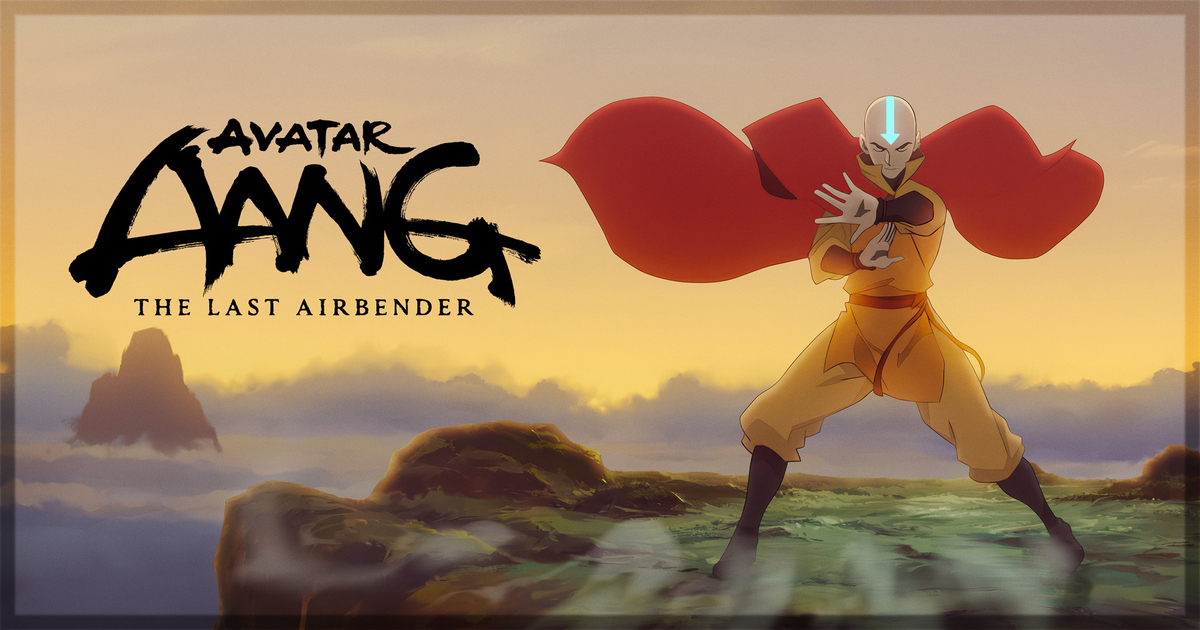
It’s infuriating that the film was denied a cinematic release for most of the world because, animation-wise, this is the greatest Avatar has ever looked. Utilising the same hand drawn 2D anime-esque style of the show, the colours leap off the screen and make the setting feel alive, the explosive uses of yellow, blue, green and red generating depth to the character designs and setpieces, with clever lighting choices generating atmosphere to the imagery. Even the film’s more underdeveloped aspects – namely a villainous group of non-benders called The Denied – benefit from the exquisite colours and linework that go into their designs. The details in the designs give weight to each scene, leaving the emotional scenes gripping, the spiritual scenes magical and the action scenes pulse-pounding – the incorporation of martial arts into the different bending styles once again adds flair and style to the fight scenes. Jeremy Zuckerman returns to craft the soundtrack, and the grand scope and evocative inquisitiveness of his orchestra give a grandiose sensationalism to the action and animation. Edited sharply and stunningly detailed in execution, it’s breath-taking work from an incredible team of animators.
That the film accomplishes this while still staying true to both the tone and especially the weight of the show really is a feat in itself. Some of the dialogue can be a tad childish, even by the show’s standards, yet, at its best, the dramatic gravity of the themes are laid bare for all to see through the action and character dynamics. If the film’s thesis is on how to grapple with guilt and embrace fellowship, then it explores these sentiments with conviction through its compelling lead character arc and the artistic devotion to its televisual counterpart. From its vivacious, weighty animation to its emotionally gripping resolution – made absolute by a brave and difficult choice Aang must ultimately make – this is a picture that recognises what made its source material work and builds on the foundations to give us an exhilarating character study in its own right.
Avatar Aang: The Last Airbender is by no means perfect, and is more of a fun addition than a necessary continuation. But the stuff that’s good is so damn good that it’s impossible to overlook. Spellbinding animation brings these beloved, timeless characters to life splendidly, while powerful musings on guilt and existentialism allow this otherwise routine story to stand firmly on its own. It may not have gotten the cinematic release it deserved, but the filmmakers can take comfort in knowing they have contributed a terrific new picture to this franchise that may, including myself, hold so dear to them.
4 stars
Avatar Aang: The Last Airbender is now streaming on Paramount+.
Learn more about the film at the IMDB site for the title.
You might also like…