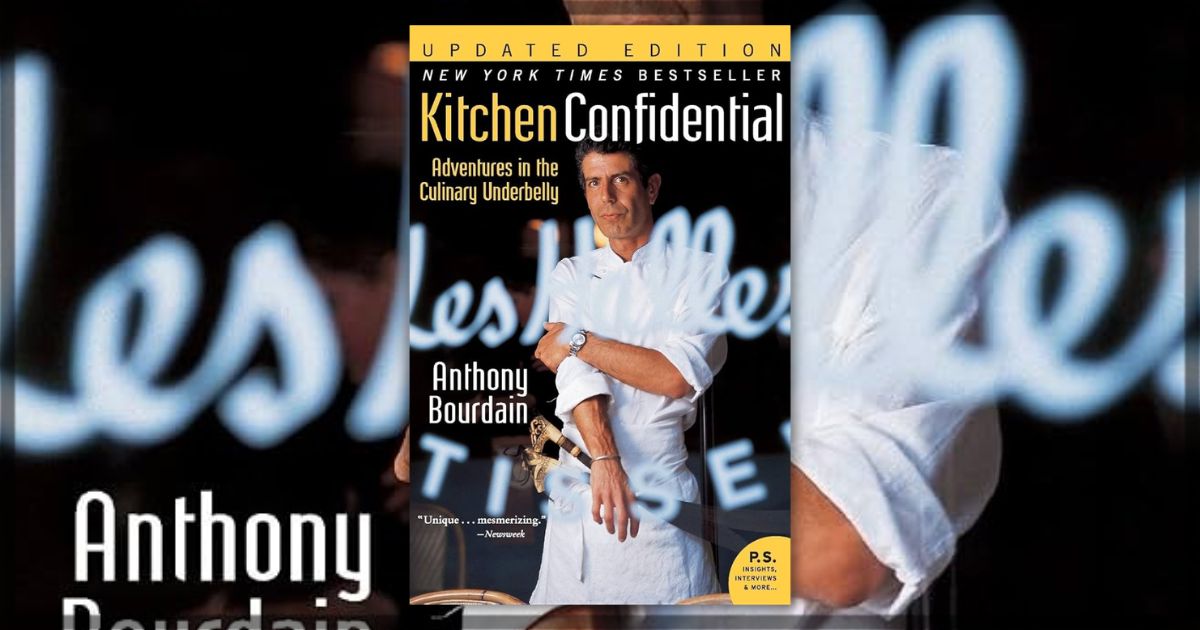
Get ready to never look at a restaurant the same way again. I’m sure you assumed that professional kitchens are fast-paced and stressful; it’s not Grandma cooking one meal for your family after all- it’s dozens of chefs making countless dishes for hundreds of people. Each dish has a different cooking time and is probably being made by a different chef, but they all need to be done at the same time and come out together. If you’ve never worked in a kitchen before, I guarantee you can’t appreciate how difficult that is (try cooking a different meal for your picky eater and having it ready at the same time as yours, then multiply that by about a thousand). Twenty-five years ago, Anthony Bourdain shocked the world when he exposed the secret life that kitchen staff lead, drugs, sex, and alcohol fueling the never-ending grind of providing the rest of us with delicious food in his book Kitchen Confidential: Adventures in the Culinary Underbelly. All these years later, the stories are just as good. But beware, this book will change your whole perspective on eating out for good.
[Warning: My review of Kitchen Confidential: Adventures in the Culinary Underbelly contains some spoilers!]
The book that shocked restaurant-goers everywhere
Today most of us feel like we know what goes on in a professional kitchen. Food Network and reality TV have been around for a couple of decades now and have offered an inside look at the fast-paced craziness that the front of the house never sees. We’ve even come to accept Gordon Ramsay’s anger and vulgarity. Although I think most people think he’s an exception, not a rule.
But back when Anthony Bourdain first published Kitchen Confidential: Adventures in the Culinary Underbelly, even the whitewashed, TV-friendly version of the kitchen that we know now was unknown to most. So when Bourdain shared stories of sex, drugs, violence, and questionable legality, the general public was shocked, and kitchen staff felt seen. It was loved by both sides. Customers were enthralled by the drama happening just on the other side of the wall. And the people experiencing the drama felt validated.
The beginning of a craze
Honestly, Bourdain is probably responsible for the explosion of interest in professional kitchens that has taken over our airwaves. Cooking shows are everywhere, and while they’re watered-down versions of what Bourdain revealed, they still follow the basic shape and form he exposed. The chefs are under very high stress, the judges are very mean, there’s tons of yelling, and the participants tend to be more colorful than other shows.
My copy of Kitchen Confidential: Adventures in the Culinary Underbelly is a more recent reprint that had some extra content, including some ruminations from Bourdain. He doesn’t go so far as to give himself credit for the national obsession with professional chefs, but he does note that it’s become a cultural touchstone that didn’t exist before. I, however, give him full credit for setting off the first rock that has become a landslide. He took something most people never even thought about and dragged it out into the light, warts and all. His unvarnished look at what goes into running a successful (or not so successful) kitchen caught people’s imaginations and created a hunger for more.
What makes his stories even more compelling is that he doesn’t make himself a hero. He doesn’t spin things that happened to make himself into someone better than he was, or to make himself a victim. He honestly admits when he made mistakes, when he could or should have done better. He is just as ruthless and honest with himself as he is with all the other people he talks about in his stories.
And he talks about a lot of people, all of them real. Of course he’s changed names to protect confidentiality (and to not be sued, I’m sure), but he claims that if you’re from the restaurant world in the 70s, 80s, or 90s, you still know who he’s talking about. Some of the people he dishes about, you can tell he hates. Or if he doesn’t hate them, he doesn’t respect them. But when he was impressed by someone, when he liked someone, or when he respected that person, that comes shining through in his writing. Bourdain puts his whole self on the page; you know exactly what he feels about everything he writes about, and that makes for very compelling reading.
A quarter of a century later, Kitchen Confidential is still valid
Some of the extra content in my version is like an update from Bourdain. He says a lot has changed since he wrote his book. Especially since the early stories that took place in the drug-soaked 70s and 80s. He doesn’t say that things have become a perfect utopia of cooking and serving magic à la Beauty and the Beast. But things are a little more civil now. I imagine this is because society as a whole is moving in a new direction that makes many of the things that happened in the past unacceptable even to the outcasts that Bourdain loves so much. But at the same time, professional kitchens are still hectic, stressful places. Plenty of craziness happens in them that most people would never believe. But Bourdain makes it clear, and kitchen workers everywhere will tell you, that it’s not all bad. Things might be crazy, stressful, or inappropriate for any other setting, but they’re also fun.
I worked in a kitchen back in the early 2000s, and those are some of my cherished memories. I also currently work in a kitchen, and while it’s a little different from the kitchens that Bourdain is talking about, you’d be surprised at some of the stories I could tell. Kitchens everywhere gather the outcasts, according to Bourdain, and they couldn’t function without those outcasts being exactly what they are. I don’t think Bourdain set out to honor these misfits when he wrote Kitchen Confidential, but I feel like his book is a beautiful tribute to those who endure a lot of shit in order to allow the rest of us to enjoy delicious food without stress.
Rating: 8/10
Kitchen Confidential by Anthony Bourdain is available now!
Learn more about the book at the official website for the title.
You might also like…