The sincerity with which Anemone begins with a child’s drawing of violence from the Northern Irish troubles does not bode well. And yet Daniel Day-Lewis, who has acted in two previous about the Troubles, In the Name of the Father and The Boxer, has taken his first acting role in seven years to work with director Ronan Day-Lewis, with whom he co-wrote the script. As you can guess from the names, Ronan is his son, and the two of them have clearly spent a long time considering how the war in Northern Ireland has impacted the British people who were involved. From him, this is new. And while it is always wonderful to see Daniel Day-Lewis onscreen – has anyone ever built a stronger and more justified reputation on so little work? – Anemone itself takes the coward’s way out of dealing with the issues it addresses.
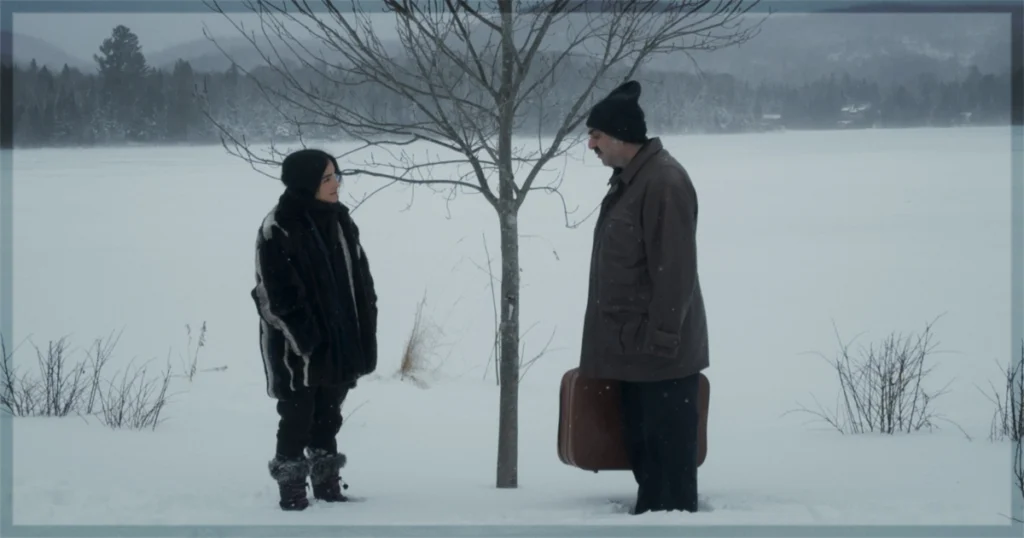
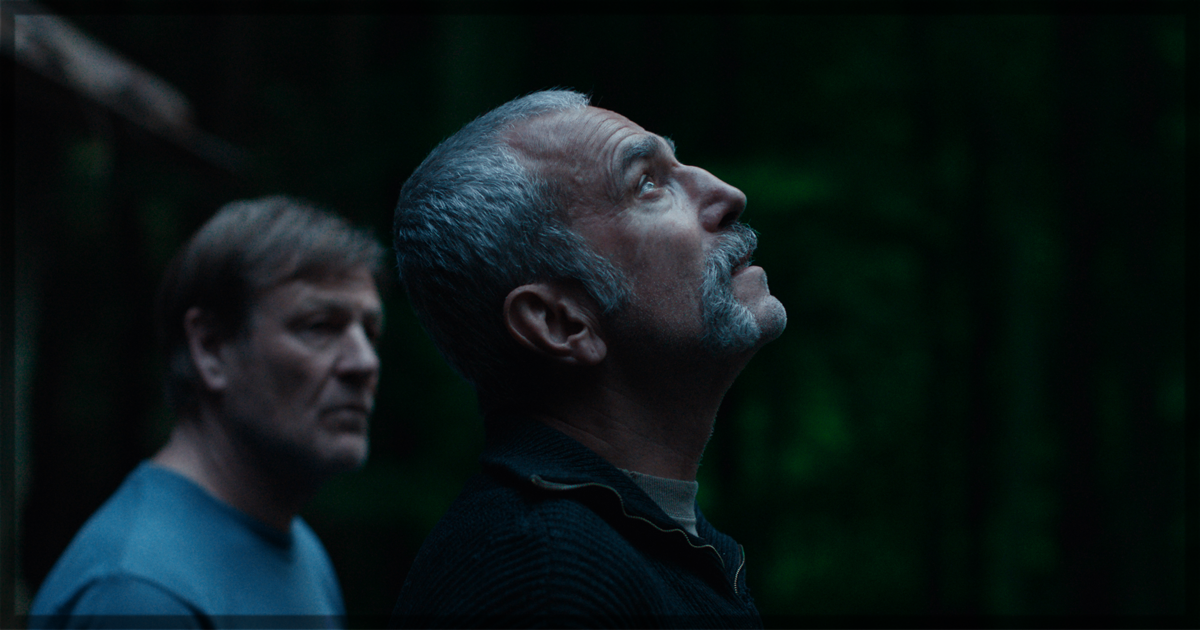
And this is because there are so, so many movies (like so many) which center men who walk out on their children. The barely adult Brian (Samuel Bottomley) lives in a town in northern England with his emergency call handler mother Nessa (the always extraordinary Samantha Morton) and his stepfather Jem (Sean Bean). Jem is also his uncle, brother to his birth father Ray (Mr. D. Day-Lewis) a former soldier who went off-grid many years ago. Brian is on the cusp of the kind of trouble you can’t really come back from, so Nessa and Jem agree that it’s time to poke the bear. Jem packs some camping gear, kisses Nessa, and rides his motorbike into the woods towards a set of latitude/longitude coordinates. In a remote wooden house near the coast, in the kind of semi-feral splendor it’s deeply unusual to see in the UK, Ray has been living alone with a wooden stove, tins of sardines and his hawk-like disposition. He hasn’t seem Jem in decades, but immediately allows him through the door for a reunion of sorts. The question is whether any of this will be for the good.
As Jem and Ray circle each other warily, Nessa drudges around town and Brian mopes in his bedroom, there’s time to ponder an enormous amount of questions. How has Ray paid for his life of semi-solitude? For a hermit he seems to spend an awful lot of time in the pub or down the shops. Why did Jem choose to build a life in the shadow of his brother instead of literally anything else? Why has Nessa so stereotypically chosen to be fond of her ex instead of furious at his abandonment? Why has Brian never expressed the slightest curiosity at this unusual family setup before? Why do any of these people believe that meeting Ray at last will turn Brian’s life around? And above all: why is Ray the hero here, instead of Nessa?
This is because female trauma is of no interest to men. It’s clear Mr. D. Day-Lewis wished to return with a movie that reminds all of us just what a spectacular actor he truly is. He has a monologue about confronting a priest who abused Ray as a child which is one the most intense and extraordinary pieces of single-handed acting put to screen in a very long time. It’s violent and disgusting and you see the flickers of every thought over Mr. Day-Lewis’s righteously furious face. Poor Mr. Bean has nothing to do but listen (and presumably reflect about some of his own career choices). This is even before we get to the real reason why Ray skipped out into the woods knowing Nessa was pregnant and why he’s chosen to hide all his fury under a bushel all these years. It has to do with war crimes, whether the right people have been held responsible for them, and how a person copes when what you thought was an act of kindness was actually true evil.
Considering that in October 2025 the British government has once again failed to find Soldier F guilty of murdering two people on Bloody Sunday in Derry in January 1972, Ray’s respect for the long arm of the law is somewhat overdone. The crimes committed by British soldiers (among others) in Northern Ireland are legion, well-known and in almost all cases unpunished. This means that Ray has noped out on life for his own reasons, and it’s bewildering that both Jem and Nessa, who were left literally holding the baby, are so understanding about it. But this is not the point.
The point of Anemone is for Daniel Day-Lewis to give full voice to his contempt for his talent and demonstrate his lifetime lack of understanding at how anyone could value it so highly. Watching him grind everything around him to dust as if he is the only thing onscreen makes Anemone utterly essential viewing. Ben Fordesman’s cinematography, which manages to make the windswept weather a palpable thing, expresses the heavy price that Ray has paid for his life of sullen contemplation. It’s a metaphor for what Mr. D. Day-Lewis has chosen for himself, and only someone like a son could coax this out of him. Ms. Morton and Mr. Bean should be thanked for their willingness to go along for the ride, and it will be interesting to see if Mr. R. Day-Lewis can develop a career for himself outside of his father’s considerable shadow, but anything that puts Daniel Day-Lewis back onto our screens is worth watching.
Anemone recently played at the London Film Festival. It is now in theaters.
Learn more about the film at the IMDB site for the title.
You might also like…