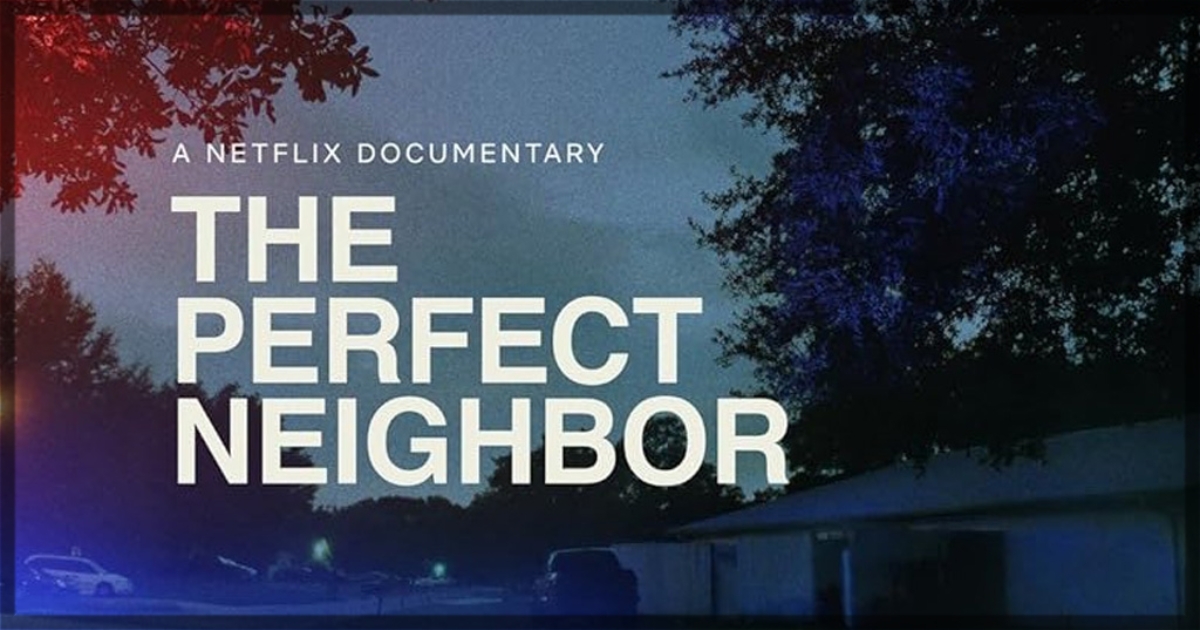
Documentary filmmaking is probably the cinematic medium that benefits the most from technological improvements in the arts. Each new tool used in production allows the directors to fill gaps caused by the lack of archival footage and the limitations of interviewing subjects. Hence, in recent years, we have observed the use of deep fakes, GenAI, animation, and machine learning to create various effects in documentary filmmaking. Utilizing the capabilities of digital image documentation devices, Geeta Gandbhir (Evidence, How We Get Free, and Lowndes County and the Road to Black Power) organizes a wealth of footage from a criminal case to reveal the problems with gun laws in the United States. In The Perfect Neighbor, the director uses footage from bodycam recordings of multiple officers, 911 calls, and security camera footage. Therefore, she constructs through numerous hours of documentation the brutal assassination of a Black woman, mother of four children, by her white neighbor.
Furthermore, Gandbhir builds the linearity of the events. Similar to Bill Morrison’s Academy Award-nominated Incident, which also uses bodycam footage, both directors received boxes with hundreds of unorganized materials about brutal deaths. In Morrison’s film, it comes from a police brutality case, the death of a Black-American man at the hands of an officer. Gandbhir narrates the perishing of a Black mother due to the prejudice and intolerance of her white neighbor, an elderly single woman. In this sense, both in substance and style, the filmmakers study the brutal enforcement of force against the Black population, who are not safe on the streets or in their own communities. Gun violence took a son from a mother and a mother from her children, predominantly because of the lack of conflict resolution skills by individuals and the state. The difference in The Perfect Neighbor is the role of the police force as an intermediary, who listen to both sides, and observe the act of killing.
The virtue of the film’s storytelling comes from the efficiency of the directing and editing by Viridiana Lieberman. Despite the heavy duty of organizing hundreds of hours of footage from multiple cameras, there is an ongoing, progressive sense of tension growing with each minute of the film. The film contextualizes for the audience, starting in February 2022, when Susan Lorincz calls 911 to denounce her neighbor’s children, who play in front of her house. Her problem is the children running and screaming, who use the long grass yard outside her house to play football. Consequently, Susan coins the documentary’s title, saying she does no harm to anyone in the community because she is literally the perfect neighbor. Yet, there lies a contradictory nature of someone who titles themselves as a flawless member of a community, and murders another one for the sake of intolerance and prejudice.
In ninety minutes, the film resumes eighteen months of incidents and clashes between Lorincz and most of the street families. It positions her as an antagonist, someone who opposes the need for children to play together as a means of socializing. However, the fascinating aspect of her calls and statements is how she understands the impossibility of avoiding them in the grass yard, which is not the property of her landlord, but she insists on their wrongdoings. Firstly, there is an antagonizing nature, but it escalates to the problems of the gun laws in Florida, where someone can assassinate others if they feel threatened. The so-called presumption of fear law justifies plenty of murders in the supposed threat to the safety of someone. Hence, Gandbhir exposes through the use of calls and bodycam footage the hypocrisy of the woman, who contradicts herself after shooting, cowardly shooting Ajike Owens. The final minutes study the psyche of a woman who refuses the arrest, particularly because of the nature of the law, which makes her feel justified. Yet, she is not brave enough to address the four children of Owens, who became orphans, and felt guilty because of a woman who was unable to live in the community.
Ultimately, The Perfect Neighbor is an ideal fit for the director’s filmography, which has documented the social injustices of American society, notably those affecting minorities. Thus, Geeta Gandbhir’s new work is a heartbreaking documentary about the impact of gun laws in the United States. Precisely edited and beautifully found throughout hundreds of materials, the film tells a tragedy, a tale of the human inability to live together, and the dangerous possibilities of the combination of intolerance and guns.
The Perfect Neighbor is streaming on Netflix.
Learn more about the film on the official Netflix site for the title.
You might also like…