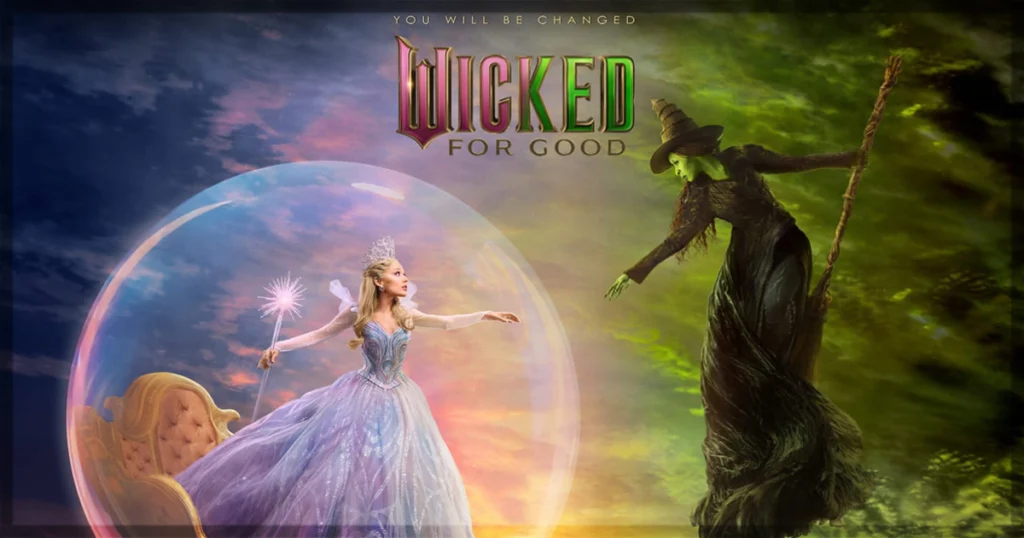
Wicked: For Good is one of the most anticipated films of the year. It is the conclusion of the musical saga adapted from the 2003 stage show by Winnie Holzman and Stephen Schwartz, which became a massive success at Broadway, and in various local adaptations of the story of Glinda and Elphaba. Wicked, the first part of this adaptation, premiered last year, and it was one of the most successful films at the global box office. It also earned ten Academy Awards nominations at this year’s ceremony, including Best Picture.
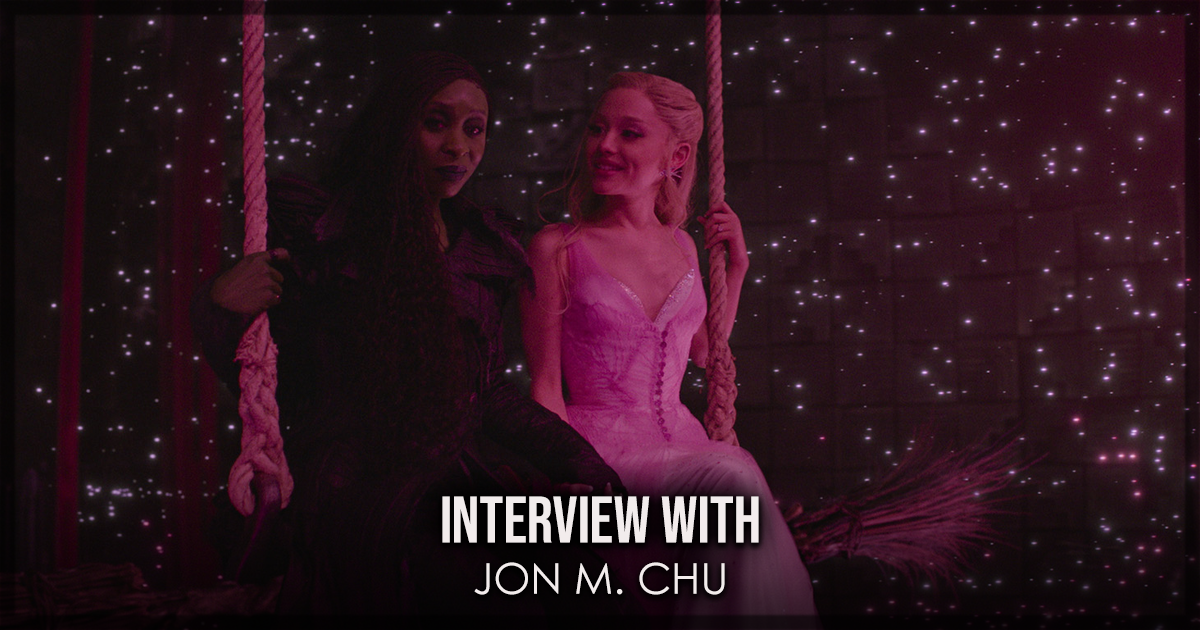
Directed by Jon M. Chu, the Hollywood veteran adapted the musical after a long period of creative limbo. For ten years, producers attempted to adapt the hit play into a film, and Chu finally succeeded. The director already has a history with musical cinema. He adapted Lin-Manuel Miranda’s In The Heights, followed Justin Bieber’s hit tour in the documentary Never Say Never, and debuted in feature filmmaking with Step Up 2: The Streets. Besides the musical-themed films, Chu also helmed the massive hit Crazy Rich Asians and Now You See Me 2, the second film of the beloved franchise. Movies We Texted About had the opportunity to exclusively talk with the director about the challenges of filming both parts together and the massive sets designed by Academy Award winner Nathan Crowley. Read our Zoom conversation with him below:
The Interview with Director Jon M. Chu of ‘Wicked: For Good‘
Pedro Lima: Hi, John. Nice seeing you again.
Jon M. Chu: Nice seeing you.
Pedro Lima: We met in São Paulo. (at the Wicked: For Good world premiere)
Jon M. Chu: Yes.
Pedro Lima: First, you mentioned that both parts of the musical were shot together; I would like to know how the pre-production process was. Did you do the first part, then ‘For Good’, or did you do it all at once?
Jon M. Chu: Oh, we had to get everything done all at once, not just for the budget reasons, so people understood how much money we were actually going to spend and how big a bet this was. But we had to get buildings started. If we were actually building these huge sets like Emerald City, like her (Glinda’s) private suite, like Munchkinland, which we actually built, that had to start months and months and months and months before. It was planting 9 million tulips that had to happen a season before to be ready for us. And so that was a major component of building this world.
Pedro Lima: You just mentioned that Nathan Crowley’s sets were of a grandeur that is different from anything you’ve seen before. What were some of the challenges for you as a director to capture in these massive stages?
Jon M. Chu: So I will also go back a little bit. I’m not sure I fully answered your first question, too, so I’ll sort of tie them together. But the prep was huge on both of these movies because they were shot at the same time, which meant we had to have whatever, 20-something musical numbers already choreographed and rehearsed by not just a skeleton crew, but the actors themselves. So we knew what they were doing. The costumes had to understand how they (actors) were moving so that the shoes and floors could match. Our cinematographer needed to know. So we needed to know what kinds of lenses and equipment we refer to. The girls needed to understand this music. Everybody had to understand the scenes and what they meant to them so that the music and movement could play into that. Then the sets had to be built around.
Jon M. Chu: So this was before we shot any one frame of both movies. We had a good nine months to get everything ready and prepped in that way so that when we started, we would leave enough room. So while we’re shooting, we’re finding all the little nuances that the movie starts to take on, and that actually happened a lot. Things like the closet scene or moments in the suite where they first meet together, we had enough freedom to create those moments there. Now, in terms of production design, that was just a massive effort. We knew that from the very beginning. We wanted this to feel like you were touching Oz. If we were going to ask the audience to believe in real emotions and real stakes, emotional stakes, not the stakes from the political side of it, but the emotional stakes of this friendship, then it had to feel like a very real place.
Jon M. Chu: The threats had to feel very real. Them (Glinda and Elphaba) being pulled apart had to feel very real. And so that meant the place had to feel (real), it couldn’t feel digital. And so, even the recommendation from the VFX people was: build as much as you can, get up to 40 feet if you can. So that it’s just about finishing things. It’s not about building things. And that combination was really helpful for us. It made the movie feel as cinematic as possible, as grand an event that you need to see in the theater. But also, we could be really intimate and find the little weird areas and corners that you can’t just make up. That just happened because the set is there, and Nathan Crowley and his team are just amazing at creating that. And nothing could be off the shelf when we’re in a whole new world. So everything had to be as if we were on another planet, and that’s a lot. From the chairs to the forks, to the pieces of paper, to the fonts, every single thing had to be considered. The amount of detail is stunning, and it shows in the girls’ acting. It is amazing what Ari and Cynthia do. This is when people say they feel the movie, it’s because of them, they are not giving any sort of facade. They are giving us real truths in their performances.
Pedro Lima: Thank you so much, Jon. Congratulations on the film.
Jon M. Chu: Thank you very much.
Wicked: For Good is now in theaters.
Learn more about Wicked: For Good on its official website.
You might also like…