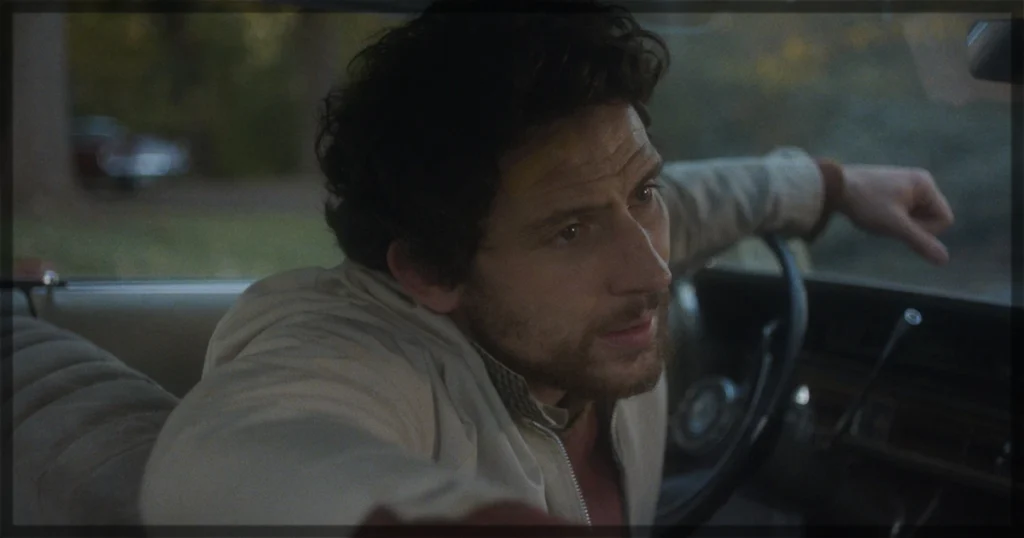
Whereas Kelly Reichardt’s latest indie fare The Mastermind, a character study of an arguably decent criminal shot 1970s-style, starring the brilliant and now ubiquitous Josh O’Connor, tersely eviscerates our notion of a crime/heist movie — though the resulting picture feels rather coiled — Gus Van Sant’s comeback feature Dead Man’s Wire, another character study doubling as an adaptation of a real-life hostage standoff in Indianapolis in 1977, follows a straighter line as far as hostage thrillers go, but doesn’t exactly adhere to the cold hard facts already assembled in the 2018 documentary Dead Man’s Line by Alan Berry and Mark Enochs, who both worked closely with screenwriter Austin Kolodney as historical consultants.
One can readily sense some Dog Day Afternoon here (for one, it has Al Pacino, though he’s playing a character on the other end of the spectrum), but the film’s true-crime relevance also takes us back to the streets of New York, where Luigi Mangione, in an incident that rocked America and the world for all the right and wrong reasons, shot a pharmaceutical executive in December last year. Which is to say, this is as much a movie about capitalist America today as it is about the late ‘70s.
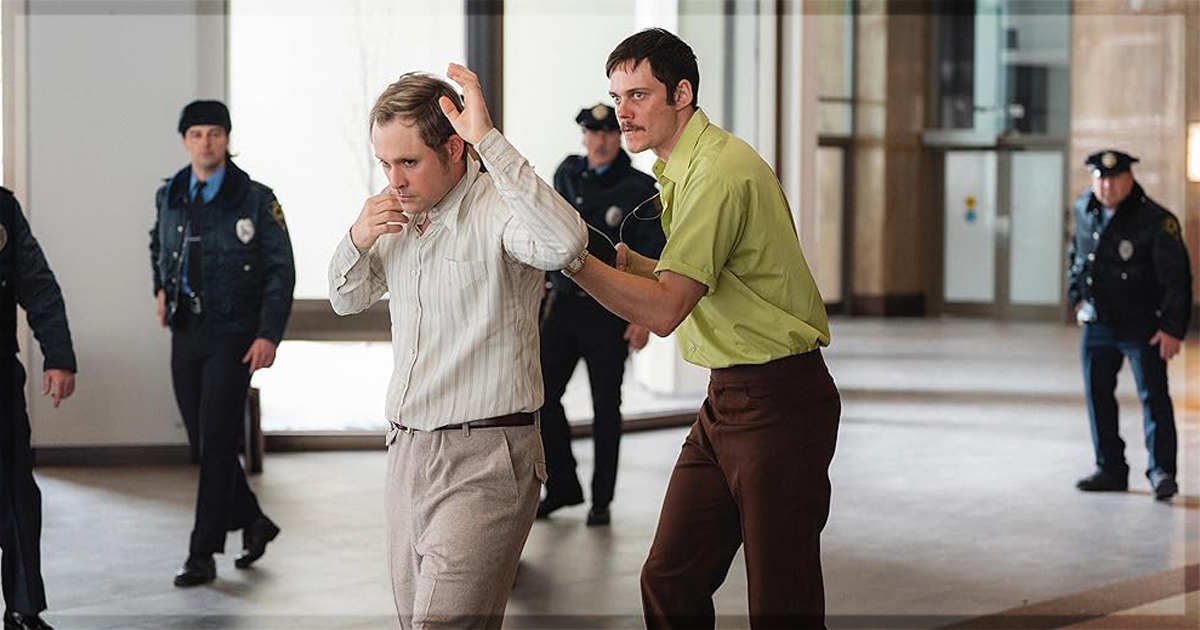
The movie’s antihero is Tony Kiritsis (played by the underrated yet always effective Bill Skarsgård), an aggrieved businessman who entered the Meridian Mortgage premises one Tuesday morning in February 1977 and took his broker Richard “Dick” Hall (Dacre Montgomery, of Stranger Things) captive by wiring the muzzle of a shotgun to the latter’s neck. Tony, it turns out, took loans to acquire and develop a lucrative plot of land into a shopping center, a business venture that Meridian, allegedly, systematically blocked him to achieve by milking him of interest and deterring potential shopping-mall renters; it’s a classic story of robbing somebody blind. As the standoff unravels, Tony lists his demands: a debt write-off and financial compensation, immunity, and a formal apology from the mortgage company and the Big Man himself, M.L. Hall (Pacino), who’s on vacation on the day of the kidnapping.
Tony eventually dragged Dick to his Indianapolis apartment, which could explode at any moment, and holed up there for 63 grueling hours, drawing the attention of higher officials, local cops, and news reporters, including the sidelined and young Linda Page (Industry star Myha’la), who seizes the opportunity by insisting that she and her cameraman cover the beat despite its scale; the movie, in a curious move, presents Linda’s reports alongside archival news footage recalling the actual hostage incident. There’s also the local radio DJ Fred Temple (played fascinatingly by Colman Domingo), whose smooth voice, set against a jazzy score, cools the unpredictable gunman — and whose broadcasts, at the same time, work as an excellent scaffold for Van Sant to ennoble the proceedings, as Fred doubles as a conflict negotiator while the group of cops and federal officers try to devise a plan to take control of the situation.
Skarsgård is, undoubtedly, the main event in the film. He plays Tony with an equal amount of panic, frustration, and humor but also with working-class humility that would want you to put his simple yet very familiar story to air, primetime, even though he wouldn’t really want all this attention had he been treated justly. Skarsgård’s understated brilliance makes apparent the power dynamics between the poor man and the wealthy executives, which he tries to invert even just for a brief moment, for some short-lived sense of justice — and whether we end up hating or adoring him, we live vicariously through him anyway. At its core, Dead Man’s Wire is a poignant picture of capitalist disillusionment, which also functions as an undeniable paean to the bygone era of hostage thrillers, hence its genre trappings.
Dead Man’s Wire is now in limited theaters.
Learn more about the film at the IMDB site for the title.
You might also like….