Writing about James Cameron (Titanic) is always an exercise in managing expectations. It’s a precarious balance between recognizing his technical genius and the hope, sometimes frustrated, that the narrative can keep up with the visual evolution. When Avatar: The Way of Water hit theaters thirteen years after the original production, it was relatively easy to “forgive” a structurally familiar story in favor of an unprecedented sensorial experience. Now, with the arrival of Avatar: Fire and Ash, my curiosity was centered on the promise of a darker Pandora, where the elements that give the sequel its title would replace the serenity of the waters.
As a close follower of Cameron‘s career, from the days of The Terminator to the cinematic revolution of 2009, I entered the IMAX screening with an open mind, hoping this third chapter would deepen the open wounds of the previous “episode” and take me down less-traveled paths. However, what I found was a filmmaker who seems to have become stuck in his own creation, delivering a project that, while visually arresting, feels dangerously stagnant.
In Avatar: Fire and Ash, directed once again by Cameron and written again by himself alongside Rick Jaffa and Amanda Silver (Mulan), we return to the Sully family. Jake (Sam Worthington, Clash of the Titans) and Neytiri (Zoe Saldaña, Guardians of the Galaxy) are now trying to find a new balance after the devastating loss of their eldest son, Neteyam. The human threat persists through Colonel Miles Quaritch (Stephen Lang, Don’t Breathe), who continues his obsessive pursuit, but the big news comes with the introduction of the Mangkwan clan, also known as the Ash People. This group of Na’vi, led by the fierce and enigmatic Varang (Oona Chaplin, Game of Thrones), presents a much more aggressive and nihilistic view of Pandora, challenging the spiritual beliefs we’ve known until now.
The first major obstacle I encountered in Avatar: Fire and Ash was the characters’ decision-making, particularly at the beginning of the movie. It’s truly baffling the number of moments in the first act that are based on choices devoid of any logic, serving only the purpose of forcing artificial conflicts. Lo’ak (Britain Dalton, Ready Player One) is, without a doubt, the main vehicle for these inconsistencies. While I understand the need for rebellion in a young man looking for his place in the world, the decisions he makes suffer immensely from a lack of even a minimum of common sense, making it difficult to maintain empathy. Whether it’s completely ignoring the protection of his sisters or his father’s basic orders — Lo’ak forgets to use his communication device around his neck twice in less than five minutes, even after an entire dialogue about it — everything culminates in a truly confusing scene that finally puts the young man in a position where he can show what he’s capable of… only for him to question why it has to be him to save the day, contradicting one of his main motivations.
Watching experienced figures fall into obvious traps or ignore basic dangers just so the story can advance to the next action point is something that pulled me out of the audiovisual immersion several times. There’s a constant feeling that plot points happen because “it’s written in the script” and not because there’s an internal, thematic, or narrative motivation that justifies them. It’s the kind of writing that privileges spectacle over organic coherence and, therefore, especially in a production of this scale, ends up wearing down the viewer’s patience.
The structure of Avatar: Fire and Ash is, again, an issue. This time, Cameron and his screenwriters unashamedly rehash entire sequences from the previous two iterations. If in Avatar: The Way of Water I had already felt a certain repetition of the original formula — with the important difference that there are, in fact, new characters, arcs, and storylines — this third project elevates that recycling to an almost unsustainable level. During the first two hours, I found myself in a nearly beat-for-beat reiteration of the second film’s structure: the escape, the adaptation to a new environment, the exploration of new wildlife, and the inevitable conflict that arises from discovery. The only difference is that instead of the Sully family going through all these points, it’s Quaritch who has to get used to the culture of the Ash People.
The movie goes as far as replicating camera angles, specific dialogue, and even combat choreography. Lo’ak once again finds himself in danger underwater, hiding in corals, losing his breath, and being saved at the last second by another character in a moment that seems to have been taken directly from the 2022 flick without any shame. There’s a complete sequence of a Tulkun hunt with exactly the same timing and visuals. Spider (Jack Champion, Scream VI) is captured and imprisoned in a lab again to have a conversation with Quaritch that’s highly identical to the previous record. Kiri (Sigourney Weaver, Alien) connects with Eywa again, despite the numerous times characters mention that she’ll die if she does it again. Tuk (Trinity Jo-Li Bliss, The Life of Chuck) continues to serve merely as a plot device to be kidnapped over and over again without adding anything to the narrative or even to another character’s arc. This lack of narrative novelty makes the extensive duration of this journey, something that never bothered me in the previous films, feel genuinely heavy and difficult to digest.
The dynamic between Jake and Lo’ak is another point of deep frustration. Their path in these last two features is practically identical. Jake remains the authoritarian father who’s unable to see his son as a valuable and trustworthy member, while Lo’ak continues to fail to obtain paternal validation, regardless of his achievements. It’s a repetitive and endless cycle of “don’t leave your post,” Lo’ak leaves; “protect your sisters,” Lo’ak leaves them alone; “Payakan isn’t a bad Tulkun, believe me,” Jake doesn’t believe him and reprimands him. This relational conflict eventually reaches the predictable outcome, but it’s a surprisingly unearned resolution. The reason that leads Jake to finally “see” his son is, at the very least, problematic, as he chooses to value a secondary and less relevant action involving other figures instead of recognizing the countless moments of real growth the boy has shown before. It’s an emotional climax that rings hollow and an attempt to close a door that was kept open for too long without solid development to support it.
Despite these structural flaws, there are moments where the themes of Avatar: Fire and Ash manage to shine, especially when focusing on pain and grief through the duality between destruction and purification, personified by the element of fire. Neytiri remains, by far, the most complete and fascinating character of the entire saga. Saldaña‘s interpretation is exceptional: her expressiveness and the way she transmits pain through agonizing screams are enough to give anyone chills. Her arc is painful to observe, as we follow a mother who, consumed by the loss of Neteyam and her original home, begins to mirror the very cruelty of the RDA. She’s no longer just defending her family; she’s hunting like the humans she hates so much, which generates a deep spiritual crisis about her connection to the forest and Eywa. It’s in this exploration of inner darkness that the film finds its most authentic and personal voice, away from the explosions and high-end technology.
Kiri also receives a more careful treatment in this chapter. If in the previous movie the character seemed to be just a narrative tool, here her connection to Eywa is developed and explained in a way I found genuinely beautiful. The concept of “divine isolation” — the realization that being a conduit for the divinity means carrying both the world’s beauty and its immense suffering — is one of the highlights of Avatar: Fire and Ash. Her relationship with Spider also serves to humanize this spiritual burden, although he remains an individual limited by a script that traps him in a conflicted and confusing relationship with Quaritch. This bond between father and son, which had so much potential to explore the heritage of evil, ends with a disappointing outcome, without an evolution that seems organic or transformative. Quaritch, for his part, enters a cycle of spinning wheels: he captures Jake several times and doesn’t kill him, changes sides depending on the convenience of the scene, and ends his journey in this film in an inconclusive manner. Throughout these titles, his arc has been spinning and spinning without evolving into something truly new.
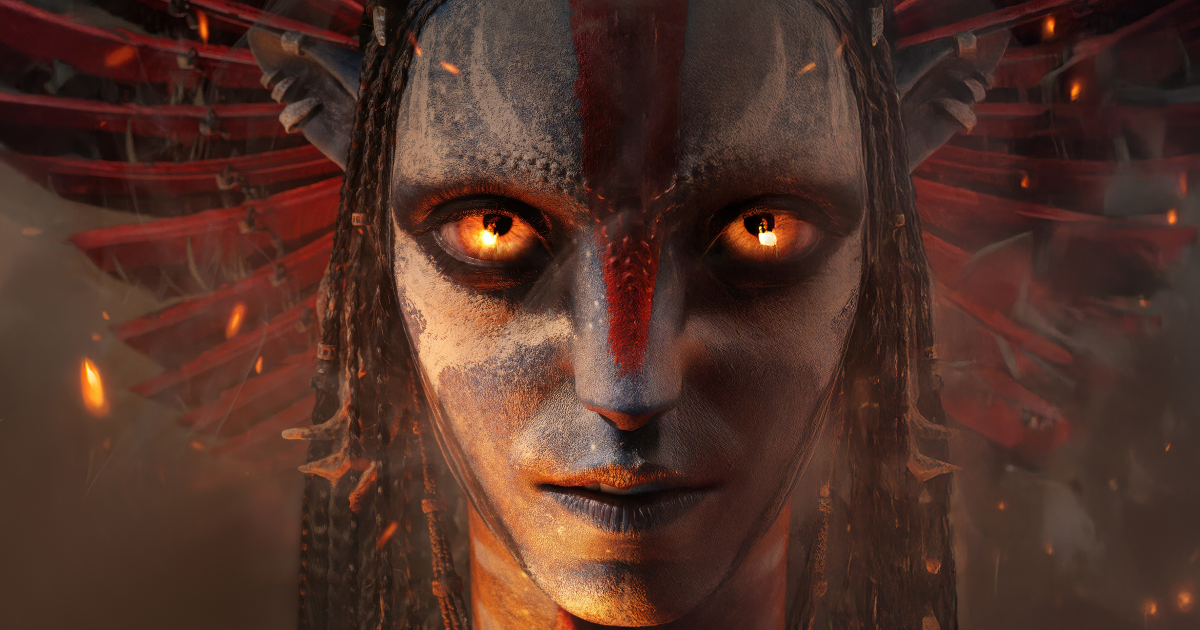
The introduction of Varang and the Mangkwan clan brought a breath of fresh air in terms of antagonist presence. Chaplin delivers a diabolical and menacing performance, elevating a character who was hardened by tragedy. Varang offers an alternative religious view of Eywa, a much more aggressive perspective that would have been incredibly interesting to explore deeply. Unfortunately, Avatar: Fire and Ash chooses to shift the focus of that spiritual motivation to a strange plot of seduction and erratic behavior with Quaritch involving guns, sex, and Na’vi cocaine. It’s a missed opportunity to deepen Pandora’s mythology through an internal conflict of beliefs, something that would have been much more valuable than the constant pursuits and hostage situations. In fact, it’s exasperating how almost all action scenes depend on the same device: someone is captured, held hostage, and eventually released only to be captured again a few minutes later — Tuk, as mentioned before, is the big champion in this category.
Visually, Avatar: Fire and Ash is, as expected, an absolute triumph. Cameron continues to prove that he’s the only filmmaker capable of using 3D and HFR in a way that actually adds something special and highly engaging to the cinematic experience, even if in occasional moments the excessive fluidity gives the blockbuster a bit of a video game look. The consistency of the visual effects is extraordinary, and the motion-capture performances are of an expressiveness that makes us forget the digital barrier between the actor and the character. The close-ups on the Na’vi faces remain the most immersive aspect for me, capturing micro-expressions that sell the emotional reality of Pandora in a way the script often fails to achieve. That said, the novelty factor has completely dissipated. The absolute wonder at the landscape is no longer there, although I felt several chills in phenomenal audiovisual passages. The first big set piece with the Windtraders and the introduction of the Ash People is a standout moment, as is a rescue attempt carried out by Neytiri that demonstrates all of Cameron‘s mastery in staging high-adrenaline sequences.
The score by Simon Franglen (The Magnificent Seven) also deserves a shoutout. While I consider the original music by the late James Horner to be unsurpassed, Franglen managed to deliver his best work in the saga here when it comes to action moments. The music is epic, loaded with layers that elevate the tension of these sequences and make the heart beat faster during moments of confrontation. It’s an arrangement that brings those truly cinematic melodies to the big screen and leaves me genuinely excited. It’s a shame the story doesn’t keep up with this pace…
Cameron has always been a master at bringing the viewer back to the film, even if we’re bothered by narrative issues, through set pieces of pure audiovisual madness that restore hope. Lamentably, this time, the visuals alone cannot sustain the movie in its entirety. A third act that mixes the conclusions of the two previous installments and focuses too much on simply multiplying the already known action elements — more ships, more Tulkun, more Na’vi, more Ikran, more submarines, more animals, more explosions — instead of bringing a truly impactful climax on a narrative level. Yes, it gives you chills. Yes, it increases the scale of the blockbuster even more. Yes, it’s a finale full of action and everything the saga fans desire. But, in the end, it’s simply not enough.
Final Thoughts on Avatar: Fire and Ash
Avatar: Fire and Ash leaves me with mixed feelings of technical admiration and creative exhaustion. It’s a film that lives off its scale, scope, and technical audacity but fails to take the step forward the narrative required to become memorable on its own merit. Cinema cannot just be a technology demonstration; it needs characters whose journeys we feel as our own, themes that are explored in depth, and stories that aren’t limited to repeating past successes. There are fascinating ideas here, from Neytiri’s grief to Kiri’s divine isolation and Varang’s antagonistic beliefs, but they’re lost under a cynical structure and unjustified plot decisions that make the experience truly frustrating. The lack of clarity about the fate of certain characters and the stagnation of some arcs make me fear that the next movies will follow the same path. James Cameron is an undeniable visionary, but he seems to have forgotten that for a flame to keep burning brightly, it needs new fuel and not just the ashes of yesterday.
Rating: C
Avatar: Fire and Ash is now playing in theaters.
Learn more about the film, including how to buy tickets, at the official website for the title.
You might also like…