
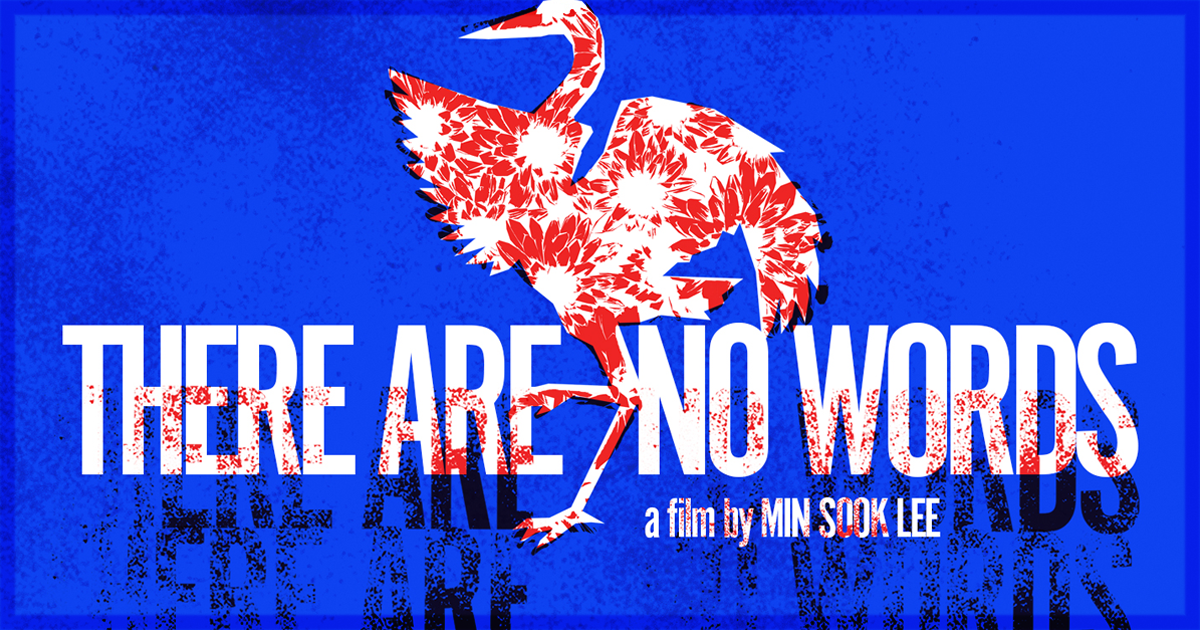
Min Sook Lee is a veteran of the Canadian documentary filmmaking. With a history of producing documentaries since 2003, the South Korean-born and Toronto-raised director has a strong background in non-fiction. Since her debut, Sook Lee has released other films, such as Hogtown: The Politics of Policing, Tiger Spirit, and Migrant Dreams, which have all premiered at the Toronto iconic documentary festival, Hot Docs. It has been nine years since the director released her last work, Migrant, which approached her South Korean roots. After almost a decade, she continues to delve into her origin, more precisely, into her traumas. In There Are No Words, the director studies her mother’s life until the moment of her suicide, which occurred when the director was twelve years old. Therefore, she tries to rebuild a long-gone memory corrupted by the trauma and pain of loss.
Similar to works like Dick Johnson is Dead by Kirsten Johnson, the inception of the project ranges from conversations between the director and her father. In the introduction, Sook Lee establishes that she has an emotional distance from her dad, predominantly due to his prior life. Yet, she narrates the importance of the COVID-19 pandemic as a reconnection point to her father, who is ninety years old, and needs her assistance to live. Consequently, There Are No Words births into the urgency of rescuing the oral anecdotes about her gone mother. The director understands that as soon as her dad perishes, the stories do too. In a sense, the film is a healing tool for over forty years of unmedicated pain. As a teenager, Sook Lee would not understand the underlying suffering of her mother within the maternal figure, something the director assimilated as she became a mother. Thus, the film is a documentary that has been in pre-production for almost four decades, awaiting the perfect opportunity to pitch, research, and immortalize those stories.
Firstly, the director attempts to contextualize the relationship between her and her father. In a sense, there is a complex background to the central investigation in Sook Lee’s film; however, the audience needs to understand an intricate thread of events and interactions that led to her mother’s death and her own trauma. In this sense, South Korea becomes the starting point to narrate the story, and the director must return home to navigate the profound intricacies of her parents’ story. In the first order, the director exposes the post-war of Korea scenario: two different Koreas, different leaderships, and an intelligence battle between the South and the People’s Republic of Korea. Her father was a member of the Korean Counterintelligence Corps (KCIC), a government organization responsible for supervising the other intelligence forces, including the Korean Central Intelligence Agency (KCIA). Hence, her dad was a crucial member of law enforcement in the 1960s, in a dictatorial context, and in a truculent relationship between the two Koreas. This background unveils his belief in solving conflicts through force, employing the roughness in his personal life, including the usual beating of his wife and children.
Furthermore, the film is an exercise of remembrance to the director, whose mind erased crucial details about her mother’s life, and traumatic events surround them. The day of the suicide is a partial memory to her, which she requires her childhood best friend to help her construct a vision of that day, and of her mother. In this sense, There Are No Words is essentially a film about memory. The far-gone one and the reconstructed one, which combined, paint the canvas of the director’s curiosity.
Like other diary documentaries, Sook Lee rewrites her history as soon as she hears from her father, her best friend, and known people from Toronto and South Korea. The structure orbits the oral stories to combine with the limited photographs of her mother, rarely smiling, which resemble that era. Hence, the director uses the filmic composition to express her feelings and to fulfill the archival void left by her deceased mother. Consequently, her body is an object to convey the ongoing grief, which started forty years ago, and still rings. Poetically, Sook Lee sits in the middle of the vacant lot that was once her parents’ convenience store. She is the only element left from that place, once the shop, and her mother have been gone for a long time, leaving her stuck in the middle of her pain.
In There Are No Words, Min Sook Lee confronts her father about her mother’s depression and suffering, which she put an end to. However, the melancholy and pain of that decision bear on a wounded director, who writes her version of her mother through the film possibilities, and attempts to heal the unresolved pendencies left by her passage.
There Are No Words recently premiered at the Toronto International Film Festival.
Learn more about the film at the official TIFF site for the title.
You might also like…

‘While The Green Grass Grows: A Diary in Seven Parts’ Film Review: An Intense Odyssey from Peter Mettler