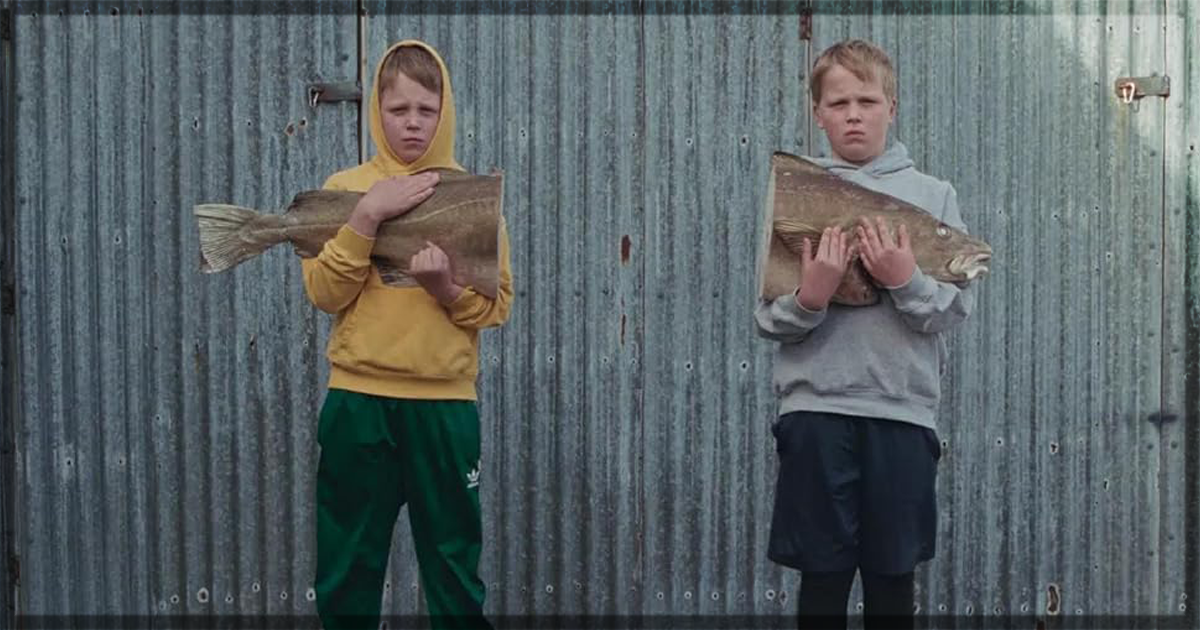
The Icelandic director Hlynur Pálmason is one of the most fascinating voices in the current European cinema. Known for his 2022 film Godland (Vanskabte land), a project about a young Danish priest traveling to the remote parts of Iceland. It premiered at that year’s Un Certain Regard of the Cannes Film Festival and was the country’s submission for the 2023 Academy Awards in the Best International Feature category. Three years later, the young talent from the small country returns with a new project, The Love That Remains (Ástin sem eftir er). Navigating the life of a family throughout a year, it follows the aftermath of a couple’s divorce, Anna (Saga Garðarsdóttir) and Magnús (Sverrir Gudnason). Hence, the director aims his lens at the impact of the family’s structure on their three children: Ída (Ída Mekkín Hlynsdóttir), Þorgils (Þorgils Hlynsson), and Grímur (Grímur Hlynsson).
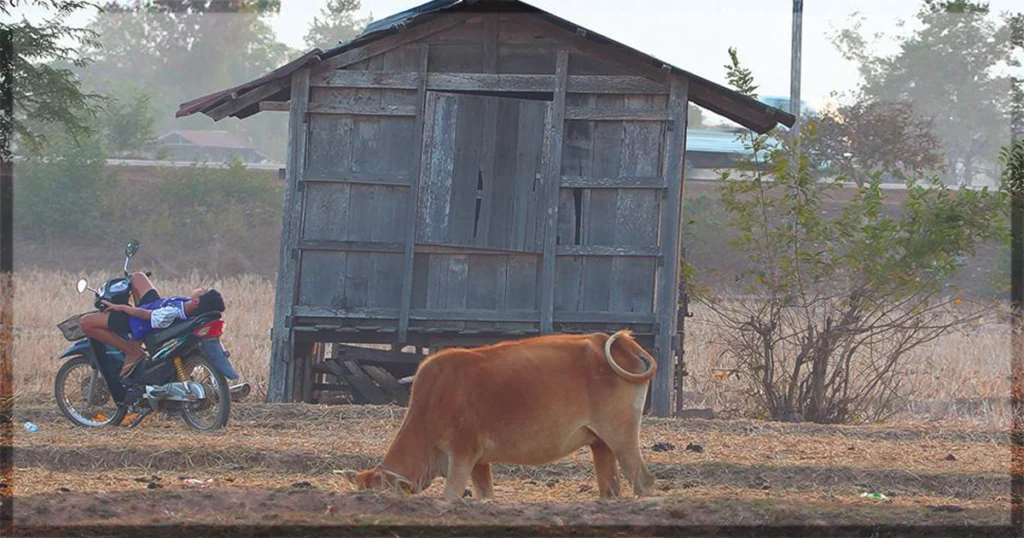
The film fascinates for its approach to the theme. Contrary to films like Noah Baumbach’s Marriage Story or Ingmar Bergman’s Scenes from a Marriage (Scener ur ett äktenskap), Pálmason aims for the life after the separation, and not for the motivations leading to it. Consequently, it is a film that elevates the weight of each moment in the character’s daily life, particularly regarding how the children live through this new dynamic. Similar to the director’s short film Nest, there is a particular realism that positions the audience closer to these individuals who have been through a tough moment. However, instead of a rigid concept of the realistic values, especially if we quote André Bazin’s notion of the realism in cinema as the transposition of truth, the audience’s eyes. The director impresses by inserting the drama into the characters’ lives through the magic realism, emulating the dreams and fantasies.
Accordingly, Pálmason’s plays with those characters’ psyches, illustrating how their minds oppose their beliefs of overcoming the pains of the break-up. An excellent example of that is the family’s picnic, when Anna jumps over Magnús, and the wind lifts her skirt. Magnús gets lost in the view of her legs, he flies away, and time freezes, defying the notions of the real time. Throughout moments that reject a common idea of divorce as a melodramatic device, such as Baumbach and Bergman did with their works. The director uses the formal structures similar to his past works, such as the wide framings from Nest and the quiet observation from Godland. Yet, the introduction of the magical realism device allows him to experiment within the limits of his own filmography. One of those magical blocks is the children building a knight in a land owned by their family. The creature, named Joan d’Arc, the exact name of the French martyr, comes to life. It even stars in a spin-off project, Joan of Arc, on the construction of it throughout cuts that simulate a time-lapse.
In this sense, the director, who is also the cinematographer, addresses the realism through a colder color palette that extracts the texture from its 35mm film work. Then, whether the scene is inside the house, which feels bloated and chaotic due to three children filled with energy running around, there is a fascinating composition of the colors, ranging from a washed-out yellow to tones of grey. Palmáson supports the idea of being a more visual than textual filmmaker. However, he elevates the compositions, blocking, and his misé-en-scene to another level, combining the best elements of his short and feature works. But the combination of an engaging story on the reconstruction of the life after a long period with someone. The director understands the difficulties of the post-divorce dynamics. Saga Garðarsdóttir and Sverrir Gudnason offer contrasting approaches to those characters, with Anna being the rational one, focusing on the children and her career as an artist. Magnús feels the distancing and the lack of Anna in his life, suffering with lapses of his conscience in the reality, being present in most of the magic realism scenes.
Ultimately, Palmáson’s latest is more of a Nest rather than Godland, exercising the use of the Icelandic landscapes as the background to the realism for those characters. Yet, he reaches his most inspired moment as a filmmaker, demonstrating an impressive ability to compose images and moments that deal with divorce in a way that differs from the usual melodramatic approach. The Love That Remains (Ástin sem eftir er) is the combination of his interest in the observation of those characters, even generating a feature about the construction of the creature, but using the best ideas of magic realism to emotionally impact even more, an already fascinating project, landing as one of the best projects of 2025.
The Love That Remains (Ástin sem eftir er) will be in theaters on January 30, 2026.
Learn more about the film at the IMDB site for the title.
You might also like…