
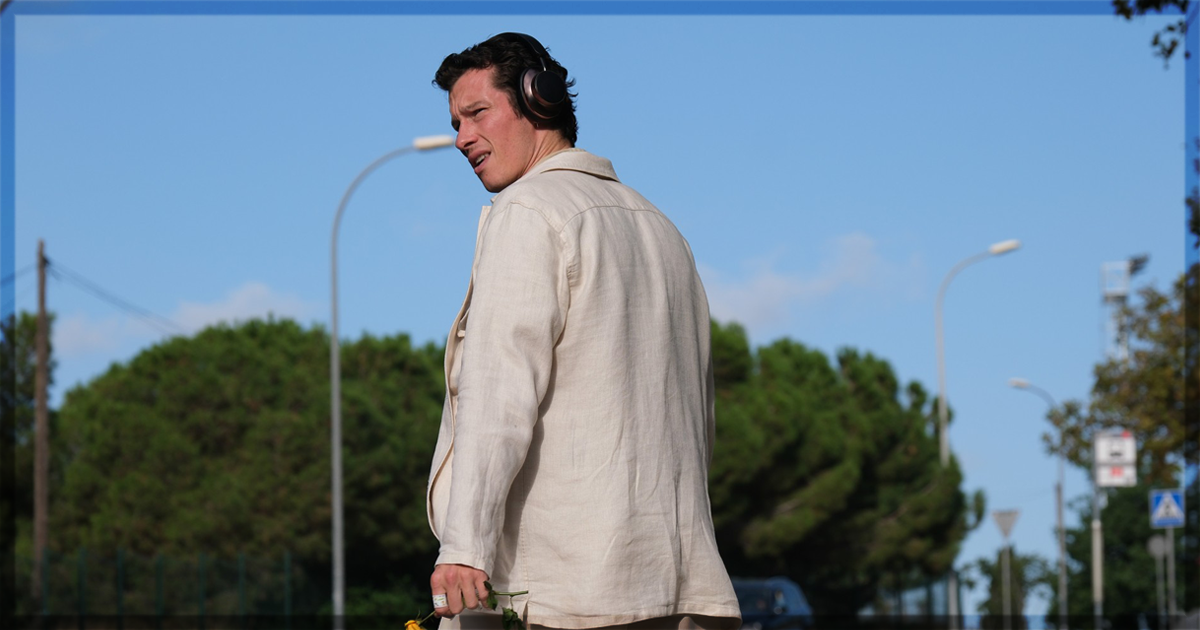
I think we can blame the English royal family. When TV shows like Succession, The Righteous Gemstones and Yellowstone decide to examine the interpersonal struggle for power within an unbelievable wealthy family, they’ve all worked from the same template: tyrannical father and absent or dead mother with three sons and one daughter. This precise family dynamic, which is now past cliché, has been replicated in Rosebush Pruning, meant to be a modern fairy tale about a horrible and horribly wealthy family. Unfortunately it has all of the spite required for a moralistic bedtime story but not one ounce of the charm.
They are Americans who live in the modern equivalent of a castle: an enormous remote modernist house in the mountains overlooking the Spanish coast. The father (Tracy Letts) is blind and the mother (Pamela Anderson) was torn limb from limb by wolves a few years ago. This laughable story is believed by the adult children, Jack (Jamie Bell), Anna (Riley Keough), Edward the narrator (Callum Turner) and Rob (Lukas Gage). The family is so wealthy no one needs to work, so everyone lounges around in designer clothing making worrisome sexualised compliments to each other. They are aware they are vapid, selfish, pointless people but self-awareness is not a saving grace. Edward likes to make up aphorisms and the title is based on one of his comparing families to flowers, and how unchecked growth harms instead of hurts. Jack is the only one with a semblance of a normal life; he can drive and has got a car (call Shania Twain!) and is dating a guitar student living in the city, the orphaned American Martha (Elle Fanning). They are considering moving in together but Jack doesn’t like the modernist palaces Martha prefers, and she refuses to beg him for the basics. Obviously this will all end well.
Director Karim Aïnouz is extremely good at using sound, and the way the siblings use music to drown out their intense and intensely unpleasant thoughts is clever indeed. Hélène Louvart’s cinematography also has a wonderful time finding the right angle to highlight the wrongness of the pampered isolation here. But this story of vapid, selfish, pointless people is vapid, selfish and pointless itself. To tell a tasteless story tastefully is quite an achievement but it’s the wrong one. If we were meant to goggle at their splendour they should be having a better time, or at least doing more than sunbathing and being weird to each other. If we were meant to enjoy their comeuppances, or at the very least be amused by them, then the choice to hold back on the gore for once is the wrong one.
Writer Efthimis Filippou, who loosely adapted an Italian film from 1965 for this, evidently was trying to write grand guignol without any sex or violence being shown onscreen, although all the implications are more than enough. Everyone involved must be congratulated for getting financing for the kind of student exercise most people have to good sense to discard the moment they grow up. And of course the actors took their parts – it’s a lot of fun to behave badly onscreen, and it must have been a massive challenge for their skills to make anything here believable – but again, once you’re out of diapers no one should praise you for using the potty. It’s impossible to say if any of the performances are good or not because there’s no genuine human feeling of any kind here, by slow and deliberate design.
It’s irritating to realise that a movie allegedly about eating the rich doesn’t even have the manners to hate them first. It’s all just an empty roundelay, a journey to absolutely nowhere, a total waste of everyone’s time. After reading this you might think you need to see Rosebush Pruning for yourself because you don’t believe it could be as bad as all that. If you do, you’ll only be hurting yourself.
Rosebush Pruning recently played at the Berlin International Film Festival.
Learn more about the film at the Berlin site for the title.
You might also like…
‘Good Luck, Have Fun, Don’t Die’ is a Gonzo Thrill Ride (Berlinale 2026 Film Review)