Playing out of competition at the 2025 Locarno Film Festival, Nova ‘78, from the directing duo of Aaron Brookner and Rodrigo Areias, functions both as a moving paean to the enduring greatness of eminent writer and iconoclast William S. Burroughs (1914-1997) and an electrifying snapshot of a bygone period of artistic subversiveness.
The 80-minute documentary follows the three-day multimedia event curiously titled The Nova Convention, which took place in the fall of 1978 in New York. The convention was the brainchild of writer and editor James Grauerholz, poet and performance artist John Giorno, and literary critic and thinker Sylvère Lotringer to honor the boundless genius and legacy of Burroughs, the prolific Beat Generation author, alongside the likes of Jack Kerouac and Allen Ginsberg, who later shaped the counterculture of the 1960s.
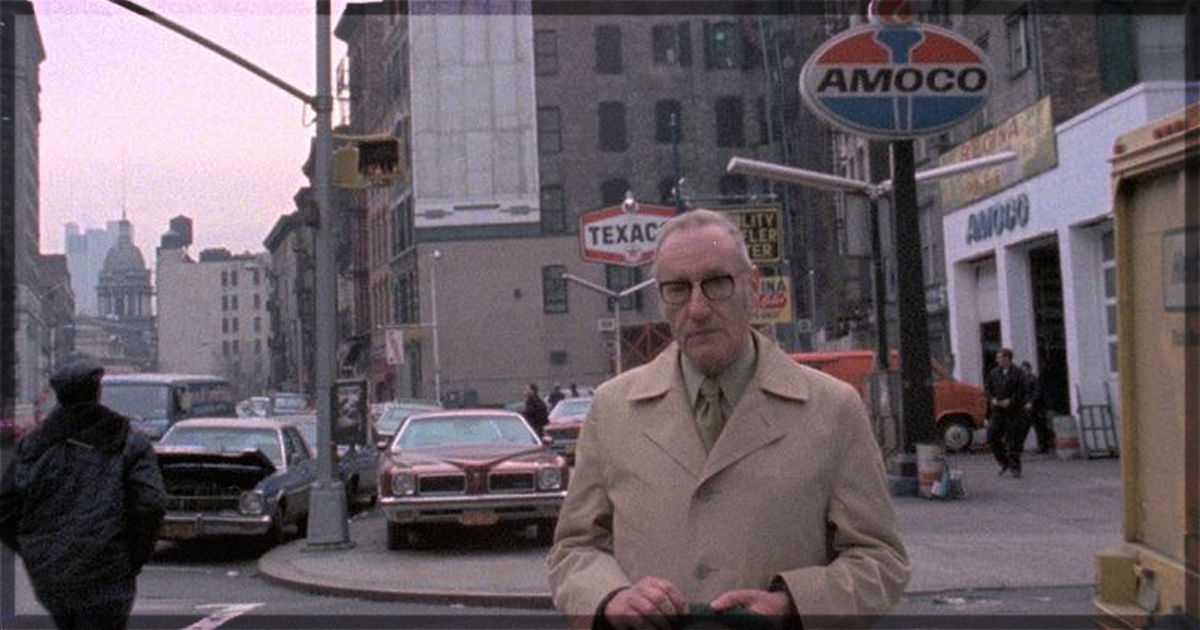
Initially lost for decades, the 1978 footage shot by the late filmmaker Howard Brookner (1954-1989), Aaron’s uncle, was rediscovered and restored between 2012 and 2024. What results is an immersive picture seemingly bent on resurrecting present-day New York’s subculture spirit by invoking the specters of the past, which is essentially the third iteration of Aaron’s exploration of Howard and Burroughs’ ties with each other, after updating Howard’s 1983 Burroughs doc-portrait Burroughs: The Movie for a 2014 rerelease, and working on the more intimate 2016 documentary Uncle Howard.
What the Nova Convention actually entails is intentionally rendered a bit vague at first. And it is only around the 25-minute mark that the film attempts to shed light on just what it is about. “This is the space age, and we are here to go,” explains Burroughs (introduced by novelist and screenwriter Terry Southern as “grand, groovy and beloved”), before waxing philosophical about space travel and exploration as the future of mankind, about seeking new dimensions — and perhaps he meant not just physical space but the kind provided by art that disrupts and breaks away from what he coins as “the aqualung of time.” Transgressive, avant-garde art as the future. “Now, I postulate that the function of art and, in fact, creation in the widest sense, including science, pure science, is to make us aware of what we know and don’t know that we know,” reads Burroughs from a piece called “Sex and Death” in an earlier section of the documentary.
Surely, Nova ‘78 exists in that register: an exploration of various forms of creation, from the familiar to the outright bizarre. There are musical and dance performances, alongside poetry readings, panel discussions, and manifestations of admiration for the influential writer at the heart of the convention. The performances, at times, tend to feel lacking and push you to draw your attention elsewhere, but often they are rousing in their eccentricity. In one of the documentary’s highlights, there is composer Philip Glass playing strange, almost retrofuturistic sounds on keys that sort of put you in a trance (which the audience apparently disliked at the time, though the film glosses over that part altogether), peppered with images of New York’s immediate surroundings.
There is also poet and The Fugs member Ed Sanders performing a poem/track entitled “Uranian Willy” aided by a sound modulation device attached to his fingers, making his voice feel fascinatingly alien. The musician Frank Zappa, meanwhile, reads an excerpt from Burroughs’ Naked Lunch, despite his aversion to reading. But perhaps the most exciting of all is the appearance of the legendary punk-rock figure Patti Smith, who, alongside Lenny Kaye, dedicates a song/poem to Jim Morrison, followed by a riveting electric guitar performance as a manifesto “to communicate with the future through sound.” Influential critic Susan Sontag and The Rolling Stones’ Keith Richards were likewise listed as participants in the convention, but they didn’t make it.
Howard’s footage chiefly focuses on the very convention and its locale, where the onstage talks and performances are intercut with brief backstage encounters and interviews with Burroughs’ beloved friends, as well as shots of the New York milieu at the time, as deftly assembled by Aaron and co-editor Tomás Baltazar, and heightened by the propulsive synth score, courtesy of Paulo Furtado, so-called The Legendary Tigerman. But beyond this, we’re provided more access to the philosophy of the movie’s subject via interviews and instances that took place outside the convention, wherein we join Burroughs during his long walks in an attempt to reveal more intimate, private parts of him, though it still leaves a lot to be desired.
As a documentary, Nova ‘78 is pretty conventional, if not insular, in its approach. It is not something exhaustive, but more of a glimpse into a significant era of artistic reinvention and experimentation, a fraction of the past that many may have forgotten by now. But what really intrigues me is how this whole fixation on space exploration and this one exchange between Burroughs and Ginsberg about Iran’s political climate at the time feel particularly prescient, considering the rise of Elon Musk and the U.S. empire’s complicity in the colonial genocide of Palestine and how it relates to its worsening relations with Iran. In this respect, Nova ‘78 is an unlikely cautionary tale about the intersection of art, power, and politics.
Nova ’78 recently played at the Locarno Film Festival.
Learn more about the documentary at the Locarno site for the title.
You might also like…

‘Juror #2’ Film Review: Eastwood’s Courtroom Morality Drama For A Simpler Time