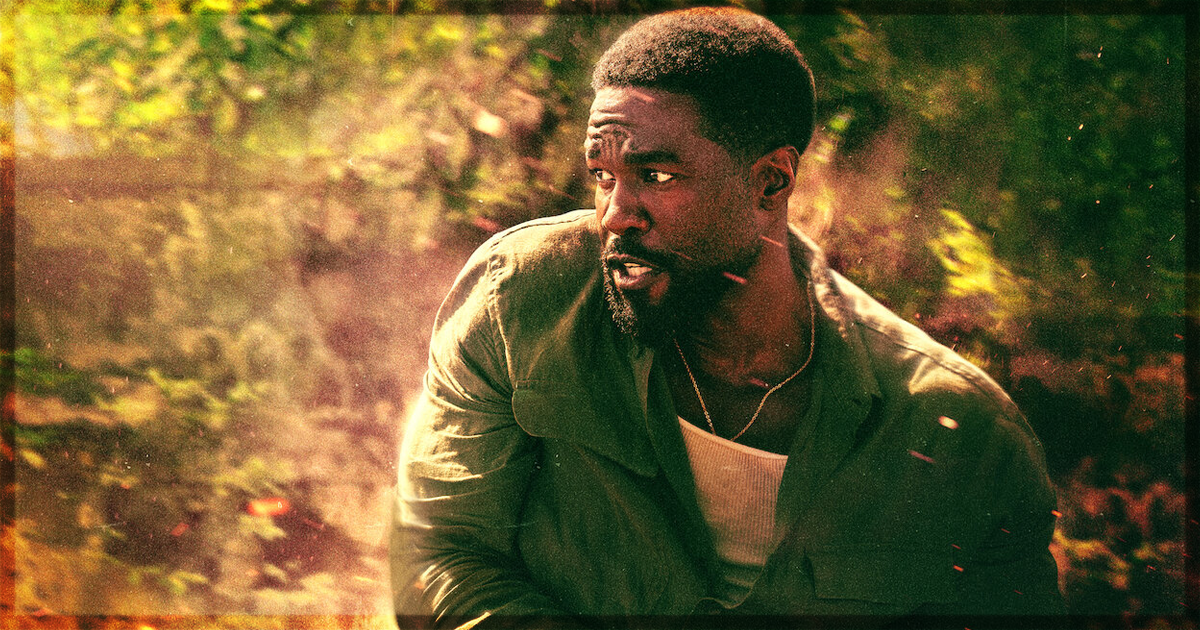
2004’s Man on Fire, starring Denzel Washington (based on a book of the same name from 1980), existed as a seminal film of its time. Twenty-four years after its release, the film has cemented its place in the action movie pantheon. In my younger film-watching years, it existed as a pinnacle in my film-loving history. That is what made me so intrigued with Netflix’s new interpretation of the story as a television series. Twenty-two years later, Man on Fire is back with Yahya Abdul-Mateen II as John Creasy.
The story of this seven-episode series follows John Creasy after his time as a Special Forces mercenary. As Creasy wrestles with life outside of the field, his fresh start is riddled with PTSD-filled tension. When an attempt to find peace is cut short, Creasy is forced back into his former role. This sends him on a path of revenge against those who wronged him. What follows is Creasy being forced back into a life he thought he had left behind. Writing this wrong involves enacting his violent skills against serious opposition.
Following in the footsteps of Denzel Washington as John Creasy is no easy feat. Thankfully, Yahya Abdul-Mateen II is more than up to the task in the titular role. Abdul-Mateen II embodies a calm composure, riddled with underlying pain. He conveys this with an undercurrent of emotion and violence. That character element is what makes the performance so exciting. When those moments of explosiveness happen, the results make for riveting television. In his portrayal, Abdul-Mateen II embodies everything to make this character a compelling hero. He’s likable, charming, and relentlessly brutal when the situation presents itself. It’s an effective combination of traits portrayed with genuine precision.
With respect to what came before, Abdul-Mateen II’s performance makes Creasy his own character. He sells the character’s emotionality, making the most of clichéd dialogue in the process. Where the performance’s real effectiveness shines brightly is in the action sequences. The way Creasy becomes a walking tactile weapon is an entertaining sight to behold. As this mystery in the story begins to take shape, the lengths Creasy will go to get the job done are quite exciting. Such a committed central performance can be enough for some to forgive the series’ fatal flaw, its writing.
Man on Fire knows how to deliver action that keeps audiences entertained. The problem lies in how compelling the “mystery” turns out to be. To put it plainly, if you’ve seen any revenge film or television show regarding secretive government agencies, the twists are easy to spot. That makes Man on Fire suffer from thinking contrivances are devices that move the plot forward. Such contrivances are particularly evident in the season’s supporting performances. Granted, that fault cannot be attributed to the actors themselves. The blame has to fall on the lackluster writing.
In layman’s terms, aside from the character of John Creasy, the season focuses on plot over character. The results of which severely halt viewers from caring about these other characters’ fates. While the action is quite thrilling, we never fully care about any character besides Creasy. That is a severe detriment with seven hours of story set to tell this revenge tale. Like any revenge tale, the series pushes the character through a series of dark decisions, mainly invoking his skill set to reach his goals. While those moments are tense, they often feel repetitive. Without many real emotional stakes, those moments could be a grueling experience for some.
There is one relationship in Man on Fire that gives the series its most emotional stakes. That includes Creasy’s relationship with Poe (Billie Boullet), the young girl he is forced to protect. That dynamic helps give Creasy’s mission a sense of purpose and genuine drive. In those moments of Creasy being a “protector,” the series moves at a breakneck pace. That dynamic is essentially the emotional crux of the series. If that was not conveyed with proficiency, then the series as a whole would be a complete misfire. Thankfully, the characters’ rapport and banter is solid enough that it’s easy to care about their outcome.
Caring about that dynamic can help the series as it speeds towards its finale. Which can exist as a saving grace as the series teeters into the machinations of the espionage genre. As more revelations and explanations occur, they are balanced with extremely intense action set pieces. Such intense action sequences help keep the moment, without an overreliance on editing. Being able to see the fluidity in the fight sequences helps make an occasionally ridiculous, and bone-crunchingly satisfying finished product. The relentless energy of those sequences help the series stand out above the pack.
Man on Fire is not reinventing the wheel for action television. The story plays it safe with easily predictable twists and turns. If the “revenge” centered premise does not sound interesting to you, then the series will not work for you. That said, it’s Yahya Abdul-Mateen II’s committed lead performance that makes the series worth your time. Not only does he sell the action-star machismo, but gives cliched dialogue emotional heft. Presented in the streaming world, that performance alone is more than worth your attention. For the right audience, that can make Man on Fire one of 2026’s most entertaining (and silliest) television watches.
Man on Fire is now streaming on Netflix.
Learn more about the show at the Netflix site for the title.
You might also like…