It’s not so much that Jaripeo is therapy – a reductive way to think about documentary, especially when the director is documenting their own experiences – but Jaripeo is maybe the first time some of its participants have ever been asked to think about the things they do. This is, to be blunt, a frickin’ goldmine, and it’s delightful to see how co-directors Efraín Mojica and Rebecca Zweig rise to the occasion. Of course they kind of had no choice: their subjects remember to include them both when the drinks are being handed around, for example, the kind of breaking of the fourth wall most documentarians do not encourage. But Jaripeo is made for defying other people’s rules.
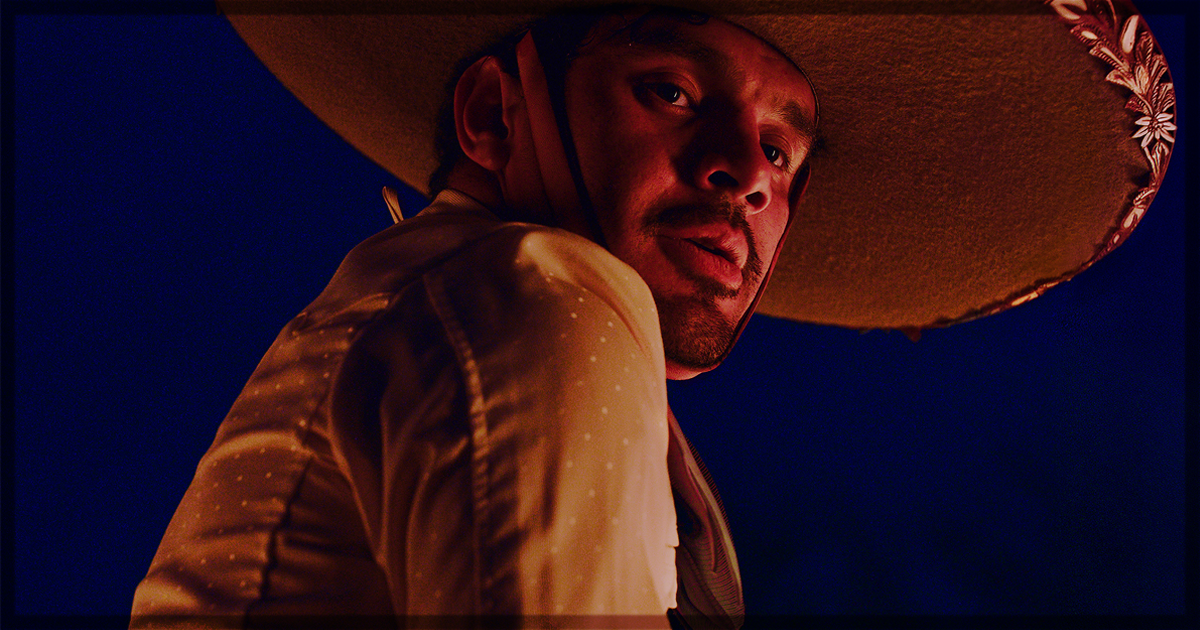
The people involved in the film are all queer, whether or not they identify as such, and who have found community in their rural Mexican area through the local rodeos. Several of these rodeos are filmed, and they are the kind of rigidly gender coded places where a rider can wear leather gear that says “heart for one, dick for all.” But in the midst of this psychotically macho environment are drag performers working the crowd, making jokes and accepting tequila shots, before going into the ring in a short skirt and high heels – high heels! – to taunt the bulls. And in some of the more hidden corners it’s clear that men are easily able to find, shall we say, companionship with each other.
Mojica and Zweig’s interviews with the participants enable them to discuss their feelings about their sexuality and how it ties into masculinity for them with the kind of frankness and hesitancy when someone answers questions they’ve thought about a lot but no one has ever cared to hear them discuss before. These encounters are clearly staged – in one a dry cornfield is turned into a nightclub through pulsing lights and club music – but that does nothing to undercut their power. A lot of modern queers spend a huge amount of time fretting about their definitions and their labels instead of doing stuff, so it’s valuable to see how that works when it’s the other way around. Most of the participants love the place they’re from – and the excellent scenic footage makes it clear just how beautiful it is there in this part of Michoacán – and are prepared to compromise on their sexuality or endure some abuse if it means they can keep their home. How people value a community, or a church, that doesn’t necessarily value their whole selves back is an important question for us queers and it’s always interesting to see how others thread that same difficult needle.
It’s also clear that this movie was only made thanks to the hometown networks that Mojica was able to bring to the project. If the story is a bit light, reliant on its imagery to make its case, for once that’s a price worth paying. There’s no way an outsider could have been accepted by these crowds and these parties in the same way, but it takes that outsider eye to understand the power of the imagery here. The cut from a chandelier to a mirrorball is just one case in point. Cinematographers Josué Eber Morales and Gerardo Guerra did great work in making their stylised imagery iconic – a cliched word of praise here meant literally – and the combination of dance music over the rodeo footage is a fresh way of understanding how these people move through the world. Jaripeo opens a window on a previously hidden queer experience and invites viewers of all sexualities to consider what we find. It is also short, 70 minutes, but it’s exactly as long as it needs to be. It played Sundance and will shortly be at the Berlinale, and is likely to continue to be embraced by festival audiences around the world.
Jaripeo recently played at the Sundance Film Festival.
Learn more about the film at the Sundance site for the title.
You might also like…