Documentary filmmaking captures a particular notion of reality. Although common sense believes non-fiction means an utter sense of reality, it is a false premise. Every frame shot by a camera is an illusion, a magical process provided by technique to transform into imagery; consequently, it eternalizes something. The same goes for poetry, despite the different format, notion, and art. A lyric underlines the sentiment of its writer, flexing it through the lyrical stylization to memorialize an idea, a sentiment. Similar to the aesthetic of a new documentary portrait of Asia, there is a resemblance to Nicolas Graux and Trương Minh Quý Hair, Paper, Water…, which frames an Asian country through poetic observance. Deming Chen presents his new film, Always. The young Chinese filmmaker observes a family in the Hunan province, where an eight-year-old boy, Youbin Gong, lives with his father and grandparents.
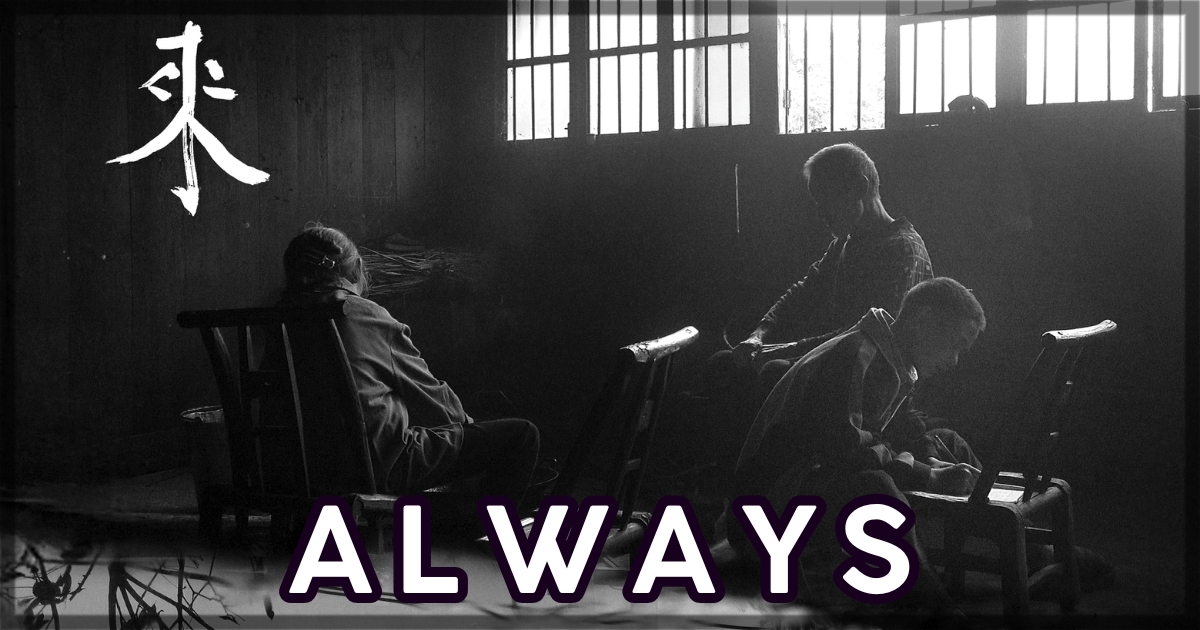
Like children his age, he shares their eagerness and curiosity; in his case, he’s a talented poet, despite working throughout the mountains on his family’s farm. In a sense, his willingness to help reflects the necessity of growing food, which is the family’s central source of survival. Even though he is a potential poet, his family fails to admire that, predominantly because of their financial situation. Yet throughout his classes, the young boy learns Chinese poetry, a knowledge that inspires him to write about his emotions and observations of the world around him. Therefore, Deming Chen analyzes the boy’s life through an utterly poetic approach. His camera, through his polished Black-and-White cinematography, documents the daily life of rural China. The ritual of growing crops, working the land, and wandering through the moody ground in the rainy season. Chen is an observer in the corner, eyeing the family’s calm life.
Similar to chapter introduction cards, Youbin’s poetry appears on the screen. Chinese calligraphy appears on the black screen, showcasing the boy’s work and illustrating the talent in rural China. It is the moments when the audience encounters the skill that make him so special. In this sense, the director allows the camera to remain still, allowing it to analyze the full scope of the child’s journey. However, he is not the central object of the film; it is a diagnosis of his surroundings: the farm, the family, and the events in his childhood. It is an observational documentary that combines with the poetic environment of his talents. It is a fascinating combination of the artistry in his life and a sense of naturalness behind it, not a trained ability, per se. The cinematographic nature of Chen’s cameras delivers a fascinating glimpse from the exterior eye, the one that observes the beauty of the young poet’s words and his ability to write brilliant notes about life. Yet, it is a film that requires patience and a meditative effort from its viewer, one that effortlessly captures time, preventing the need to rush its events.
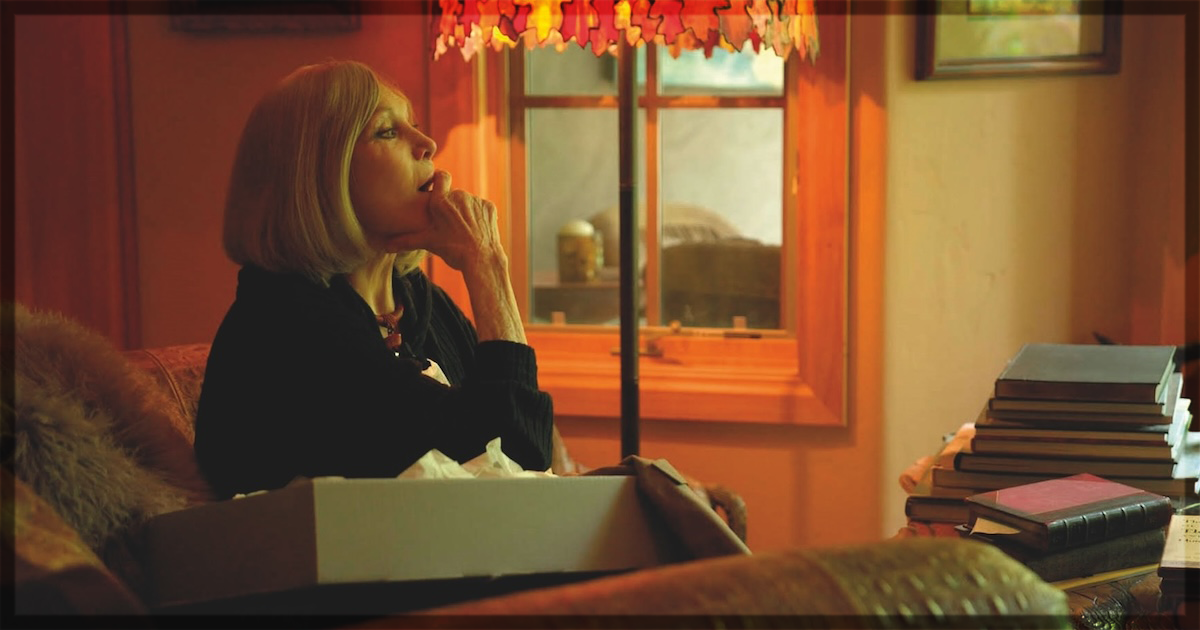
The film has an excessively fascinating shift in the visual structure. It features a colored excerpt among the Black and White sequences, in which the director takes his subject, who is not solely the protagonist, out into the exterior world. There is an evident tonal separation between the farm and everything outside that logic. Explicitly, Chen states the differences in the various circumstances of that documented setting. In a sense, it might be his most creative choice in the entire film, deriving itself from the rigid Black and White form to a free one, where it has colors, and the subject is evidently happier. It represents a rupture of the formality the director establishes in the first place; yet the director returns to it in the subsequent moment, almost an expected route to the form. As with anything in life, the film events are cyclical and trace back to the initial place, despite the subject’s journey to learn from the world around them. Finally, those ten minutes bring a freshness to tiring repetition, presenting a singular beauty, but ultimately attached to a shallow substance.
Always is an outstandingly beautiful film; yet it lacks better development to expand on the story of the natural gift of a young Chinese poet in the mountains. It is a rough watch because of its repetitive nature, but it offers an inspiring, poetic look at the world that only cinema can.
Always (Cónglái) is now available for rent or streaming.
Learn more about the film, including how to watch, at the CPH DOX site for the title.
You might also like…