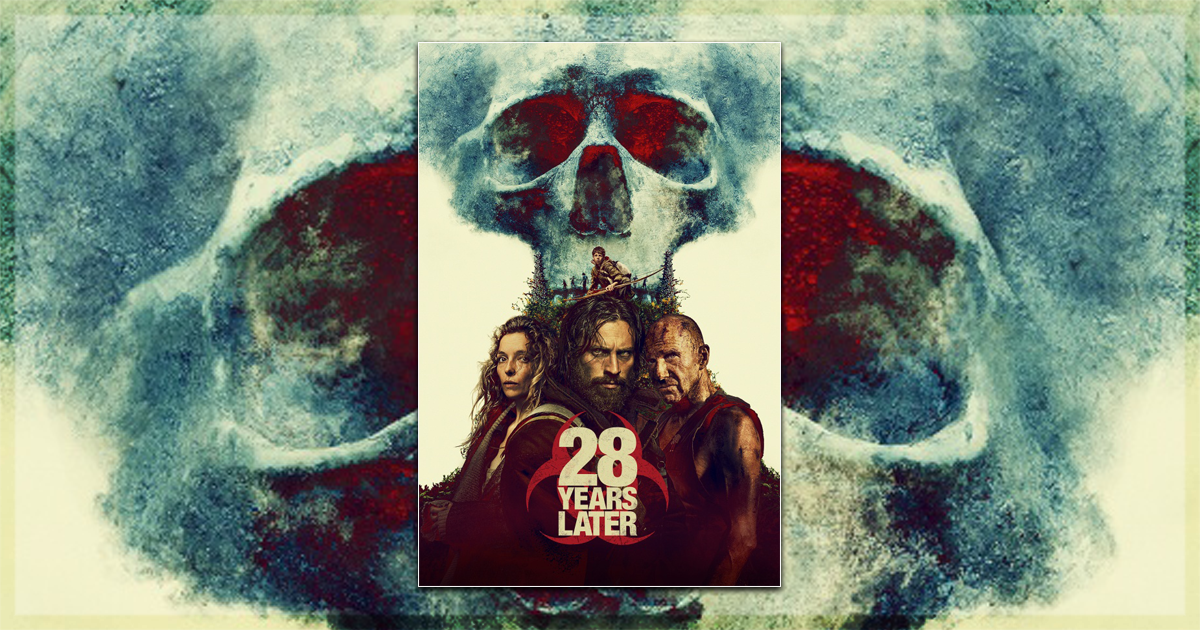
Horror films have been one of the most interesting genres to watch in 2025. While not a self-proclaimed horror fan myself, it is hard to deny how enjoyable they have been to watch this year. One of the best films of the year, 28 Years Later (the third film in the 28 Years trilogy) helped push this thought to the forefront. The story of 28 Years Later follows a small island of survivors under an indefinite quarantine of the rage virus within the British Isles. This includes a Mother named Isla (Jodie Comer), a Father named Jamie (Aaron Taylor-Johnson), and their 12-year-old son Spike (Alfie Williams). When certain events push Spike and his loved ones out of the comfort of their home, it forces young Spike to grow up faster than he ever expected.
To get this sentiment out of the way, 28 Years Later is unequivocally one of 2025’s best films. That is not because it’s simply an entertaining zombie movie, but a story that relishes deeper themes and ideas. At its core, 28 Years Later is a coming-of-age story that is disguised as a horror film. The screenplay by Alex Garland wisely keeps the story’s point of view from Spike’s perspective. Spike sees this small, dangerous world, filled with its joys and many horrors and sorrows alike. This includes how Spike sees those around him, with their numerous warts and all.
A core idea that made 28 Years Later resonate with me involved how a child perceives the world. This includes a pivotal moment many have (and will) face in their lifetime. That moment is when children realize that their parents are people too. It’s a realization that in the wrong movie, it could feel like a message in an after-school special. Thankfully, that is not the case in this film at all. That is in large part thanks to the performances across the board, starting with Alfie Williams.
28 Years Later undoubtedly rests on Williams’ shoulders. We, as an audience, have to feel every emotion that Spike does. That includes every bit of humor, pain, fear, and sorrow that encapsulates his journey. It’s an oftentimes harrowing performance, with him simply expressing one look that says so much by saying so little. Williams’ performance beautifully conveys that sentiment over the 115-minute running time. This includes his interactions with both his parents (Taylor-Johnson, Comer) as well as the mysterious Dr. Ian Kelson (Ralph Fiennes.)
Taylor-Johnson, Comer, and Fiennes all have a different purpose in Spike’s journey. Taylor-Johnson serves as Spike’s idol and aspiration in this world, playing Jaime as a “warrior” and “man’s man.” As an audience, we feel this and understand why Spike worships him the way he does (besides the fact that he is Spike’s father). Simultaneously, we begin to feel there is more than just a “charm” that Spike sees, with an emphasis on his father’s smarmy tendencies.
Whereas Jodie Comer as Isla serves as Spike’s humanity. Not only does Comer have to carry the dramatic weight, but she has to imbue the film with a sense of warmth. While Comer conveys Isla’s own pains from a mysterious illness, she still remains a bright spot in Spike’s world. That results in a performance that’s equal parts caretaker and helpless individual. It’s a performance that not only feels resonatory but keeps the viewer emotionally engaged throughout. We love Isla, but are also deeply concerned for her.
The performance I would like to shine a bright light on is Ralph Fiennes as Dr. Kelson. Arguably, Fiennes‘ performance is the most important in the film. Fiennes exists as the reality that Spike has to face in this world. It may be scary from a distance (like the mythology surrounding Kelson early in the film), but up close, it is not. In actuality, Fiennes gives Kelson a sense of sage wisdom. While it is not what Spike (Williams) wants to hear, it’s what he needs to hear at that moment. By the time the film reaches its conclusion, Kelson has taught Spike what it really means to live and survive in this space. There’s a poignancy in Fiennes portrayal that helps him deliver a performance that feels real and incredibly tender in subtle ways.
My only real “issues” (and I say that loosely) with 28 Years Later is relatively minute. Director Danny Boyle applies the technique of “speed ramping” in several scenes. The results of which deliver an incredibly visceral sensation. If you’re squeamish, it’s definitely something I would recommend you avoid. While my problem isn’t the gore itself, it’s that those scenes feel random. There are not enough of them to make a significant positive impression. When they are shown, they are needlessly gory, with no real emotional or thrilling impact. There are more random sequences that, while looking cool, have no real heft or purpose. The results of which create sequences that classically feel like a lot of style over substance
28 Years Later is one of the best films of 2025. The film serves a dual purpose as both an effective zombie thriller and something more profound. Those looking for a violent, carnage-filled zombie odyssey will not be disappointed. Whereas those looking for more substantive material will reap the rewards. That is with several superb performances, and a magnificent breakout performance by Alfie Williams. Such a combination makes this more than just a zombie movie, but a moving account of growing up before you’re ready. The results help create a very special film that left me eager for the next chapter, 28 Years Later: The Bone Temple, which is coming to theaters next month!
28 Years Later is now available to purchase at your retailer of choice.
Learn more about the film at the IMDB site for the title.
You might also like…
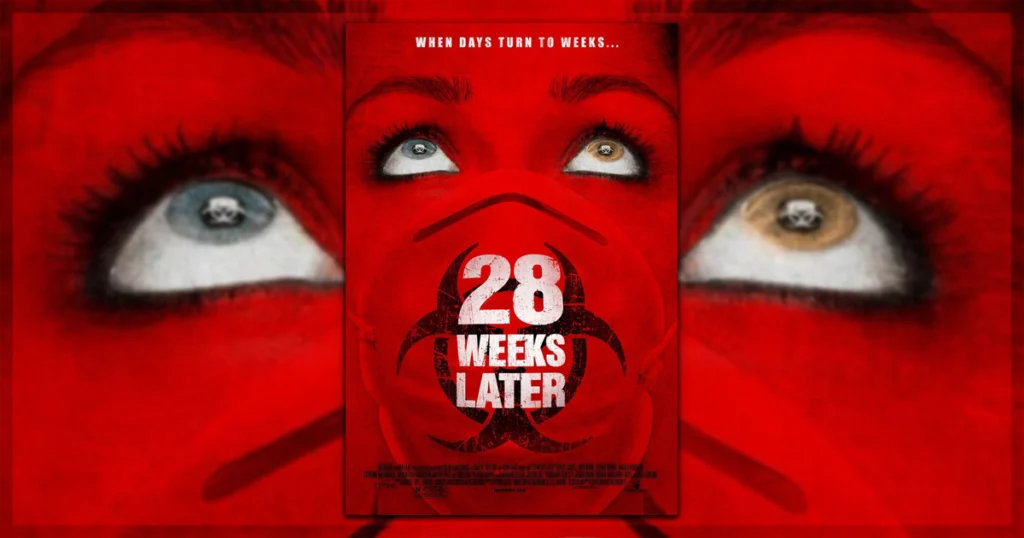
’28 Weeks Later’ Film Review: A Fun Action Thriller That’s All Bark and No Bite