As award season descends upon us, the winners and losers already feel set in stone. 2025 was a strong year for film, and not every performance can make the cut, but just because they didn’t earn a nomination doesn’t mean they aren’t worth checking out.
From unknown queer biopics to horrors, awards contenders and international favourites, we celebrate the overlooked. Here are some performances and films that the mainstream has largely ignored but should have been in more awards conversations.
Sissy Spacek in Die My Love
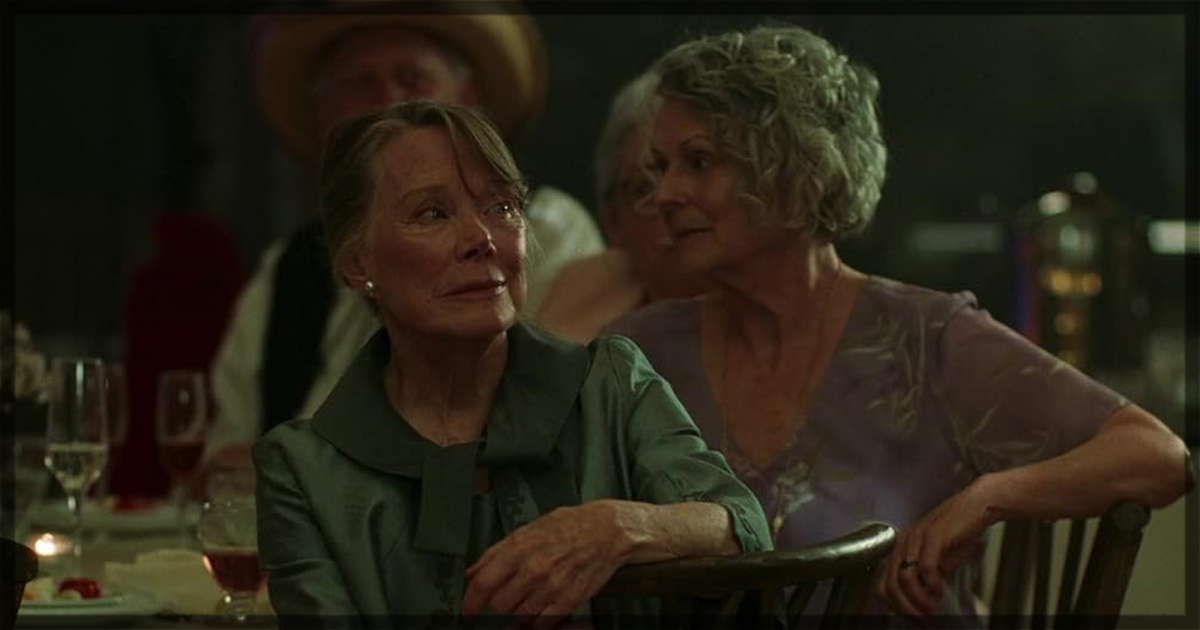
Sissy Spacek appeared alongside Jennifer Lawrence in Lynne Ramsay’s 2025 psychological drama, Die My Love. Spacek plays Lawrence’s grieving mother-in-law, Pam.
While the film belongs to Lawrence’s raw turn as a mother with postpartum psychosis, Spacek gives one of the year’s best supporting performances. She acts like a guide to Lawrence’s Grace, as one of the few people who understands the profound effect motherhood has on a woman’s psyche. The duo bond over the circular nature of womanhood as one grieves the life she had her with husband, and the other grieves the life she had before motherhood.
This small but impactful role is the type of performance that should be in the supporting actress category. Lack of award recognition aside, it’s a powerful return for Spacek after a three-year absence from our screens. Her role as Pam adds an extra layer, connecting the loneliness of postpartum with the grief of old age.
Emily Watson in Hamnet
Like Spacek, Emily Watson also played a memorable supporting role as a mother-in-law offering guidance in a time of need. In Chloé Zhao’s Oscar-nominated film, Watson plays Mary, William Shakespeare’s mother, who is left to support her daughter-in-law, Agnes.
While the award conversation was understandably about frontrunner Jessie Buckley and the unfairly snubbed Paul Mescal, Watson feels a sore exclusion. Minus a surprising but welcome Bafta nom, Watson was nowhere to be seen all award season. Her character grounds the inevitable tragedy, standing in the background with an unspoken pain, while Agnes wears hers so beautifully open.
Watson’s performance in Hamnet might seem reserved until she delivers one of the most gut-wrenching monologues of the film. Her monologue on motherhood and loss reframes the scene and the film as a whole. While her performance is not as wild or lived-in as Buckley’s, Watson’s quiet empathy perfectly underscores Agnes’ grief.
Leo Woodall in Nuremberg
Leo Woodall stars in Nuremberg as Sgt. Howie Triest, a young American soldier and German-speaker, who is tasked with translating during the war crimes trials. The young actor doesn’t just hold his own against the Oscar-winning Rami Malek and Russell Crowe, he outacts them both with ease.
Woodall learned German for the role and met the real man’s family to portray him in the biopic. It’s a committed performance from the young actor, showing him to be more than just a romantic lead. Initially Triest is another patriotic soldier, but a mid-film monologue about growing up in WWII adds a complex humanity to James Vanderbilt’s drama.
This monologue reframes Woodall’s entire character and, in retrospect, proves his performance is more layered than it initially appears. It’s a horrifically relevant portrayal of the way people survive through cultural assimilation.
Channing Tatum & Kirsten Dunst in Roofman
Roofman was a film which suffered from being released at the busy end of year with a not particularly engaging trailer. The real-life story of a man who went on a crime spree by robbing McDonald’s restaurants by cutting holes in rooftops was a surprisingly charming affair. This charm was entirely down to the lead, Channing Tatum and Kirsten Dunst, who plays a divorced mother and love interest.
Roofman was never the type of film to impact the awards, but that’s not to take away from the ] performances. What the writing lacks, Tatum and Dunst more than make up it for with their effortless chemistry and likability. Tatum makes you not just root for his criminal, but you’ll likely root for him to get his happy ever after.
It’s a shame Tatum isn’t given more of these roles, which allow him to fully exercise his old school Hollywood charm. Dunst has been giving these grounded performances for three decades and still hasn’t been given her flowers. Now, to put them both in a project that really captures the world’s attention!
Frank Dillane in Urchin
Frank Dillane had been working as an actor consistently since his teens, but Urchin felt like a true breakout role for the British star. Dillane gives a heartbreakingly layered performance as an unhoused man called Mike trying to get his life back together after a stint in jail.
Actor Harris Dickinson’s directorial debut tackled the big topics facing the UK, like homelessness, the frustrating social system, and class divide. The film is stripped back and minimalist, so the actor has nothing or no one else to hide behind. Dillane more than handles the tough material, with his character being equally frustrating as he is lovable.
It’s no surprise Dillane won the Un Certain Regard best-actor prize at the Cannes Film Festival, where Urchin premiered. Since then, the film has fallen under the radar, but hopefully it’s enough of a showcase for Dillane that audiences will be seeing much more of him.
Dylan O’Brien in Twinless
Dylan O’Brien was best known for his work in MTV’s Teen Wolf and The Maze Runner franchise. Twinless sees the 34-year-old actor escape the world of YA and prove himself to be a dramatic actor worth paying attention to.
In Twinless, O’Brien plays two different characters, disappearing into the dual roles. He plays Roman, a man grieving the loss of his more charismatic twin, Rocky. The physical and emotional difference between the two brothers is outstanding. He also manages to play a camp, queer man without it turning into parody.
In one of the most unforgettable moments of the year, Roman speaks to Dennis (played by director James Sweeney) as if he were his deceased twin. The spine-tingling monologue was one of the year’s finest, it’s just a shame it received next to no awards consideration.
Ben Whishaw in Peter Hujar’s Day
After playing the stoic husband in Ira Sachs‘ Passages, Ben Whishaw gave another beautiful and layered performance in the director’s follow-up, Peter Hujar’s Day. Whishaw, alongside Rebecca Hall’s warm performance as his author friend Linda Rosenkrantz, brought the portrait photographer’s spirit to life.
Peter Hujar’s Day is a deceptively minimalist experimental film. Based on a 1974 recorded conversation, the 70-minute movie features Whishaw and Hall in largely stationary roles. He movingly recounted a single, detailed day in the life of the underrated artist.
While not a showy performance, Whishaw portrays the real-life photographer as witty yet vulnerable. It’s a hypnotic tribute to the man and that era of 1970s queer New York. Honestly, Ben Whishaw is out here delivering top performance and top performance with next to no credit.
Claire Foy in H for Hawk
Claire Foy brings writer and academic Helen MacDonald to life in the moving H for Hawk. Based on her memoir, the film follows Helen as she adopts a goshawk after the loss of her beloved father.
It’s an unshowy performance from the frequently underrated actress, but it’s an accurate representation of the numbness of grief and the slow unravelling of a woman struggling to process her emotions. H For Hawk skips the melodrama of grief and grounds it in a sometimes-uncomfortable reality thanks to Foy’s performance.
Aside from the emotional performance, Foy also delivers an impressive physical performance. The actor learned falconry to the point that she looks totally comfortable with the birds of prey. H for Hawk is an overall under looked film that didn’t find its audience,
Mariam Afshari in It Was Just An Accident
Although It Was Just An Accident is an ensemble cast, Mariam Afshari stood out as wedding photographer, Shiva. Her character is the level-headed, moral voice in Jafar Panahi’s Iranian revenge tale.
It Was Just An Accident follows a man who believes that the family man who has walked into his garage is his torturer. He gathers a group of people who have also suffered at the hands of the man, including Shiva, to confirm his identity.
Despite her past abuse by the Iranian regime, Shiva refuses to stoop down to their level. The film is remarkably light and humorous, given the topic, thanks in part to Afshari’s witty performance. Afshari very much gives a supporting role until her final scene, filmed in one unbroken take, where her character releases years of pent-up emotion.
Sergi López in Sirāt
Sirāt was in no way a perfect film, but Sergi López’s performance was. In Oliver Laxe’s experimental trek through the desert, López plays a desperate father searching for his daughter in North Africa. With his young son and dog in tow, the film is an unexpected odyssey into the world of ravers.
The portrayal is as physically intense as it is emotional, as he navigates raves, the army, and immeasurable levels of grief. His character is a man of very few words, but his imposing performance says more than any dialogue could.
Sirāt is an eccentric film that won’t be right for everyone, it’s loud and errs towards shock value, but López’ grief-stricken father grounds it. One of the only professional actors in the main cast, he anchors the narrative with emotional depth and rare humanity. Sirāt would still be a technically impressive film, but it would have much less emotional relevance without López.
Florence Pugh In Thunderbolts*
Florence Pugh is one of the most consistently talented actresses of her generation. She commits 110% whether it’s minor roles in sci-fi epics (Dune Part 2) or playing a mother dying of cancer (We Live In Time). Not even the MCU was immune to Pugh’s depths as an actress.
Thunderbolts* is generally considered one of the best Marvel films in years. It used the superhero genre to explore mental health struggles and depression. It was so much more than the CGI fight fests the MCU had recently turned into. Pugh reprised her role as Yelena, who we find grieving her sister Natasha. While the cast is full of talent (Sebastian Stan, Lewis Pullman, and David Harbour are also doing excellent work), Pugh shines the brightest.
Yelena carries the emotional weight of the film, as a young woman trying to find her place in a world that hasn’t been too welcoming to her. It’s a performance that bridges the gap between expected lighter beats and unexpected darker themes. Pugh doesn’t just flex her emotional skills; she also believably sells the no-nonsense fight choreography. Is there anything she can’t do?
David Jonsson in The Long Walk
David Jonsson has long been one of the most underrated actors working in film and TV. The Long Walk once again proved that filmmakers should be lining up to work with the Brit. In the Stephen King adaptation, Jonsson plays Peter McVries, known as #23, a charismatic man on the televised long walk.
Jonsson’s Peter is the spiritual heart of the film. He is the good-natured slice of humanity among a sea of traumatised young men. However, it’s soon revealed that there is a simmering anger under his bravado.
Johnsson is doing a lot in The Long Walk without even trying. It’s an effortlessly layered performance that easily outacts everyone in the film, even the extremely talented Hoffman. As friends begin to fall around him, Peter holds it together, not because he doesn’t care but because he has to, although he subtly lets those in charge know how much their behaviour angers him.
Tom Blyth in Plainclothes
Tom Blyth may have become a household name for his role in The Hunger Games prequel The Ballad of Songbirds & Snakes, but Plainclothes felt like a true breakthrough for the English actor.
Blyth plays Lucas, a 1980s police officer assigned to entrap gay men in public restrooms. He ends up falling for one of his targets, played by Russell Tovey. His performance conveys a man grappling with his own sexuality while enforcing laws that repress his community. It’s a remarkable performance of a man balancing between the repressed and the repressor.
Plainclothes is also a love story and a coming-of-age tale. The actor also perfectly encapsulates the yearning and fear that come with discovering your sexuality and your first true love. His vulnerability and the internal anguish unleash themselves in a powerful finale where all his pent-up feelings explode at a family gathering. Between this, Wasteman and The Fence, Blyth is proving himself an exciting actor to watch.
Jodie Comer in 28 Years Later
The 28 Days Later films were never about the infected; they were always about the way humans deal with the events. 28 Years Later, and Jodie Comer especially felt more about the humanity than the horror.
In the long-awaited sequel, Jodie played a mother, Isla, struggling with health issues while her son and husband spend their days scavenging. Despite all too little screentime, it’s sometimes a difficult-to-watch performance as a sick woman, angry in her state of confusion.
Throughout the film, she is mostly distant, struggling to remember her past and understand her surroundings. Yet, through the daze, you can see glimpses of the real Isla and who she should be. This is especially obvious when her mama-bear instincts kick in. Her conversation with Ralph Fiennes’ Dr. Kelson is a too-brief but remarkable showcase of two underrated British actors.
Sally Hawkins in Bring Her Back
Departing from her typically warm, likable roles, Sally Hawkins plays a grieving foster mother in Bring Her Back. The 2025 folk horror film, directed by Danny and Michael Philippou, follows a visually impaired girl and her older brother who are taken in by a manipulative woman after the loss of her daughter.
Hawkins is sensationally committed to the unhinged in this performance. She starts as someone sweet on the surface, but clearly battling internal demons. As events unfold, her true nature and intentions slowly come to light.
Hawkin’s Laura is never a character to feel comfortable with, there is always something unsettling about her. For an actress usually known for soft-spoken roles, she commits to the film’s larger, swings. Yet there is always a naturalistic humanity to her performance, which stops it from becoming a caricature.
Sope Dirisu in My Father’s Shadow
My Father’s Shadow is generally a film that deserved more attention this awards season. Nigeria’s first-ever Cannes selection and winner of the Caméra d’Or Special Mention follow two carefree young brothers growing up in 90s Lagos.
Sope Dirisiu plays their absent father who suddenly returns home. He is a charming and charismatic man, whose presence commands the entire narrative. The film spends a day with the two boys and their father as the country has its first election since a military coup a decade ago. The young boys don’t care about the changes going on in their homeland, they just want a bonding experience with their father.
His performance is reminiscent of Paul Mescal in Aftersun. There is a sense his fate has already been sealed, long before the end credits roll. Dirisu visibly wears the weight of the internal tension his character faces. He is clearly torn between his obligations to his family and political activism he’s suggested to have. But his sons don’t care about this, they just want approval from their dad. It’s a heartbreaking portrayal that only gets more gut wrenching when looked back on in its full context.
You might also like…