It wouldn’t be a lie to say it’s been a fairly tumultuous year for one of the BBC’s flagship franchises Doctor Who. Not only was the second series of Russell T Davies’ soft reboot of the show met with low ratings, both critically and in viewership, but Ncuti Gatwa the actor who was charged with propelling the show into the future made a shock early exit in the series 2 finale. Gatwa’s swift farewell was also overshadowed by his regeneration as former companion Billie Piper was the face that replaced him. There was a looming sense in the fandom that the snake was eating its own tail.
All of this left Doctor Who in a state of uncertainty, specifically in terms of the partnership the BBC had made with Disney, until later this year when the mega company pulled out of the deal. With that, an announcement was made that the next Doctor Who will be coming to us in the form of a Christmas special in 2026. But left up in the air was a spin off that was produced during the aforementioned deal, The War Between the Land and the Sea.
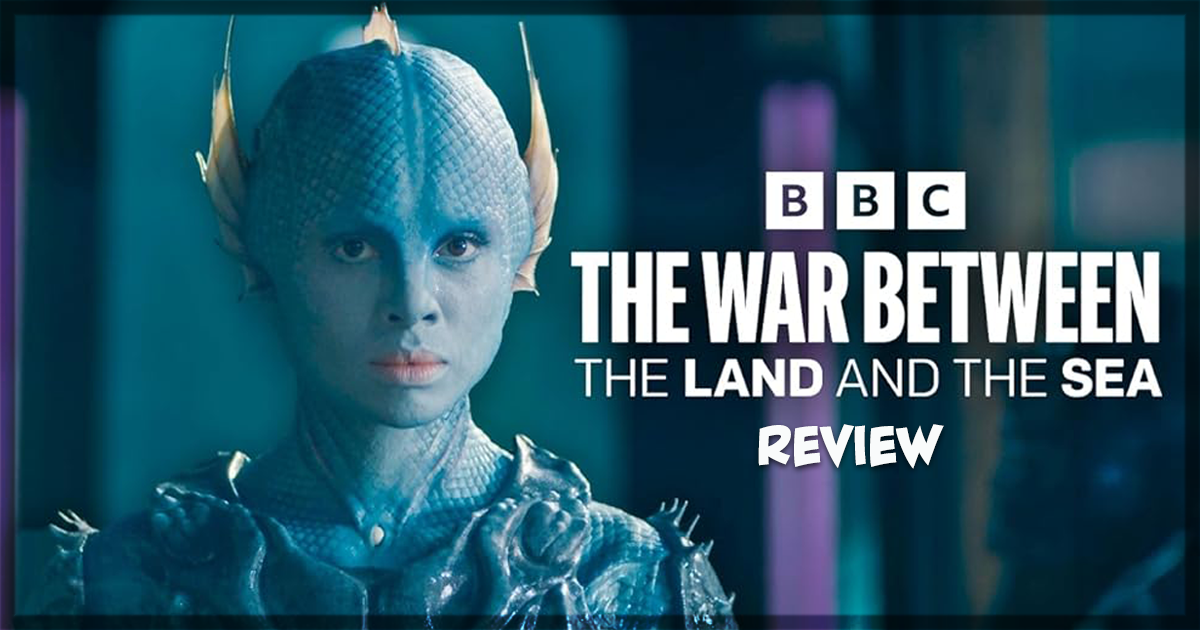
The War Between the Land and the Sea is a five part miniseries set in the world of Doctor Who. The spin-off has a storied history in the Whoniverse with shows like Torchwood, The Sarah Jane Adventures, and Class all existing alongside the main show with one catch, no Doctor. The War Between the Land and The Sea takes this concept into Doctor Who’s new era, and follows the United Intelligence Taskforce (UNIT) as they attempt to temper tensions between the human race and a new (returning) threat, the sea devils. The team, headed by Kate Lethbridge-Stewart (Jemma Redgrave), are forced to take Barclay (Russell Tovey) under their wing as he is unexpectedly requested to be the ambassador for Earth by the ambassador for Aquakind – an updated moniker the sea devils are given in the show – Salt (Gugu Mbatha-Raw)
The War Between was split into a three week release schedule over five episodes. Two episodes were released for the first two weeks, and the final episode aired on the third week. Each section of episodes has clear cut mini-arcs that end with cliffhangers setting up for the subsequent episodes. It feels reminiscent of Doctor Who spin-off Torchwood’s third series, titled Children of Earth, which was also written and produced by Russell T Davies. The War Between doesn’t live up to the heights of the Torchwood miniseries however. Where Children of Earth is able to balance between the intimacy of the character work and the ambition of the world ending threat that the team face, The War Between falters.
The worldwide, potentially world-ending, implications in The War Between The Land and the Sea are fit to burst from the seams of such a short series. First contact, political summits, high scale attacks from both sides, and a full on war break out between the human race and Aquakind. Trying to fit all this into tight runtimes leaves no room for the smaller character-driven moments to breathe. Over the five episodes you get a decent understanding of Barclay and Salt but we never get to see too far under the surface. Their relationship hits overdrive with blink-and-you’d-miss-it scenes that try to convince us of their burgeoning romance but never quite land due to their swiftness. This overflowing of half-baked ideas doesn’t begin to consider the show’s political musings on Climate Change, and how humanity is on a self-inflicted collision course with extinction.
It’s not all bad however, the writing has its moments and the performances are enough to stick around for. There’s hardly any nuance to The War Between’s political leanings, and that isn’t necessarily a bad thing. Maybe it’s time a TV show existed that bashed us over the head with the idea of how people in power are continuingly complicit in the destruction of our only home, and that more needs to be done to save Earth. Some of the best pieces of writing come from little nods to the main show though. In a scene early in episode 1 Barclay muses about when he met the Doctor in passing once stating that “he’s vivid. You know?”. The way Tovey plays this moment is enough to give you chills whilst reminding you what world the show exists in. It’s something previous spin-offs revel in, and it’s good because it helps you realise why you’re watching this and not the main show because you have characters to grasp onto that are a little less fantastical than a time travelling alien.
Russell Tovey proves once again that he can lead a TV show with confidence and Gugu Mbatha- Raw is great with little material. The star of The War Between, however, is Jemma Redgrave. It’s been over twelve years now since Redgrave first hit our screens in Doctor Who as UNIT head Kate Stewart, and with this show she finally gets the spotlight. She’s always been great in the countless Doctor Who episodes she’s featured in over the years, but there’s something about her performance here that feels like her moment has finally come.
Overall The War Between the Land and the Sea represents the best and worst impulses of Russell T Davies’ second time in the head chair for the Doctor Who universe. There are moments of gold that threaten to shine through the rough, but overall it feels rushed and weightless. This might mark the end of Doctor Who having any kind of spin-off again, but it was good to have one while it lasted.
The War Between the Land and the Sea is available through the BBC.
Learn more about the show at the IMDB site for the title.
You might also like…
Doctor Who: ‘The Well’ Review – Season 2 Episode 3