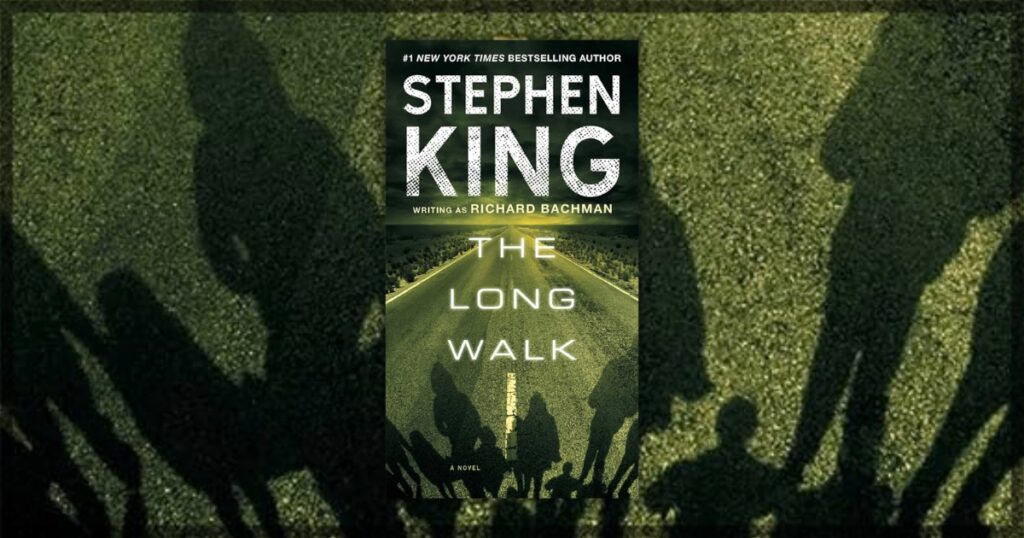
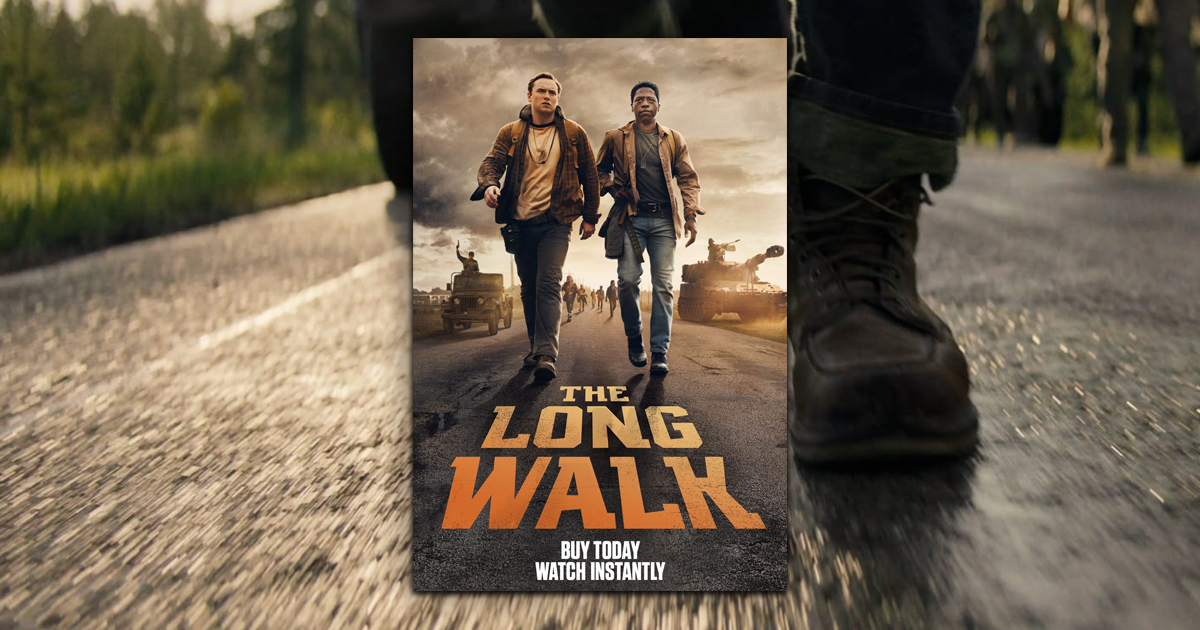
2025 has been a strong year of Stephen King adaptations. These include It: Welcome to Derry, The Running Man, and The Life of Chuck. One of the darkest would have to go to the adaptation of his story The Long Walk directed by Francis Lawrence (The Hunger Games franchise). Set in a dystopian 1970s, the story follows a group of fifty boys in a walking competitive marathon. Designed to “motivate” the country, the show requires them to walk at a 3.0 miles an hour pace. Failure to do so after three warnings from the vicious Major (Mark Hamill) results in death broadcast live across the nation. What follows is undoubtedly one of the darkest films of 2025. Which for some, could simply be a deterrent from watching in the first place.
What can’t be said enough about The Long Walk is that it’s an incredibly difficult film. The subject is rooted in hopelessness, making it a bleak experience. What’s undeniable is that the screenplay is incredibly effective. Written by JT Moliner (the director of 2023’s indie hit Strange Darling), has clear ambitions within the screenplay. Such ambitions include putting audiences through an oftentimes brutal and gut wrenching experience. It’s best to mention this now in order to clarify one thing about The Long Walk. To say the film is “enjoyable” is a rather dishonest interpretation of its purpose.
The Long Walk is designed as a product that is meant to do anything but entertain. It’s meant to deliver a grueling, tense, and occasionally thought-provoking experience. If that sounds unappealing, then you might be better off avoiding the film all together. The results can be taxing, delivering something that feels like a chore to watch. Feeling that way is completely understandable and absolutely justifiable. What can be said is that, if you’re willing to go along with this journey, there’s plenty to be rewarded by. The first major reward of the film resides in its performances.
The cast of the film consists of some of the best working young actors today. While not all are major stars (yet), two in particular stand out from the rest. First of those would be Cooper Hoffman (Licorice Pizza) as our titular character Raymond “Ray” Garraty. To be clear, most of the characters in the film are archetypal. From the “hopeful realists,” rebel rousers, comedic relief, everyone serves a purpose. In the wrong actor’s hands, such archetypes can feel like nothing more than cliches. They would lack substance, which could limit the impact on viewers. That is not the cause with Cooper Hoffman. He makes Ray so much more than an archetype.
Hoffman in theory should be nothing more than the film’s “straight man.” Even with a tragic backstory, the role runs the risk of feeling underwritten. Much like his father, Hoffman showcases a rare acting skill. He delivers so much of who Ray is not through words, but through conveyed emotions. His eyes clearly tell a story, which is a task easier said than done for most actors. That is not to say he does not show a verbal emotion in the film itself. A particular scene with Judy Greer as his mother delivered one of the most devastating scenes I’ve seen in years. It’s a nuanced emotional turn that perfectly contrasts another standout role from David Jonsson.
Jonsson co-stars as a fellow walker in the film, Peter “Pete” McVries. Similarly to Hoffman, Jonsson is set with a challenge in his role. McVries as written could be nothing more than comedic relief. When in actuality, he is given the biggest arch over the entire film. While starting as an optimistic, hopeful, wisecracking participant, he becomes something else by the end. To say anymore would spoil the impressive range that Jonsson delivers on-screen. That effectiveness really helps the performance linger long after the credits roll.
Where the film struggles is in some of the casting in the smaller supporting roles. To be clear, the film consists of some of the best younger actors working today. This includes Charlie Plummer (Moonfall, Spontaneous) and Ben Wang (Karate Kid: Legends) to name a few. Each of these actors is undoubtedly given a moment or two to leave an impression on audiences. The problem is that, with so many actors, their individual moments all feel a bit repetitive (aka everyone gets a big speech). Henceforth, it lessens the impact of each performance in the process. There is one actor that manages to do so much with arguably the most limited amount of screentime.
Mark Hamill as The Major could be called a minute supporting performance. Yes, the character’s presence looms large, but he simply does not have that much screen time. With Hamill’s gravitas as an actor, he manages to leave a strong impression every time he appears. Not only does he ooze villainy, but continuously proves himself as a worthy adversary to these participants. He commands the screen making audiences fear him but also enjoy seeing what he’ll say or do next.
The Long Walk is an incredibly hard film to recommend to audiences. It asks much from its viewers, delivering something that many will not call entertaining. Instead, it’s a film that commands quite a bit from its audience. The story thrives in throwing viewers into this world, without room to breathe. That can deliver a daunting experience forcing viewers on a dark and emotional journey. Thankfully with performances this compelling the finished product delivers a resonatory experience. Not only is it one of the most impressive Stephen King adaptations to date, but it will linger in audiences minds long after the credits roll.
The Long Walk is now available to rent or buy at your retailer of choice.
Learn more about the film at the official website for the title.
You might also like…