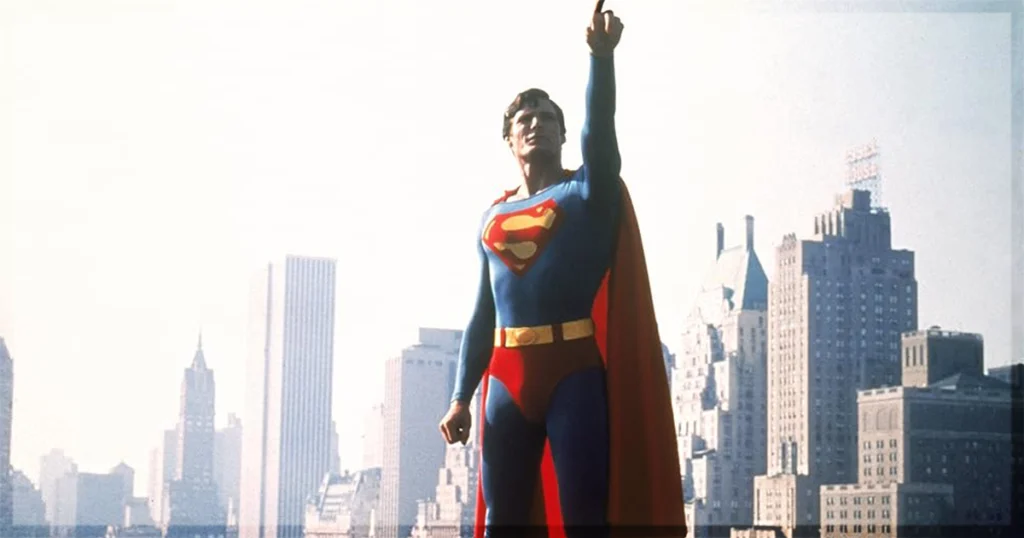

Continuing our rewatch of classic Superman films before 2025’s Superman, we have now reached Superman II. To clarify for those unaware, Superman II had a unique history. The initial theatrical version was released in the 1980s. While warmly received, the behind-the-scenes drama plagued the film with mystery. With the director changes, the film proved to be an entertaining but strangely incomplete project. Pieces of Richard Donner’s (the director of the original 1978 film) vision were present, but a more jokey tone took the forefront. That is, until the year 2006, when Richard Donner’s original version was restored. Superman II: The Richard Donner Cut delivered something else entirely.
The film not only kept the humor but also embraced a gritty and simultaneously charming aesthetic. It existed as an organic continuation that proved a better finished product. After seeing both versions, choosing to review this Donner Cut came down to a straightforward factor. It’s simply a stronger film compared to its theatrical version. It created a very different film, but one that proves a pivotal touchstone of the character. Before delving into this review, it’s best to describe the story of Superman II: The Richard Donner Cut.
Superman II follows Clark Kent/Superman (Christopher Reeve), who sacrifices his powers for a chance at a relationship with Lois Lane (Margot Kidder). Deciding on the idyllic human life, Clark is unaware of the threat on the horizon. This threat is three Kryptonian criminals: General Zod (Terence Stamp), Ursa (Sarah Douglas), and Non (Jack O’Halloran). After being sentenced by Jor-El (Marlon Brando) to the Phantom Zone, the three criminals escape after Clark saves the world in the original 1978 Superman film. These new villains force Clark to realize that the world needs Superman, whether he likes it or not.
Compared to the original film, Superman II has several elements that make it an improvement over its predecessor, the largest of which is the relationship between Lois and Clark. Superman II wisely spends time building out that relationship. The film forces both characters to spend a considerable amount of time together. That allows both actors to build their chemistry, creating genuinely palpable stakes. Such stakes can be best described in both the performances of Reeves and Kidder.
Reeves, of course, perfectly encapsulates the duality of both Clark and Superman. Similarly to the first film, he embodies the heroism of Superman. He wants to do good no matter the cost. Granted, the film forces him to wrestle with what it means to be a hero. Does he simply want to protect the world? Or does he want to have a chance at a regular life? Reeves perfectly conveys that dilemma in a simple look. In both personas, every one of his reactions hides levels of pain. Viewers care about Clark, but also understand why he wants a regular life. It’s a compelling performance that keeps viewers engaged, perfectly accentuated by Kidder’s portrayal of Lois Lane.
In 1978’s Superman, Kidder is reduced to nothing more than a damsel in distress. Undoubtedly a “plucky reporter,” she existed as nothing more than an object to save. Here in Superman II, she becomes something more. It’s a performance that evolves as the film progresses, feeling entirely different than what came before. She starts the film as the plucky reporter, only to be proven right about Clark’s secret identity. Once she learns Clark is Superman, their entire dynamic shifts. Kidder turns into someone who genuinely cares for Clark, creating a new layer of tension. Viewers want the relationship to succeed, while also realizing that Clark has to be Superman. Lois can’t have one without the other, forcing her to wrestle with what she wants.
That new back-and-forth gives the film a needed injection of both heart and action. Obviously, for some, the film will still suffer from a dated quality. The effects are cheesy, and the action does feel stilted compared to today’s films. Yet upon rewatch, those criticisms simply disappeared as my watch continued. Not only does it give the film stakes, but it also imbues the action with a sense of danger. That shines brightly once the film’s three antagonists arrive on planet Earth.
Terence Stamp is an imposing presence, conveying a sense of danger to the planet. Viewers are fearful of him and know Superman is the only one who can stop him. The results of which give a truly perfect comic-book dynamic. At its core, the film tells an excellent story of good versus evil. That is a classical comic story, embodying the essence of the superhero genre. When these two opposing forces come into conflict, the results prove incredibly efficient and exciting. It works as a perfect counterbalance to the compelling relationship drama.
Superman II is a perfect summation of what makes the character iconic. He’s someone who, in theory, is an unbeatable hero. In the wrong hands, that can make the character a boring watch. To make him interesting, you have to give him a rather profound emotional dilemma. This film does that, forcing Clark to choose what he wants out of his life. Not only does that give the character new emotional shading, but it also creates great interpersonal conflict. Combining all of those elements makes more than just a great Superman film. Instead, it makes a superhero film unlike what we have today.
Superman II: The Richard Donner Cut is available to stream or download at your retailer of choice.
You might also like…