
James Benning is one of the most prominent experimental directors in history. Labeled as a researcher of the American landscapes, his work features a formally rigorous study of the United States and its structures. His interest in the composition of the country is evident in his most well-known films: The United States of America, 11 x 14, Landscape Suicide, El Valley Centro, and 13 Lakes, to name a few. Hence, the eighty-four-year veteran continues to release a film per year, works that spark the curiosity of cinephiles and critics, drawn to the filmmaker’s fascination with the physical elements that comprise the nation on a larger scale. Last year, the director presented Little Boy, a miniature film that combined speeches of the American political figures to expose the long history of the nuclear threat in the country. A year later, Benning returns to the exterior world, analyzing the buildings that connect places, individuals, and stories. Eight Bridges is another of the director’s films to show at the Berlinale in the Forum section, which programs experimental and bold projects.
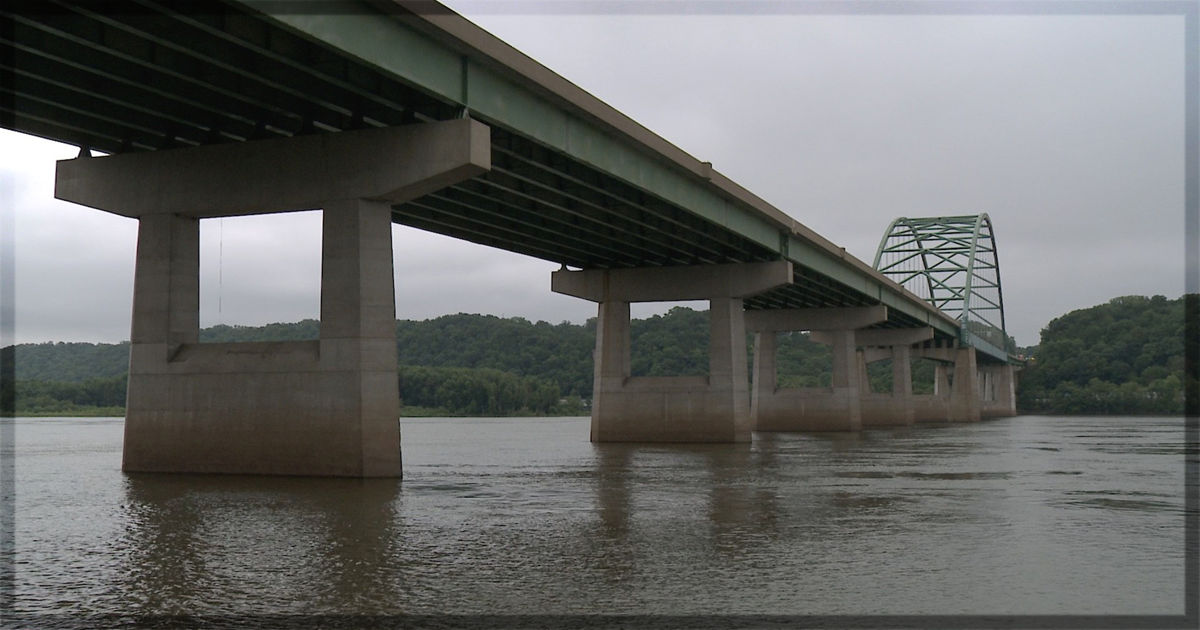
As the director stated on the Berlinale’s website, his new work is a project of “it seems to be the time to consider bridges”. And it is what he does in the film. Benning shoots eight bridges in the continental United States. They are the Golden Gate Bridge in California, the Rio Grande Gorge Bridge in New Mexico, the Edmund Pettus Bridge in Alabama, the Seven Mile Bridge in Florida, the George Washington Bridge in New Jersey, the Dubuque-Wisconsin Bridge in Iowa, the High Bridge in North Dakota, and the Astoria-Megler Bridge in Oregon. Therefore, the director establishes his camera at a particular angle, distant from them, frames the building as a whole, and lets the movement speak. Similar to his previous works, it is an exercise in observing the structural elements of the life that seem invisible.
Fascinatingly enough, those bridges hold an engaging history in the United States. Hence, Benning documents the monumental stature of the Golden Gate Bridge, one of the most well-known constructions in the world. Still, the other ones are equally important to the chronology of the nation. The Edmund Pettus Bridge is the one where the Martin Luther King Jr. and the Selma protestors marched for the civil rights in the 1960s. In this sense, the director highlights the significance of those concrete bodies. What are they if we do not assign meaning to them? By positioning his camera there and letting it breathe, the legendary filmmaker challenges us to reflect on our preconceptions about those architectural bodies that we sometimes do not question. The Edmund Pettus road became a civil rights memorial after protestors marched on it demanding racial change during a period of heavy Apartheid in the so-called most crucial democracy in the world. Contrary to what it might seem like, it was a recent event, sixty years ago. Therefore, the documentation of the construction indicates the unsung memory of the concrete years that shift after an event takes place on it.
Eight Bridges is an exercise of observing those inflexible items that have been there for centuries or only for a few decades, but expressing the magnitude of the human ability. We have achieved an educational and engineering level of building complex pieces involving kilometers of steel cables, concrete, and iron. Yet, there are intricacies to that, such as the dozens of construction workers who died while they were working in those venues, and the imminent danger of it falling out, and creating an immense wound within society. There is plenty of room for thought in non-fiction that invites the audience to sit, watch the screen, and reflect on the imagery. Benning is not interested in explaining those images, mostly because they are not cryptic or unintelligible. Yet, they are the plain reflection of years and years of complex engineering and the basic necessity of commuting. Even in his statement for the festival programming, the director keeps it brief. And he is right, cinema audiences and individuals want the most complex narrative devices, plots, and technical achievements. However, it is the time to reflect on the random items of life, including the bridges that connect us from the land divided by water.
In this sense, as James Benning returns to his natural soil, the research of the structures of the United States, he achieves a more intriguing and efficient result than his previous work, Little Boy. Throughout the quiet documentation of eight different bridges, there lies the spark to reflect on the small elements that compose our daily lives.
Eight Bridges recently premiered at the Berlin International Film Festival.
Learn more about the film at the Berlinale site for the title.
You might also like…