Historically, Brazil has had a complicated relationship between maids and houseowners. The long slavery trade in the country, one of the last to abolish it, spread its evil seeds to the hierarchical association between those who have the power and those who obey. In this sense, the abolition of slavery abolishes the slaves, African and African-Brazilian individuals, from the farms to the outskirts of the Urban context, locating them in the suburbs, the favelas. Hence, immediately, millions of individuals lose their homes and jobs, returning to the fields as low-cost labor. In the feminine aspect, they become housemaids and nannies, working in the mansions built upon Black blood. Almost a hundred and twenty-five years after the abolition, little has changed in the housemaids’ situation. Karol Maia portrays the problems within this work position in her Aqui Não Entra Luz (No Sunshine in Here), a deeply personal observation of the story of a few subjects that reflect communal experiences.
The film features a structure that begins as a diary documentary, in which Karol displays photos of her infancy on screen and voices-over them. She tells us about her childhood memories, her mother taking her to the houses she would clean, and the director’s ability to play an invisible role. She understood that she needed to be silent and invisible in that societal context because she was an extra burden to the bosses. Her mother would take her daughter with her because if she did not, she would not be able to watch her daughter grow. The housemaid position occupies a worker for nine to ten hours of her day, adding two to three hours of commuting from the suburbs, which are the cheaper residential areas, to lower-class areas, and then to elite areas closer to the cities’ downtowns. The immense inequality present in the Brazilian society prevents the working-class mother from fully concentrating on raising her children; they usually raises someone else’s child before their own.
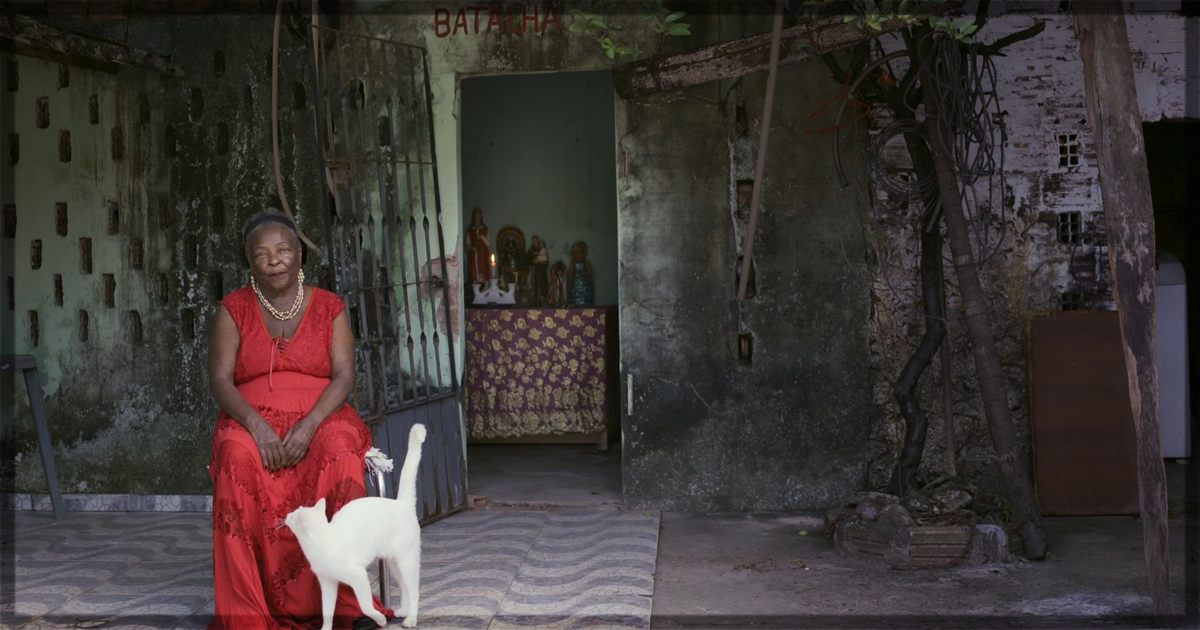
Therefore, the director shifts from the microcosmos of her history to a broader area, encompassing the stories of five different women in different cities. She talks to Rosa, who needed to quit her job as a maid because raising her daughter in someone else’s home made her fear the transference of motherhood. She feared her daughter growing fond of her boss instead of her, the child’s mother. Hence, a central element is present in the director’s analysis. In Brazil, ancient houses would design a room for the maid, usually near the laundry area, distant from the principal rooms of the house. At the same time, the worker would be close, they would not need to commute daily, but their place was near the washing machine and the sink. Maia dedicates a final chapter of the film to explaining the architectural aspect of the inequality between the housemaids and their relationship to the bosses. For a long time, hiring someone to perform duties at your residence meant taking on a financial role, spending your money in ways most cannot. There lies the prejudice and inequality, drawing inspiration from the colonial humiliations.
After interviewing four maids, the director returns to the first one she met: her mother. Her mother’s profession is the ignition point for her film, but also a part of her identity, an aspect of her ability to overcome society’s expectations that she become a maid as well. As one of the subjects states, being a maid in Brazil is passed down from mother to daughter. Yet, the director broke the cycle. She graduated and talked to her mom about how she worked at places she had worked before, or at the clinic where she used to do therapy. Finally, Maia’s script reaches the cycle she mentions, but she is playing the role of the film director, not her mother’s successor. Despite the structure’s cohesion, a few of the director’s voice-overs feel off, predominantly because of the tone and the writing, which attempt to convey poetry and emotion through words rather than images. However, the interviews and the explanations she provides offer a worthwhile perspective on the housemaid’s duty.
Aqui Não Entra Luz (No Sunshine in Here) features a crucial discussion of the maid’s role in Brazil and its historical roots. At the same time, it is an overview of women’s experience and a glimpse at the director’s history, particularly how she broke the cycle. Even if the voice-over seems off at times, Karol Maia addresses the long-standing problem in the profession, while also opening up about her life and her mother.
Aqui Não Entra Luz (No Sunshine in Here) has recently played at several international film festivals.
Learn more about the film at Mubi for the title.
You might also like…