
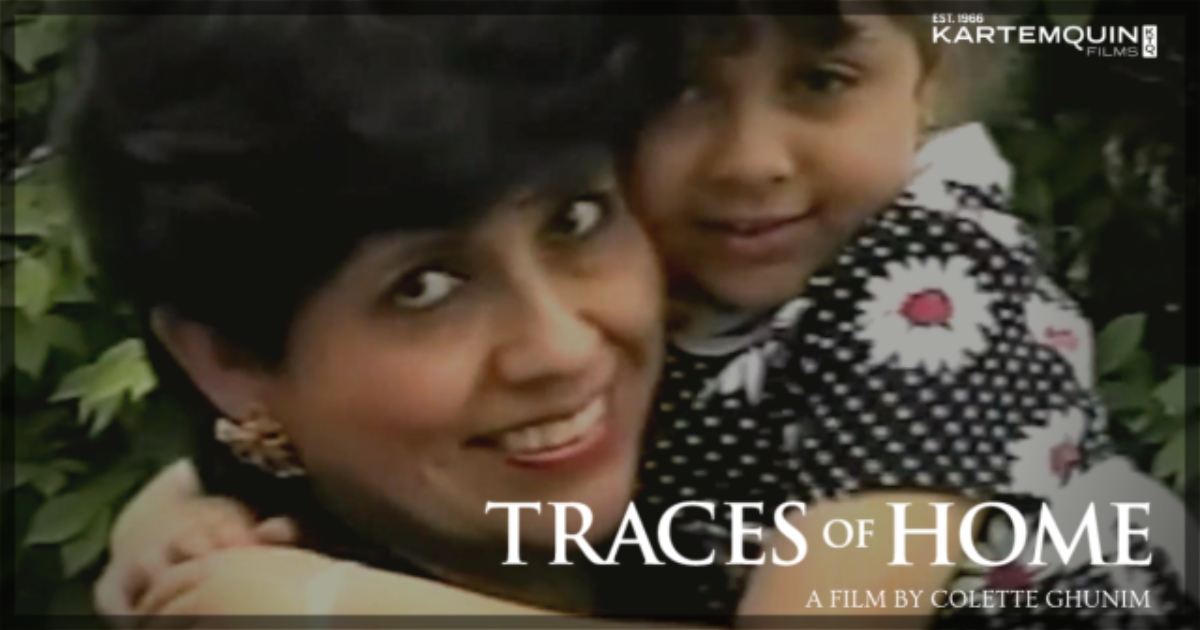
Immigration is a central aspect of humanity. Since the beginning of time, the human being has had the need to transition from one place to another. Yet, the reasoning behind that shifted throughout the years. At the outset, individuals would move to access food and protect themselves from danger. However, these dangers transformed conformity into the complexity of the society formations. The civilization has been clashing and initiating conflicts, leading to war and tragedy. Also, the setting of capitalism as the economic norm would create new challenges to survive, including the contemporary financial necessities. Immigration became a means of escaping wars and seeking opportunities, particularly in third-world countries that suffer from volatility in economic and political stability. Hence, the logic of a North and South in the geopolitical context led to migrations from the South to the North, especially to Europe and the United States. In Traces of Home, Colette Ghunim delves into her family’s history, studying and searching for the meanings of her origins.
Born into a Palestinian and Mexican home, the director grew up in a suburb in Illinois. Hence, her parents, a Palestinian father and a Mexican mother, would encourage their children to immerse themselves in the American lifestyle. Questioning her brother, Ramsey, she asks how many times in their childhood he thought of his inheritance. His answer is straightforward, almost none. He got occupied with toys and Mortal Kombat. The combat moves would have a higher priority than the reasoning behind his parents’ motivations to leave Palestine and Mexico. In a sense, the film is an exercise in rescuing the notion of origins and belonging. Thus, it is a fascinating reflection of their heritage, which surges through the process of maturity, as they understand that in the United States society, they will not be solely Americans. They are something else. But what are they? Ghunim attempts to understand it. Why did their parents leave Palestine and Mexico? How and why did they marry? How did their immigration influence how they raised their children? There are too many questions and very few answers; they know the answers. Consequently, the director wants to comprehend them by documenting the process of returning home, but she and her brother are finally coming home at the same time.
In the first minutes, her father, Hesni, explains how the Nakba affected his family, even expanding on the concept, which comes from destruction. In his case, his father was a leather seller who built two homes in his region, both of which were settled by the Israeli settlers. However, he moved to the United States in the 1970s, searching for opportunities and escaping Israel’s occupation. Yet it only got worse; even her father acknowledged he would return to live there only if colonization ended. As of today, it is a distant reality. Quoting Mark Fischer, he affirms that it is easier to think of the end of the world than the end of capitalism. Personally, the same might apply to the Israeli settlement, which gets support from the financial and diplomatic elites of the world. Hence, returning to the Palestinian land is an act of rescuing the heritage and surviving a lifelong attack on the identity of that population, who currently suffer a genocidal attack.
On the other hand, her mother, Iza, also comes from a wealthy background; her father was a designer for the Mexican artistry. Yet, she had to move to Mexico. In this sense, the marriage of the director’s parents came from fascination and necessity; he needed a visa to continue living in the United States. Hence, it is a fascinating dichotomy: two different cultures merged, yet they share the suffering of the Third World. Colette Ghunim thrives in documenting the return to the point zero, the beginning of their histories. Despite a chilling excitement in meeting the homelands, she questions the relationships in her past, such as her difficult one with her mother. Yet, Ghunim delivers a documentary that balances a bittersweet feeling, the grief and sores from a past, but a commemoration of the return to those roots, evidently, in a pre-genocide context.
Thus, Colette Ghunim introduces her personal history as a discussion point on immigration and the pains that come with it. Besides the limitless opportunities of the American dream, it comes with the expense of erasing heritages, racism, and trauma. Through Traces of Home, the young director refuses to forget her Mexican and Palestinian roots; hence, she documents beautifully the emotions of remembering in her film.
Traces from Home recently played at the DOC NYC Film Festival.
Learn more about the film, including how to watch, at the official site for the title.
You might also like…