It was Stephen Sondheim who wrote a song about the two things people can leave behind: children and art. What the Shakers, a small religious movement which began in the mid-1700s, left behind was their art. Some of this is their highly influential style of furniture, made plainly to emphasise both functionality and the raw materials, and some is their music, including their hymns. And what made the Shakers was a woman, who believed herself to be the second coming of Jesus Christ. Her unusual life is given raw and palpable shape in this unusual and unusually beautiful movie, which reaches through the screen and into the body with a keenly dramatic power.
Ann Lee (Amanda Seyfried) was born and raised in Manchester, England to a family which could not afford to educate its daughters and whose children went to work in the mills almost as soon as they could walk. As an adult Ann spends her limited spare time searching for religious answers and finds them with married Quaker preachers Jane and James Wardley (Stacy Martin and Scott Handy). In that congregation she meets a blacksmith named Abraham (Christopher Abbott, who played a similarly unsatisfactory and disturbing role in director Mona Fastvold’s previous and less excellent film, The World to Come) but their marriage is full of sorrow. Ann comes to understand that the mistake she has made, a mistake most people make, is devoting the body to pleasures of the flesh instead of worship to the Lord. Therefore she and her followers, beginning with her beloved younger brother William (Lewis Pullman, who is quietly making a solid name for himself), pray through song and dance, and do not use their bodies for the so-called carnal pleasures. Their devotions so infuriate everyone in Manchester that Ann and her devotees must relocate to upstate New York, a journey which is fraught with challenges of every kind. This modern telling does not spare ugly historical reality, including a brief scene of the auction of enslaved persons and concern expressed about the ‘wild people’ who might threaten any land the Shakers wish to purchase.
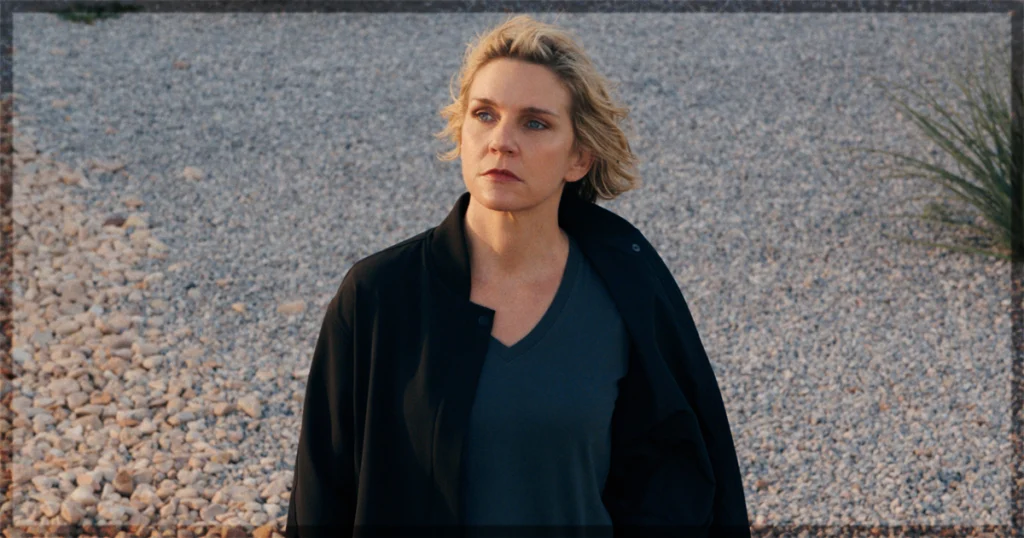
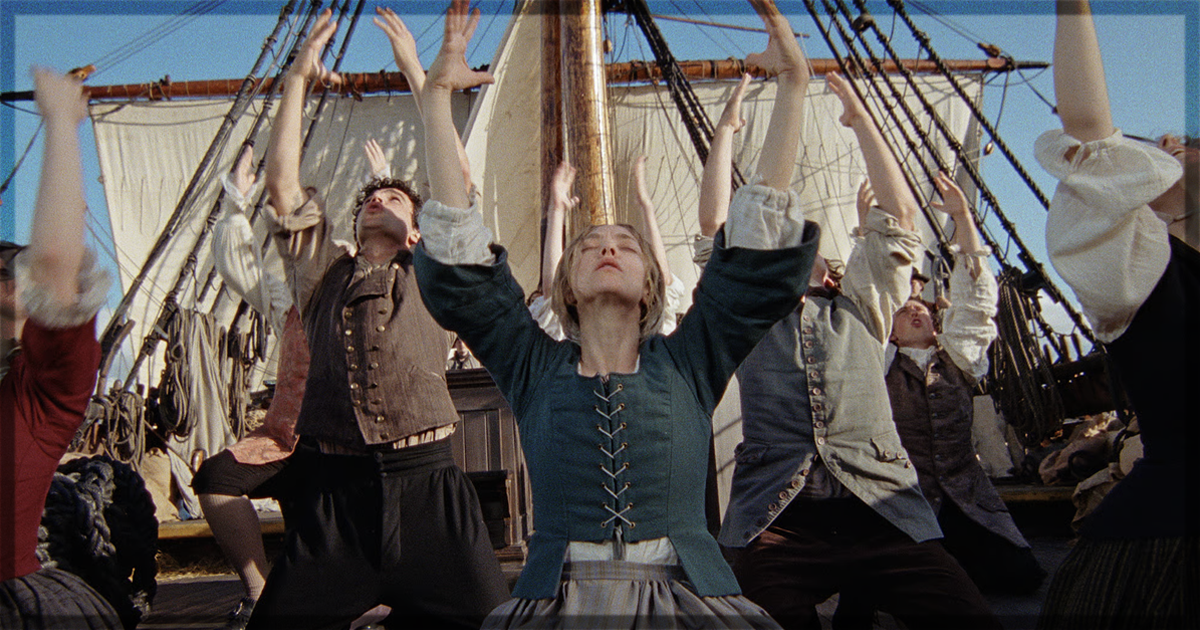
It is surprising to realise that this is a dance movie, exploring how people express themselves through their bodies. William Rexer’s cinematography and Sofia Subercaseaux’s editing follow the line of the movements, allowing the whole body space to breathe in ways which have become unusual onscreen outside of action movies. The opening sequence of Shakers moving through the woods, singing and dancing as a collective but not as one, has an explosive impact that’s especially unusual once it’s understood that we are witnessing an act of religious devotion. All the dance scenes have an unusual, rowdy, vibrant energy that are entirely shot through with joy. This centers on Ms. Seyfried’s exceptional performance (just watch her eyes) as a woman who has come to realise the righteousness of her beliefs, is lucky enough to have supportive friends, and whose direct communication with God redeems all the suffering she has and will endure.
Ms. Seyfried has a very fine line to navigate as someone who believes herself to be the literal second coming but without being insufferable. Ann will neither force anyone to agree with her nor lift a hand in violence of any kind, meaning people are drawn to her and her message almost in spite of themselves. It’s clear how very difficult the Shakers could have been up close, but it’s equally clear their beliefs are sincere and well-meaning, and provided an answer many people were searching for. And the message of their songs – almost all traditional hymns rearranged by Daniel Blumberg, who won an Oscar for his work on The Brutalist – give voice to hungers for simple spiritual sustenance, and not always with words. While attention is paid to the way in which the Shakers lived, with homesteads which remain so influential the furnishings do not feel old-fashioned, the main focus is always the valuable intensity of their beliefs. It’s rare to see a secular movie be so considerate of faith.
Thomasin McKenzie, who has a wonderful track record of making tricksy parts feel very easy, narrates the film as Mary, one of Ann’s closest devotees who makes the journey from England to New York by her side. But her voiceover includes the only mistakes in Ms. Fastvold and Brady Corbet’s script, presuming a knowledge of Ann’s life that the story must work to catch up to. However this is a minor quibble. There is a physicality in the action here – not only in the dancing, or the scenes of William trudging from town to town preaching Shaker gospel, but also in the repeated childbirth and prison scenes in which Ann suffers enormously – that brings across to modern audiences what it must have been like to walk in these shoes. This makes The Testament of Ann Lee a haunting experience for all the senses.
The Testament of Ann Lee is now in limited theaters.
Learn more about the film at the official website for the title.
You might also like…