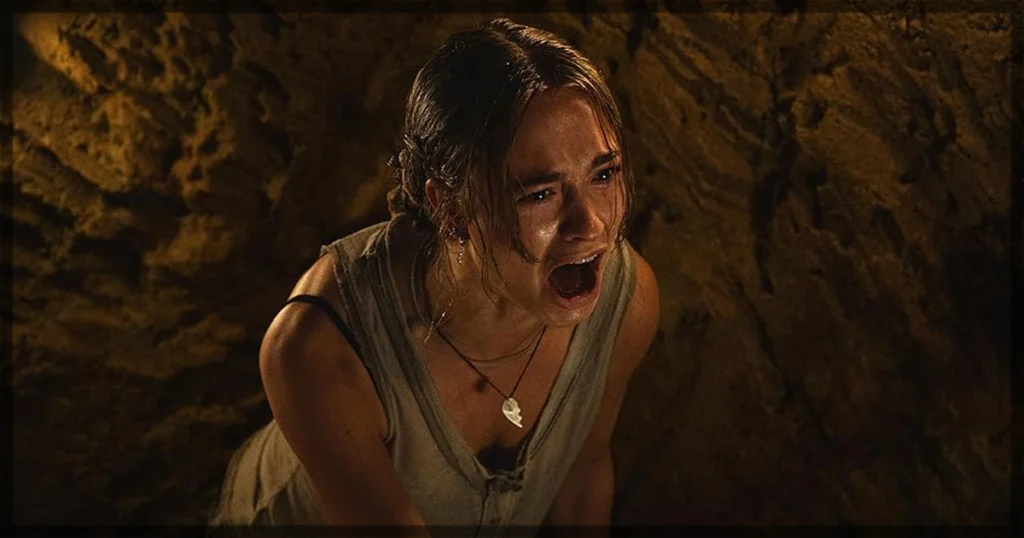
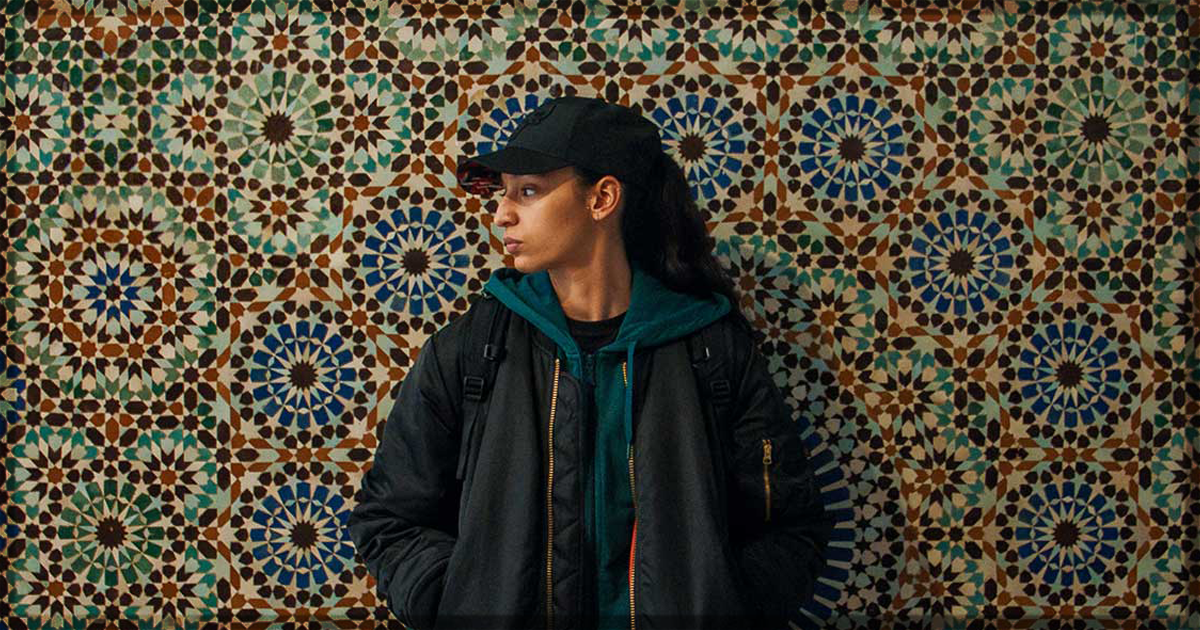
The introductory section of Hafsia Herzi’s The Little Sister (La petite dernière) is slightly alienating, as it swiftly moves from one scene to the next, without an anchor point for the audience to latch onto, despite being adapted from Fatima Daas’ 2020 autofiction novel of the same name. However, our perception of the film shifts as we begin to examine Fatima (played by Nadia Melliti), a young woman of Algerian descent longing to be accepted and torn between her faith and her desires.
Melliti won the Best Actress Prize at last year’s Cannes Film Festival, where the film competed for the Palme d’Or, and one can immediately see why the jury, presided over by Juliette Binoche, gravitated towards her performance. It’s one full of real emotional power, spoken through her sullen gaze rather than any line of dialogue being given to her. In fact, the dialogues, also written by Herzi, are the film’s weakest part, especially when it begins to draw a clichéd relationship between Fatima and a nurse she begins to have feelings for, Ji-Na (played by Return to Seoul’s breakout star, Park Ji-min).
Fatima is attracted to women, but can’t reveal this to her family, as Islam forbids anyone to engage in same-sex relationships. The conversation she has with an Imam (Abdelali Mamoun) reveals much of the film’s thesis to the audience, but not in a hand-holding way. Instead, Herzi provides essential context to grasp the layers in Melliti’s subtle performance, which reveal themselves even more powerfully after the conversation ends, because it has an indelible impact on how she will treat the characters in her life afterwards. Fatima is even more unsure whether this emancipatory journey of self-discovery (which unfolds in her philosophy class, where the concept of “emancipation” is heavily discussed) is truly worth it for herself and her family.
Told over four seasons (from spring to winter, and the following spring to bookend the story), The Little Sister is a patient drama that unfolds deliberately as the audience gradually gets into Fatima’s headspace and understands why her journey may not be as simple as others believe. Some of the more poignant scenes of the film occur as she contemplates, alone in her room (or through long drags of a cigarette), and thinks about the time she spent with various dates, finding herself in a community that accepts her as who she is, while her family suspects, but “follow the teachings of Allah” (as the Imam consistently cites during their talk).
The conversations may be simple, but the unspoken feelings Fatima shares with others are where the movie expresses itself more cogently. The relationship between the protagonist and Ji-Na, in particular, is heartbreaking, as they share a longing and piercing stares that reveal a genuine connection. Ji-Na wants to push Fatima away because of her personal struggles, but Fatima can’t repress her feelings for her. It’s an incredible scene, both illustrated through Melliti and Ji-min’s eyes. The former is a total revelation. She will break your heart in a million pieces by the time you reach the film’s final scene, where she wants to come out to her family, but can’t bring herself to outright say it. Her eyes betray her, but her family doesn’t realize what she’s experienced.
We, however, do, because Herzi showed it to us. It’s a complex, often affecting drama that isn’t afraid to take its time and put us in the middle of the character’s perspective, but it wouldn’t have worked if Melliti weren’t as strong as she is. When Hafsia Herzi came onto the scene as an actor in Abdellatif Kechiche’s The Secret of the Grain, the success she experienced was almost overnight. Now, with Herzi behind the camera and directing a newcomer in The Little Sister, Nadia Melliti already feels like a household star, primed for a (very) long career within French cinema, and, who knows, maybe beyond, too…
The Little Sister (La petite dernière) has recently played at a number of international film festivals.
Learn more about the film at the IMDB site for the title.
You might also like…