
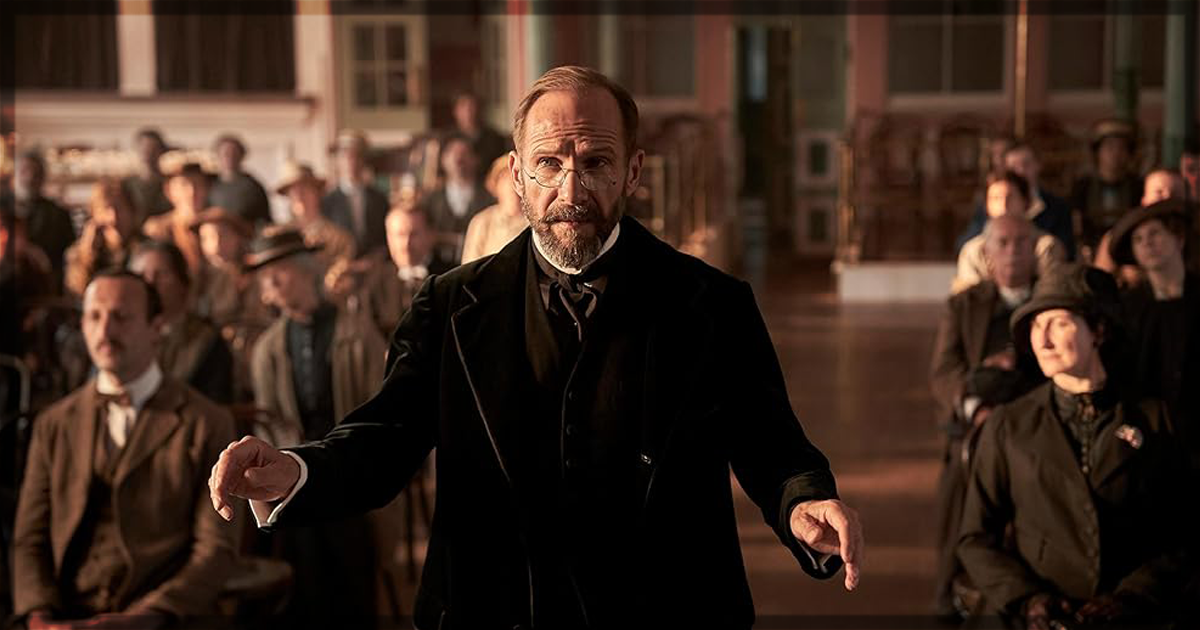
The Choral is the kind of movie at which the British film industry excels: made for audiences who like their stories flavoured strongly with nostalgia, and who like to read between the lines for their hard-hitting topics. These movies tend to play better overseas, where the historical trappings and the restraint with which big emotions are expressed are seen as ordinary aspects of life in the UK instead of stale stereotype. And yet that does a disservice to the skill it can take to make a movie like this, which spend so much time on the decor and the costumes to emphasise that human nature hasn’t changed. Director Nicholas Hytner and writer Alan Bennett are both themselves so-called UK national treasures, who have previously collaborated on worldwide smash The History Boys and the less successful but more personally relevant The Lady in the Van. But the problem with The Choral, which is about the importance of art in miserable times, is that it never quite figures out how to combine all its voices together so they soar.
One reason for that is the key vocals have been dubbed. Why an ensemble movie about an amateur chorus in 1916 tackling an Elgar oratorio didn’t simply cast singers who could act a little is a frankly baffling choice. It means the power of the ending, which ought to have had everyone in puddles of tears, is oddly diluted. And it should have been a knockout: Ramsden is a Yorkshire mill town which is rapidly losing its young men on the battlefield, and many of the male members of the town’s amateur choir get their call-up papers during the rehearsal process. The original choice of Bach for the performance is changed when a brick through the window makes the chairman (and local mill owner) Duxbury (Roger Allam) realise that German music won’t be accepted. The last-minute choice to hire Guthrie (Ralph Fiennes) as the choirmaster to bring the Elgar together is because he’s the best of the available options, even though he’s ‘not a family man’ (gasp) and an atheist (gasp!!!). He also spent several years in Germany and therefore his patriotism is in question, but when he and his pianist Horner (Robert Emms) turn up they’re so obviously talented they’re more or less accepted.
The chorus is made up from people throughout the town, including mill workers Bella (Emily Fairn), Ellis (Taylor Uttley) and Mitch (Shaun Thomas), Salvation Army singer Mary (Amara Okereke) and postman Lofty (Oliver Briscombe). Ellis, Lofty and Mitch are all seventeen, so still just too young to be called up, though a woman tries to give them a white feather at a lunch anyway. Bella likes Ellis, but she has a boyfriend named Clyde (Jacob Dudman) who’s been MIA for a while. When Clyde does come back, minus an arm, his voice is such that Guthrie starts rearranging the oratorio without permission to change the lead character to a young man. The idea to change it further to make the parallels to the war inescapably obvious feels like a great one. Throughout the rehearsals it also becomes clear Mitch likes Mary, Mary likes Horner, Horner likes Guthrie, and Lofty likes Mrs. Bishop (Lyndsey Marshal), the town’s painted lady, who’s also in the chorus. Duxbury lost a son and his wife is lost in her grief, photographer Fytton (Mark Addy) spends his days taking photographs of young servicemen before they leave for the front, and funeral director Trickett (Alun Armstrong) is also surrounded by death but making no money from it.
But this is not a movie about work. It’s also, weirdly, not really even about the music; the stakes around the performance are oddly nil. It’s about how a community can come together to create something bigger than themselves to distract from the death all around us. The Choral’s focus is on the little moments of interaction during the rehearsal process, when people chat over cups of tea or tease each other by the river. Ellis is a socialist who explains how the class dynamics of the time impact everyone’s lives, while it’s Lofty who must make plain how naïve and uninformed most of these young people are. The war hangs over everything but everyone is kind of carrying on, at least in public, and trying to enjoy themselves as much as their limited options will let them. And through all this Mr. Fiennes strides as someone who is only accepted if he does his best to conceal his homosexuality, his fondness for German language and culture, and his inability to suffer fools. It’s a lonely part and one which Mr. Fiennes performs with his characteristic efficiency, enabling the younger performers to grab the spotlight as best they can.
It’s all quite adult without being unbuttoned, with plenty of choice language and a frankness about the body and its needs which can be shocking when delivered this directly. The regular passing interactions between Clyde and Bella, during which Bella’s body language communicates the end of their relationship to Clyde more clearly than any words ever could, contain a sadness that is both ordinary and utterly heartbreaking. The final shot is sadder still, all the more so for how we in the audience knows what the future holds. The Choral is a movie which expects its audience to meet it more than halfway, and if you have the patience and maturity to do so there will be some rewards in here. They just won’t be the ones you were expecting.
The Choral is now in theaters.
Learn more about the film at the IMDB site for the title.
You might also like…
