
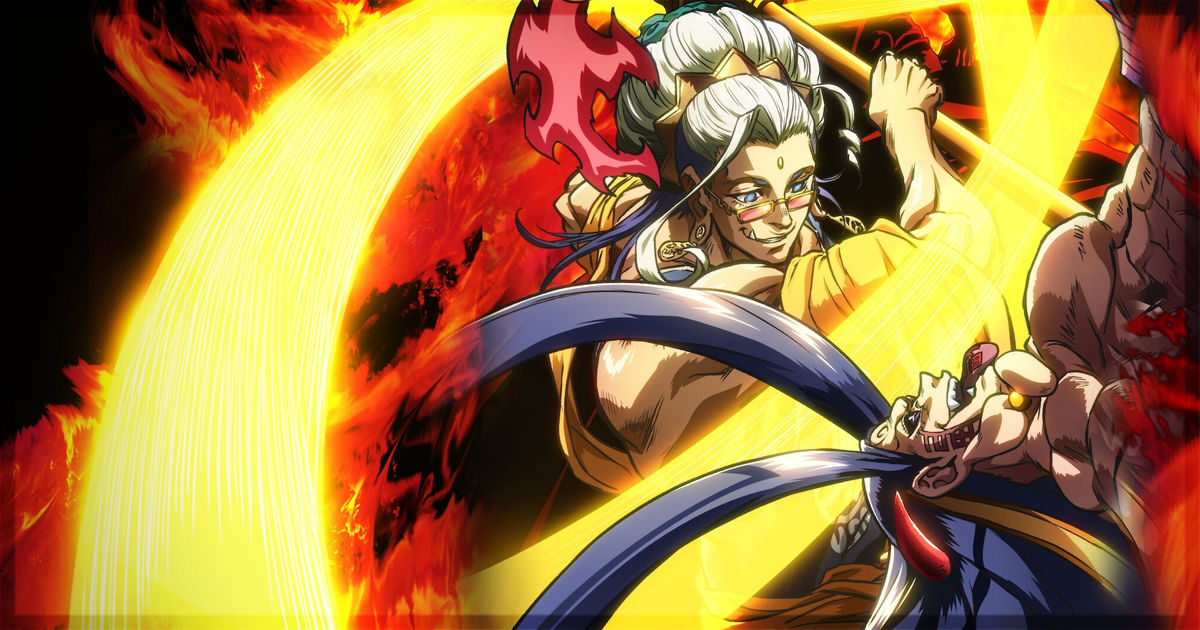
There’s no doubt that manga is becoming one of the most popular art forms in the world. Initially, manga became famous in certain parts of Asia due to its storytelling and brilliant illustrations. Soon, it started to gain popularity in Western countries. The rise of Manga made filmmakers realize that they could turn this piece of art into something extraordinary, and some of them started to make small-screen or big-screen adaptations of these Mangas. One such adaptation is Record of Ragnarok (Originally titled: Shūmatsu no Warukyūre). The first season aired in 2021 and garnered positive reviews. However, it ended on a cliffhanger, and viewers wanted to know who would emerge victorious in the fight between the Gods and humans. In 2023, the highly anticipated second season of the anime, as mentioned above, dropped on Netflix and took the story forward in a riveting fashion.
For the uninitiated, Record of Ragnarok primarily focuses on the fighting tournament happening between the Gods and humans. In the first season, it was revealed that the Gods wanted to annihilate humanity because of corruption and all the mistakes they had committed. But one of the Valkyries, Brunhilde, believes that humans should be given a chance to defend themselves. As a result, the Gods propose Ragnarok, a fighting tournament that would decide the fate of the humans. Three battles take place in the first season, and the Gods are leading 2-1. Season 2 jumps back into the story just moments after the Season 1 finale. The fourth fight is going to take place, and with a victory in the last battle, Brunhilde believed that humans can win this tournament. Similar to the first edition, the human fighters are known personalities.
Season 2 has been divided into two parts, featuring 3 (technically 4) battles. In Part 1, the first fight takes place between Hercules and Jack the Ripper, while the second is between Lord Shiva and Raiden Tameemon. However, it’s the second part where things get intense and interesting. But before we get to talking about that, it’s important to mention that Brunhilde is ready to do anything for the victory. Up until fight #4, all the human fighters were noble and had a rich history, but Brunhilde knew that they had to get another victory. As a result, the Valkyrie chose one of the most notorious and ruthless killers in human history: Jack the Ripper. The decision to have him in the battle and go against Hercules, who is known for his heroic deeds. This is one of the strongest aspects of Season 2 because Jack and Hercules showcase contrasting ideals. In other words, the fight between the two can be labeled as a battle between good and evil. The decision to have a demigod like Hercules go against someone like Jack the Ripper is a masterstroke in storytelling. The demigod represents everything good and is considered to be the pinnacle of human virtue. On the other hand, Jack is the antithesis of all that is good. He represents the dark side of humanity, a figure synonymous with cruelty and violence. That’s why when he enters the stadium for the battle, no one cheers for him, not even humans.
This matchup actually serves as a powerful metaphor for the complexity of humanity, forcing viewers to confront a difficult question: Can a monstrous evil be used to achieve a greater good? Meanwhile, the second fight in Season 2 takes place between Raiden Tameemon and Lord Shiva. Now, this fight is all about strength and showcasing who is more powerful. In Indian mythology, Lord Shiva is called Mahadev (in English: The God of Gods) and is considered to be the strongest of them all. Meanwhile, Raiden is reportedly one of the greatest rikishi in history. Apart from being about brute strength, this particular fight is also about culture and philosophy. It sees a human, Raiden, representing peak human physical prowess, against a deity considered the ultimate divine power in a major world religion. The tension in this battle is not just about who can hit the opponent harder, but about the very nature of power itself, and whether the gods truly reign supreme over human will and ambition. Both these fights end up being really brutal and leave a lasting impact on viewers. However, the show’s most interesting and hard-hitting battle comes when Buddha does the unthinkable. At first, it is suggested that Lord Buddha will be fighting for the Gods, but things get interesting when he decides to switch sides and fight for the humans. He thinks that if the Gods won’t save humanity, he will.
This is where the show achieves greater heights. Buddha’s switch completely upends the core premise of Record of Ragnarok. Up until this point, it was a clear-cut “God versus Humanity” conflict, a straightforward battle for survival. But with Buddha choosing to fight for the humans, he shatters that binary. When Buddha did that, it was expected that the Gods would send someone who could not only defeat him, but also humiliate him. As a result, they choose Zerofuku, who represents the combined power of the Seven Lucky Gods from Japanese mythology. The fight takes place, and Buddha seems to be unstoppable because he can see the light in Zerofuku. After defeating Zerofuku, it seemed Buddha had finally done what he wanted to. But, after the fight, a creature emerges from Zerofuku, and that creature is Papiyas: a devil king. Buddha finally meets his match, and Papiyas gives him a tough fight.
Just like the first season, the story is impactful. But the stakes are higher than ever, making it even more intense than the previous edition. It becomes evident that the Gods are not taking humans lightly because they have shown that they are worthy. Each fight is more than just a clash of brute force; it’s a battle with immense emotional weight, as every punch and parry carries the weight of a deeper meaning. The combatants aren’t just fighting for survival; they’re fighting for their beliefs, their legacies, and what they represent. Visually, the show remains stunning, and the fights are EPIC. The battle between Buddha and Zerofuku\Papiyas is the highlight of the season. When Buddha decides to fight for humans, his decision isn’t just a betrayal; it’s a profound statement that challenges the very nature of divinity and the loyalty of the gods. This act of rebellion forces a split within the divine ranks, creating a new level of tension and intrigue. It elevates the conflict from a simple contest to a philosophical war, making the outcome far more unpredictable and impactful. As for the fights, Jack the Ripper defeats Hercules, while Lord Shiva emerges victorious in the fight against Raiden. This season’s last fight sees Lord Buddha defeating both Zerofuku and Papiyas. So, after two seasons, the score is tied 3-3.
The second season of Record of Ragnarok arrives on the scene with a mission to improve on its predecessor, and it does with flying colors. The character backstories are compelling as ever, and enrich the emotional core of the show. Each flashback deepens the understanding of viewers and makes them connect with the fighters on a personal level. The most interesting aspect of this season is that the storyline makes you root for both sides. The pacing is good, and the background score enhances the viewing experience. All in all, Record of RagnarokSeason 2 improves in every single aspect, including visual quality, strong character development, and thought-provoking themes. These elements make this season a solid watch. It will be exciting to see how the makers take the story forward because the manga is still not completed, and if the anime follows its footsteps, viewers are going to see many more fights before the anime comes to an end.
Season Two of Record of Ragnarok is now streaming on Netflix.
Learn more about the show at the Netflix site for the title.
You might also like…
