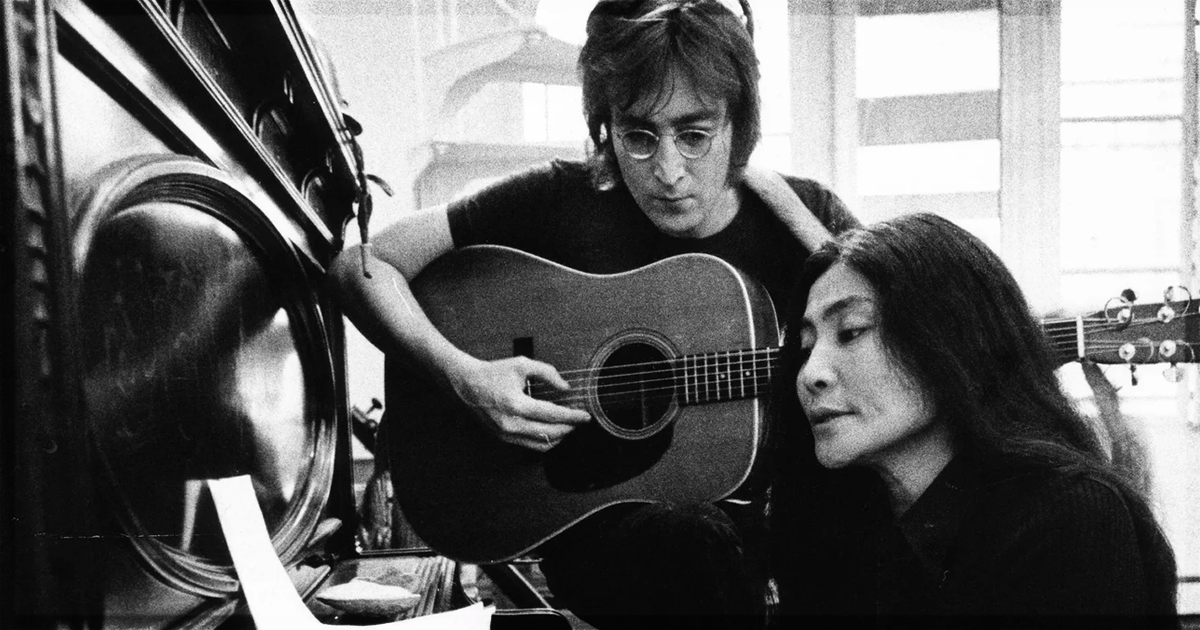
Academy Award-winning director Kevin MacDonald has returned to documentary filmmaking after a series of fiction works, including The Mauritanian and How I Live Now, among others. His last three works were documentaries: High and Low – John Galliano, Last Song From Kabul, and One to One: John & Yoko. In ‘One to One‘, MacDonald uses remastered recordings from John Lennon and Yoko Ono shot between 1971 and 1973. The director sets his film around the details leading up to the One to One concert, the only full-length concert by Lennon after The Beatles disbanded. On August 30, 1972, Lennon organized the One to One, a benefit concert to raise money for the Willowbrook State School, an institution for children with special needs. In the documentary, the director examines the singer’s political ideology in the early 1970s, including his involvement in revolutionary groups opposing the Vietnam War and his opposition to President Richard Nixon.
Firstly, it is undeniable that John Lennon is one of the most popular individuals in history. Beatlemania, the phenomenon of The Beatles‘ popularity, became a social movement that transformed how the media portrayed artists and their music. The constant focus from newspapers and TV networks would create an unwanted action: the constant vigilance over the artist’s behavior. Each step of one of the band’s four members received massive attention from photographers and reporters, seeking the subsequent major headline that would sell thousands of newspapers. One to One: John & Yoko structures around the material produced in only two years, the time John and Yoko lived in Greenwich Village in New York City. Their residency in the metropolis became an escape from London, where the media would heavily criticize Yoko’s appearance and blame her for the band’s separation.
One of the most fascinating aspects of the film is the couple’s fascination with local politics. The beginning of the 1970s continued the societal transformation that had begun by the end of the 1960s. Hence, the 1960s ending meant the younger generation and their disagreement over racial segregation in the American South, and the country’s participation in another war in Asia. In the escalation of the Cold War, the United States would combat left-leaning ideals globally and locally. Besides the so-called hippie movement, rock and folk artists spoke against the inequalities and degradations of the new American life. As an example, artists like Bob Dylan would reach the masses with their poetic and reflective lyrics, defying the political status quo, which focused on sending the young population to die in Vietnam. Therefore, the uplifting and even experimental sounds of The Beatles did not represent the societal landscape and the artistic intentions of the central lyricist, John Lennon.
Consequently, the most fascinating moments of the documentary revolve around telephone calls with the couple to journalists, artistic curators, and revolutionary individuals in American activism. It is an intimate look at how they responded to the media harassment and the political movements. These calls expose their protest planning at the 1972 Republican National Convention, where the Republican Party nominated Richard Nixon as its candidate. Consequently, the calls are the only direct conversation stating their intentions. It narrates John’s conviction of possessing marijuana and the danger of deportation. These conversations clarify the problematic atmosphere of the initial years of the decade. Therefore, the editing by the co-director and editor Sam Rice-Edwards is essential to organize the vast and rich material of the couple. He is responsible for pacing and conducting an hour and forty minutes of film that sums up three years of their lives. The film has the supervision of the couple’s son, Sean Ono Lennon. It is notable that the film avoids the confrontation about the media and Yoko’s participation in the band’s termination. Thus, it touches on the controversial aspects of their lives, but it does not engage in the topic that is most controversial among the band’s fans.
Ultimately, One to One: John & Yoko continues Kevin MacDonald’s musical documentaries after his 2023 documentary short, Last Song From Kabul. In the latest effort by the celebrated director, he works with noteworthy material: the three years of John and Yoko in Greenwich Village, during the most politically momentous period in the United States. Hence, the film successfully portrays the political chaos of the country at the beginning of the decade, resulting in the Watergate scandal, and consequently, Richard Nixon’s impeachment. Even though it avoids the most controversial aspects of their relationship, including their breakup period and the media harassment of Yoko. The film is a fascinating exercise of archival material and political portraiture.
One to One: John & Yoko is now available on digital.
Learn more about the film, including how to watch it, at the official website for the title.
You might also like…