Ameer Fakher Eldin’s Yunan begins with the exasperated breaths of its protagonist, Munir (Georges Khabbaz), who, in the doctor’s office, is getting his lungs examined. Nothing is wrong with them, yet Munir consistently has difficulty catching his breath or even breathing normally. His doctor believes it might be psychological and recommends a break. With that being his medical recommendation, Munir heeds his advice and travels to the remote island of Langeneß in the North Sea, away from the suffocating day-to-day chaos of his life in Hamburg. However, he is thinking of a more permanent break and plans to commit suicide inside a guesthouse at a bed and breakfast run by Valeska (Hanna Schygulla). The innkeeper first shows signs of reticence towards Munir staying at her inn, but quickly begins to warm up to him and open up to the protagonist in ways he didn’t expect beforehand.
Yunan thus becomes a tale of renewal, as Munir embarks on a journey of self-actualization and finds the will to live again, perhaps in a spiritual way, but the most primal connection he has with the inhabitants of the island finds him the will to keep going and carrying on, even in the face of his personal adversity. It may not reinvent anything thematically and from a screenwriting perspective, but Fakheer Eldin’s sophomore feature, which premiered in competition at last year’s Berlinale, is still worthy of your attention and time. This may be because most of the themes of his film are conveyed through the unspoken words and sullen expressions of his reserved protagonist, who’s almost afraid to say what he feels, yet whose face consistently betrays him at every turn.
The filmmaker, who was present during Yunan’s opening weekend in Montreal for a Q&A session during one of its public screenings at the Cinéma Moderne, offers a lucid and often emotionally poignant look at hope when all we think seems lost, and he does so with a staggering visual style that will hopefully be developed in further filmmaking efforts. Each landscape composition of one of the Halligan islands is simultaneously jaw-dropping and emotionally affecting. And you wouldn’t know which shot was enhanced by visual effects, or which was practically captured. They all feed into how Munir will begin finding something to hold onto in his life, even if he faces current challenges, and there will be many more on the way.
Fakheer Eldin does not judge his protagonist but lets his emotions seep through the viewer as he asks us to observe him wrestle with his existence and witness beauty in places he didn’t expect. Some show-stopping sequences unfold only through the power of a fixed camera, as cinematographer Ronald Plante’s deft use of perspective immerses us in the harsh, yet often poetic landscapes of Langeneß, whose high tide can devastate and yet create a newfound sense of balance within Munir’s very existence. It’s a difficult film to assimilate, and Fakheer Eldin himself did not want to insinuate in any way what Yunan was about. However, it’s one that even the most cynical may experience strong emotions, especially in how the movie’s visual language draws us into Munir’s mind, even as he consistently pushes us away.
What’s most important about the experience of viewing a film isn’t necessarily to “grasp” what it’s about, but how you feel. And it’s hard not to feel indifferent when observing a patient rediscover the joys of living, as complicated as living in a world that consistently challenges, and frequently punishes us may be. The metaphorical parallels to a story of a shepherd finding solace in their lives feel too on-the-nose (and the film seems unconfident in letting the present-day story speak for itself whenever it cuts to the shepherd and his wife), but the finished product is still worthy of your attention and time. The visual language alone genuinely seems special, but Khabbaz’s understated performance is already positioned to be one of the year’s most overlooked.
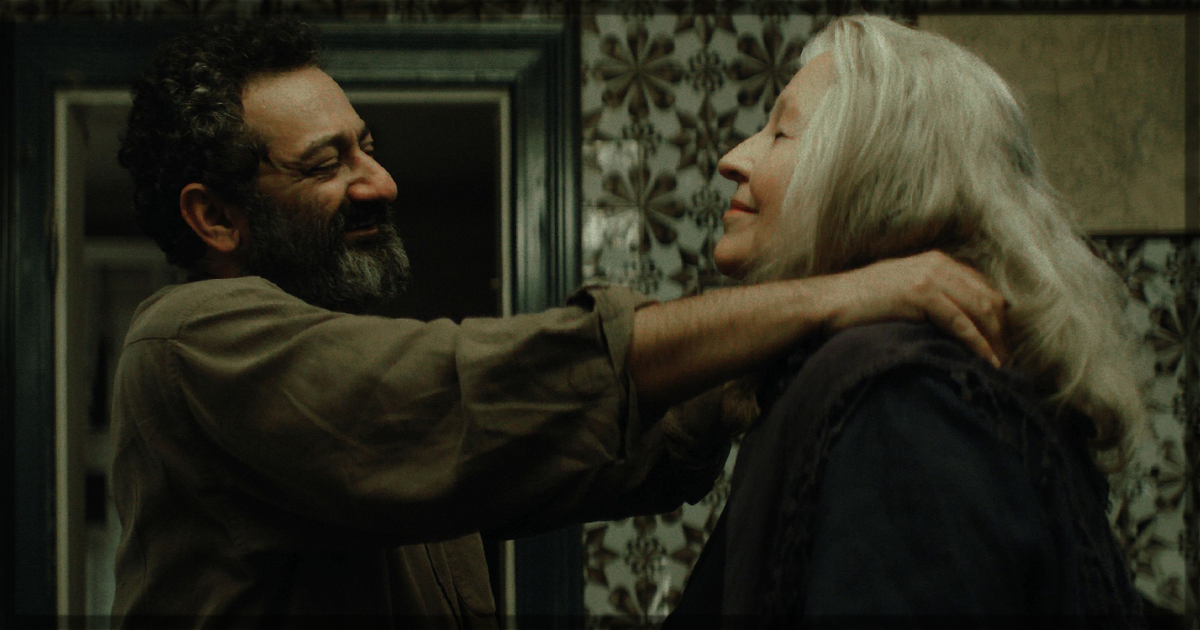
How he represents a litany of emotions through one devastating look – especially during a bravura dance sequence where his smile says more than any (small) line of dialogue given to him – is enough to make the audience feel the burden on Munir’s shoulders. Yet Valeska’s compassion somehow lifts much of the weight the protagonist feels – never judging his past mistakes (or his current fatigue with the world)- and makes him realize why this life is worth living. Many will interpret Valeska’s purpose in the story differently, but there’s no denying that no one could’ve played her but Schygulla, who might deliver the best late-stage performance you’ll see in a long while.
As someone who is currently tired of many, many things, I found Yunan to be a profoundly human and powerfully told drama that reminds all of us that, no matter how hard things can get, this life and this world are still worth being in. The jury is still out on Ameer Fakher Eldin’s filmmaking skills (he has made only two, with one unavailable to view outside the festival circuit), but his view of the world is cogent enough to make him a promising voice in humanist cinema. Here’s hoping his next movie is worthy of the one that made him one to watch and positioned him as an auteur with a singular conception of the human condition and our will to persevere even when we believe all hope is lost. It’s not. Carry on, and you may be surprised to see what lies ahead of the miserable rut you’re in. I promise you, everything you’ve ever wanted is on the other side of fear, and all it takes is for you to accept yourself that it will get better. It has to. Or else why are we here?
Yunan is now in limited theaters.
Learn more about the film at the IMDB site for the title.
You might also like…