The line between a relationship where you rely on your partner in healthy ways and a codependent one, where you are unable to function without the other person, is shockingly thin. In the new film Together, writer and director Michael Shanks examines enmeshment in a much more literal way, to varying degrees of success.
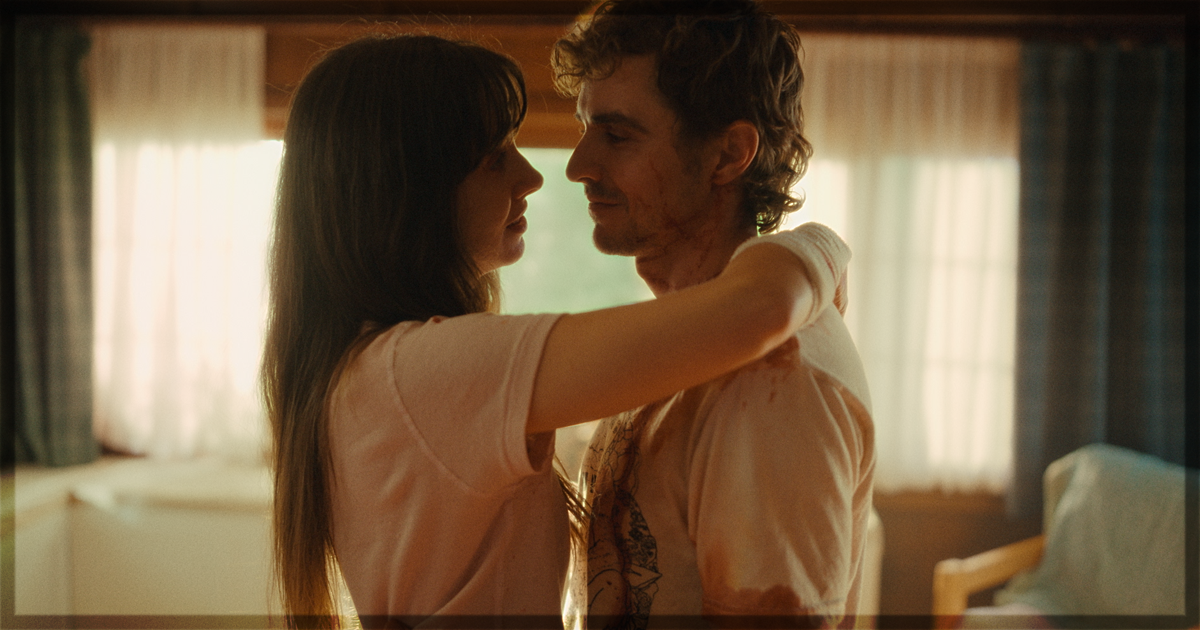
Millie (Alison Brie) and Tim (Dave Franco) have been together for as long as they can remember. As anyone who has been in a long-term relationship knows, this can provide elements of comfort, as you know what each of you expects from one another, but it can also lead to complacency, where you stop trying with one another, instead, simply relying on what is comfortable. We join this couple as they are about to move from their comfortable life in the city to a new life in the country.
This move is good for Millie, a teacher who quickly finds friendship with Jamie (Damon Herriman), another teacher, and their closest neighbor. Meanwhile, Tim is struggling with aspects from his past that keep him in a kind of arrested development. Despite their frustrations with one another, Millie and Tim keep trying to make things work, eventually taking a hike to reconnect. Unfortunately, when they go off the trail to follow a mysterious path lined with bells, the couple falls into a cave that seems to be some kind of defunct chapel. From there, things start getting tangled up.
There were elements of Together that worked well. Real-life couple Brie and Franco were able to embody both the healthy and unhealthy aspects of Millie and Tim’s life together. The comedy found in this film (and it definitely made me laugh out loud a few times) was amplified by the comedic timing of this pair. The comfort that they have together makes this movie work better than it might otherwise.
The frustration with Together comes in its third act when it attempts to give some explanation of what is happening to Tim and Millie. To be honest, I wasn’t thinking about the particulars of the transformation that was happening. It’s just what happens if you drink out of that pond. We see that almost immediately in the movie, and I wasn’t concerned with anything other than that basic understanding. Unfortunately, there is a clumsy reveal that offers some deeper knowledge of the “how” of it all, but not enough to actually satisfy the interest that it arouses. I found myself wanting a better explanation, to the degree that it got in the way of the climax of the film.
The horror elements of the film largely work. It is yet again disappointing that a trailer spoiled one of the most gruesome moments, but aside from that, there was some heavy cringing at some of the ways that body parts were connected and then disconnected throughout the movie. It doesn’t reach the heights of last year’s The Substance, or even The Ugly Stepsister from this year, but there are a few moments that will have you squirming in your seat. But even with this, there were events that happened that seemed incredibly traumatic when they occurred, and then seemed to be ignored when they were past.
Together does a great job of building tension, especially in the first half. There are at least two scenes in the second act that don’t exploit a lot of the body horror, but are incredibly stressful nevertheless. But again, these never felt like they fully paid off when the film reached its zenith. The ramp-up to the final scene was intense, but when it hit the end, something felt lacking or amiss.
In thinking about why this didn’t quite come together for me, the biggest issue was that the script gave mixed messages about how codependency plays out, or about how to fix it. The best horror stories serve as a cautionary tale about the worst-case scenario of a particular negative behavior. Together seems to be doing that through much of the film, but the final scene almost makes the negative behavior, in this case, a codependent relationship, more desirable than the alternative. I’m pretty sure it’s trying to say the opposite, but that gets muddied in the execution.
Early in Together, Tim says, “When I die, I don’t want someone else’s life flashing before my eyes.” Honestly, that’s a fair concern. Maintaining your own identity in a long-term relationship can be difficult. The more time you spend with someone, the more you are likely to see parts of their personality rub off on you. There are aspects of my partner that I have absorbed that, I hope, have made me a better person. There is no question that I am not the same person I was before he came into my life. But that doesn’t mean that I’m not my own person, nor should it.
There’s an idea in Christianity that when a couple marries, “the two shall become one flesh.” That’s a nice bit of poetry, but also, it might be healthier if the two remain as two.
Together is now in theaters.
Learn more about the film, including how to get tickets, at the official website for the title.
You might also like…
