
There are only so many ways a film like Sweetheart, originally titled Gioia Mia, pans out. Special Jury Prize winner at the 2025 Locarno Film Festival’s Filmmakers of the Present competition, Margherita Spampinato’s debut feature is a predictably compelling take on the coming-of-age genre: a schmaltzy drama about grief and intergenerational rift buoyed by realism and a little dose of the supernatural. It is the kind of movie that doesn’t exactly say something novel, nor does it introduce untested visual motifs, a work that just has enough boredom to propel the narrative forward. The result is one of tempered ambition, one that at points I still find emotionally infectious.
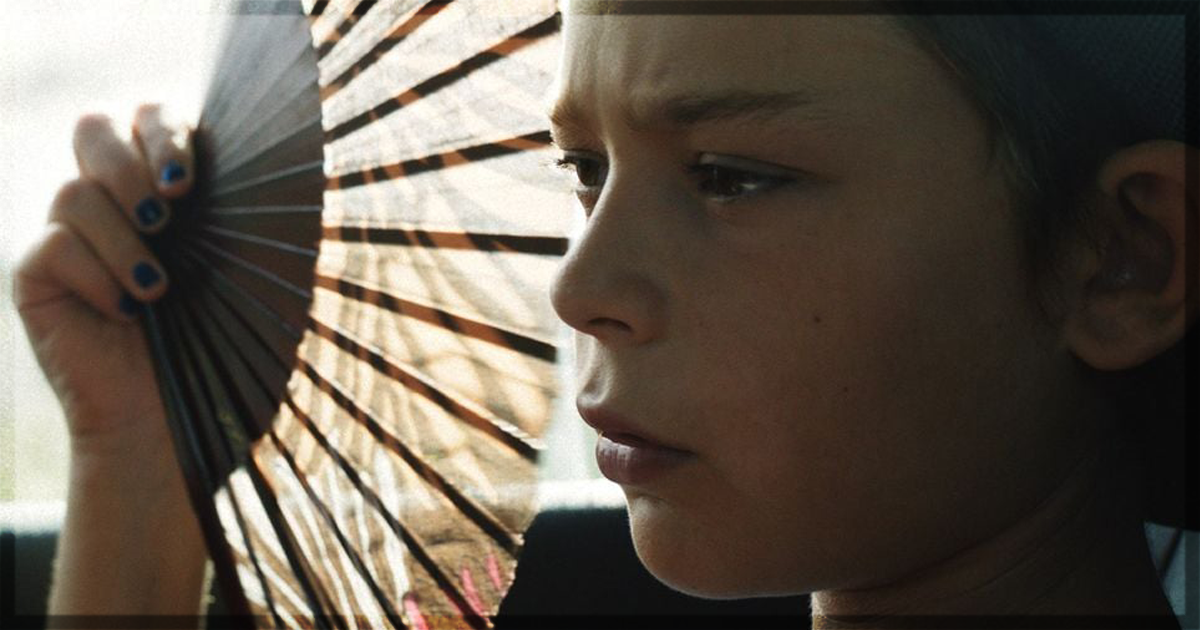
Young boy Nico, played so charmingly by Marco Fiore, is reluctantly spending his summer with his great-aunt Gela (played by Aurora Quattrocchi, co-winner of the Pardo for Best Performance), who lives in an old Sicilian apartment complex. The rural setup feels so foreign to the boy, whose parents we never see and hardly learn about. For one, there is no wifi in Gela’s house, a mortal sin for someone who’s glued to his phone, and the food is not “normal” for his liking. Here, he has to deal with things people of his age and upbringing often find annoying: forced naptime, household chores like ironing clothes and cooking, and proper etiquette like putting a napkin on his lap at mealtimes, or keeping his feet off the table. Frank the dog, who apparently senses ancient spirits haunting the building, isn’t exactly the welcoming type. Even the neighborhood kids, who are not used to interacting with outsiders, make fun of him — at least initially. Later on, he meets Rosa (Martina Ziami), the lovely granddaughter of one of Gela’s friends, who helps him unearth the storied past of his great-aunt and the mystery behind the spectral presence in the complex. (This encounter also leads to something else.)
By design, the two protagonists are at odds with each other: Nico is surly, feisty, and kind of a yapper; Gela is ultra-religious, slightly homophobic, and prefers silence. But, as the story progresses, they slowly build a deeper relationship — through ways such as playing a card game called Briscola and learning how to make the boy’s father’s favorite Sicilian delicacy — despite the gap in age and sensibility.
Grief is the rope that binds the characters and, by extension, the movie’s thematic corners: Nico reckons with a life without his beloved babysitter Violetta (Camille Dugay, who only appears in the opening minutes), as she enters marriage and starts a new life in Paris; Gela wrestles with the enduring grief of the demise of a woman named Adele, whom she had a close relationship with, a relationship cratered by homophobia, even from her own family (hence her reaction upon seeing her great-nephew’s nail polish), and the worst part is that no one in her town knows about Adele until Nico’s arrival.
Through a chiefly handheld mounting, Spampinato intimates this emotional and narrative connection, which might seem artificial at first, partly because we’re never given much access to Nico and Violetta’s supposed strong relationship to warrant the boy’s mournful disposition. The writer-director gives the characters a kind of space and language in each other to finally confront their grief, no matter its form, without shame. And the good thing is that the filmmaker’s approach, straightforward as it is, doesn’t feel condescending in its depiction of grief. By putting emphasis on the relationship among the building’s elderly population, in all their superficial beliefs and nosy energy, the movie also gives itself far more room to mine questions of kinship and care. Some formulaic creative decisions, like expository details revealed via phone calls and the unnecessary death near the end, may get in the way of totally appreciating this film, but there’s real warmth and humor as well as endearing performances here that may just soften the blow of such imprecisions.
Sweetheart (Gioia mia) recently played at the Locarno Film Festival.
Learn more about the film at the Locarno site for the title.
You might also like…

‘Magellan’ Film Review: Lav Diaz’s Radical Omissions