
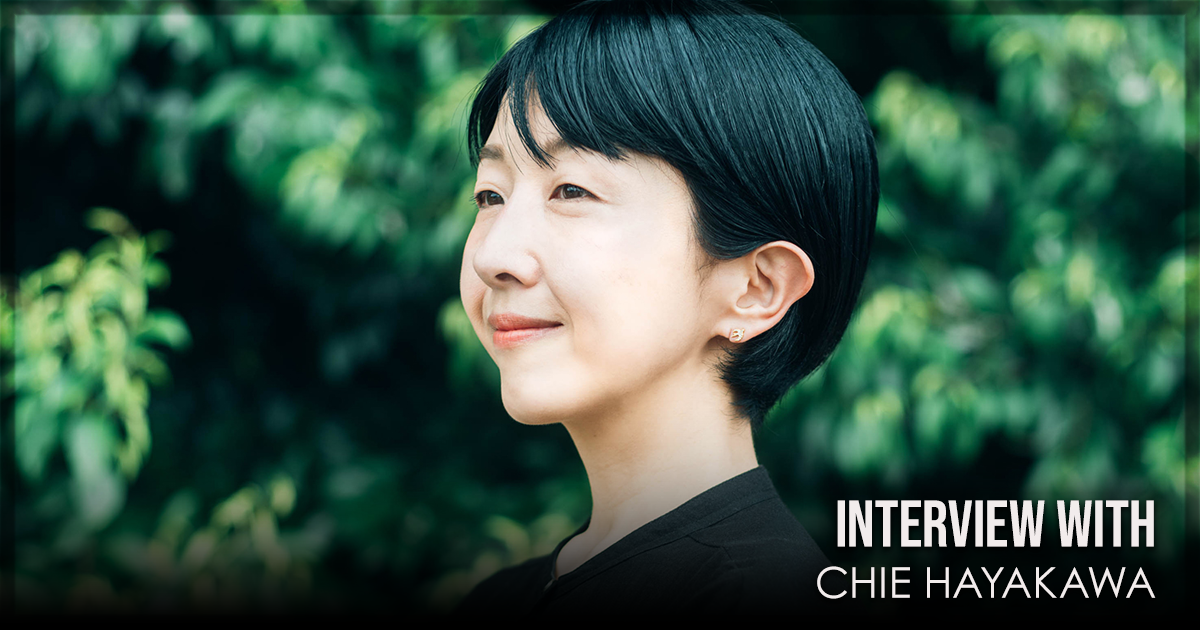
Renoir, the sophomore feature from Japanese filmmaker Chie Hayakawa, continues her cinematic exploration of the notions of death, old age, and loneliness, preoccupations that loom over her body of work, such as in her feature debut Plan 75 (2022), the anthology film Ten Years Japan (2018), which she co-directed with four other Japanese directors, and the short Niagara (2013). It’s only apt that Renoir finds a similar register as its predecessors, which offer a universal panorama of the cruelty of the minutiae and a biting reportage on the state of contemporary Japanese life, even as the stories are set in the past or the future.
This time, the director returns to late 1980s Japan, when the country was still transitioning from the post-war period to the capitalist period, with a narrative that revolves around the mercurial teenager Fuki Okita, played by newcomer Yui Suzuki, whose suburban Tokyo life is punctuated by her father’s (Lily Franky) battle with terminal cancer, her mother’s (Hikari Ishida) taxing full-time job, and her encounters with various adults silently wrestling with a hostile world. Fuki is smart, funny, and quirky. She is fascinated with telepathy and hypnosis, constantly watches a VHS tape of children in tears, and mimics animal noises. Most of all, she fantasizes about death, or at least her initial idea of it, which gradually gets fractured as she gets exposed to the textures of adulthood.
Littered with details from Hayakawa’s girlhood, Renoir mixes the wonders and inquisitiveness of youth with the protracted grief that follows when one learns the incessant demands of life and the labor it takes to keep up with it. What results is a picture that feels at once vintage and timeless, which of course recalls the vibrancy and luminosity of the works of the French artist referenced in the title.
After its Cannes in-competition world premiere, the film just played in the Asian Next Wave competition of the 2025 QCinema International Film Festival. In this brief interview, Hayakawa details the semi-autobiographical provenance of the coming-of-age drama and what she thinks of young people’s perspective of the world.
The Interview with Chie Hayakawa of Renoir
[Editor’s Note: This interview has been lightly edited for clarity.]
Lé Baltar: Three years ago, you screened your solo feature debut Plan 75 at QCinema. How does it feel to be bringing Renoir to the festival again?
Chie Hayakawa: As with the previous film, Renoir has a large Filipino crew, and one of the scenes was shot in Batangas. The Philippines is a special place for this film, and I’d like to thank all the Filipino crew and cast. That’s why I’m especially happy that Renoir will be screened at QCinema.
Lé Baltar: This film shares the same thematic corners you previously explored in your other works, such as Niagara (2013) and Plan 75 (2022), in that they all seem to be concerned with the notion of death in different contexts. What is it about death that makes it so worthy of cinematic investigation for you?
Chie Hayakawa: I’ve been asked similar questions before, but I didn’t really understand why. However, I came to understand something while creating Renoir. I think it’s influenced by my own experience of living with my father who had terminal cancer during my adolescence, and my experience of visiting hospitals many times and seeing various patients and their families.
Lé Baltar: Considering how personal this story is to you, what was it like to sort of relive what you experienced in your childhood while putting the material together?
Chie Hayakawa: If I had made this film in my twenties, I think it would have been a more self-centered and one-dimensional story. However, now that I’m close to the age my parents were at the time, I have children, and I’ve had a variety of life experiences, I’ve been able to look at my past in a new light. So I was able to remain very objective while making this film.
Lé Baltar: The film’s protagonist, Fuki Okita, has this fascination with spells and hypnosis, which I find so intriguing. How did you come up with this detail? Do you have some background in this sort of thing?
Chie Hayakawa: I myself was fascinated by the world of psychic powers and magic spells when I was a child. At the time (1980s), psychic TV programs were very popular, and I was always glued to the screen. I think I wanted to believe that miracles could happen, and perhaps it was a kind of escapism from reality.
Lé Baltar: Why set the story in 1987 Tokyo instead of contemporary Japan?
Chie Hayakawa: The late 1980s was a time when I was around Fuki’s age. At first I considered setting the story in modern times, but the telephone message motif was essential to the story, so I decided to set it in the late 1980s.
Lé Baltar: Seeing the story progress from the perspective of a child is also a curious artistic decision. Do you think children’s views of the world are more sober and honest? How did you ensure that the protagonist is not presented in an infantilizing way?
Chie Hayakawa: Yes, I think children’s perspective on the world is more sober and honest. At the same time, I think the world, and people, are full of mysteries to children. Children have many emotions that they cannot put into words, and sometimes they don’t even realize that they are sad, angry, hurt, or scared. I think they often feel things they can’t fully understand with their hearts, not their heads. When I was 11 years old, people treated me like a child, but I felt like I was already half grown up, and I wanted to grow up sooner. I was that kind of girl. So naturally, I didn’t end up depicting Fuki like a so-called innocent child-like child.
Lé Baltar: I am so drawn to the onscreen rapport of Yui Suzuki and Lily Franky, which is also a testament to how effective their performances are. Can you speak a little bit about how you built that connection between the actors?
Chie Hayakawa: We had several rehearsal days with Yui and Lily before filming, but I didn’t try to make them get along particularly well, because the trusting relationship between Fuki and her father is very quiet and subtle, and there is a certain psychological and physical distance between them.
Lé Baltar: Throughout the movie, you never let us see the protagonist in tears despite the things she discovers, at least not until the final few minutes. Can you talk more about that scene? How significant is that in Fuki’s emotional journey beyond the idea of cathartic release?
Chie Hayakawa: There are many scenes in this film where Fuki stares at people who are crying, such as the video of the crying child, the classmate at Fuki’s funeral, the mother who lost her son in the hospital, and the English teacher who cried for Fuki’s father’s death. Fuki always stares at them with a puzzled expression. Because Fuki doesn’t yet understand what it means to empathize with others. But through various encounters, she learns what it means to feel pain. She somehow grasps what the real death is, which is very different from the one she has fantasized and attracted to. Only after she has known pain herself can she empathize with others. I wanted to portray this transformation through her journey.
Renoir recently played at the QCinema International Film Festival.
Learn more about the film at the QCinema site for the title.
You might also like…
‘Souleymane’s Story’ Film Review: Speeding Through Survival