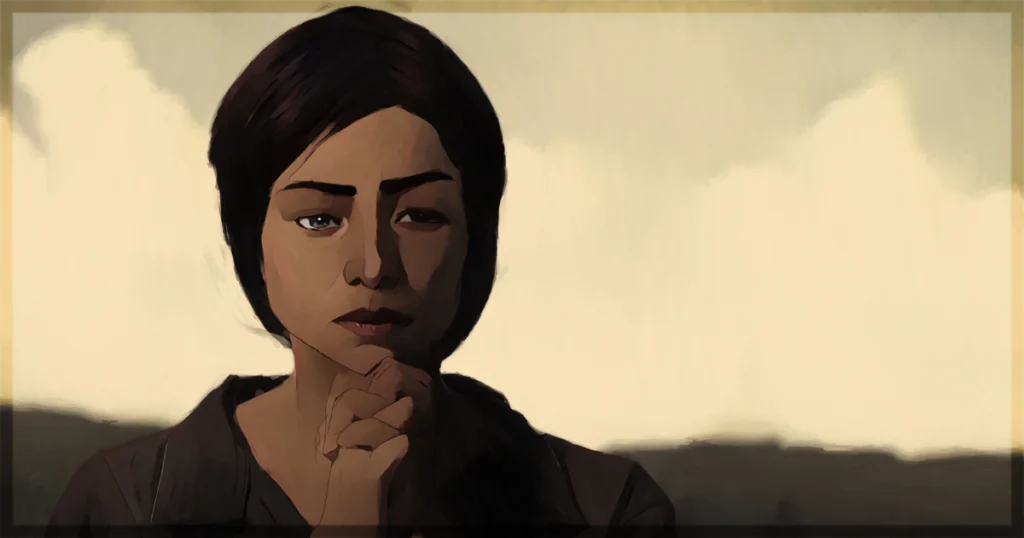
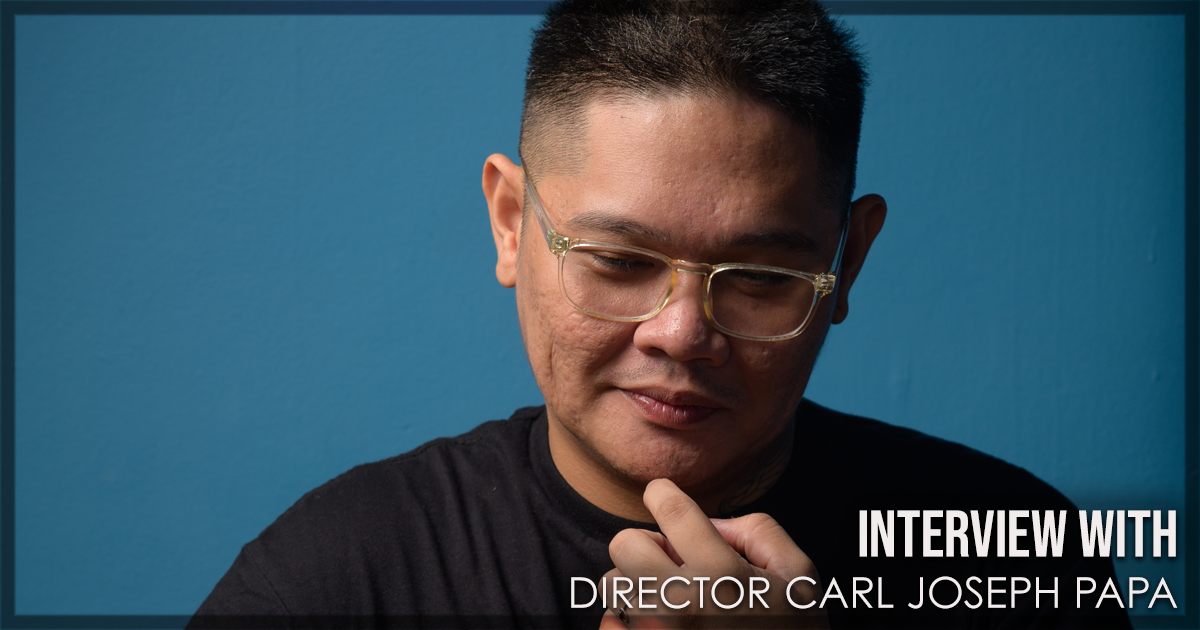
Filipino filmmaker Carl Joseph Papa’s latest film 58th is a gripping animated docudrama on the infamous 2009 Maguindanao massacre, now known as the single deadliest attack on journalists in recorded history. Recently screened in the Harbour programme of the 2026 International Film Festival Rotterdam, where the director’s critically acclaimed Iti Mapukpukaw (The Missing) also played in 2024, 58th retells the legacy of the carnage through the belated recollection of Reynafe Momay Castillo, daughter of the titular last victim, photojournalist Reynaldo “Bebot” Momay, whose death is left unrecognized in Philippine courts as his body has never been recovered in the wake of the massacre. In the rotoscoped reenactments, Glaiza de Castro portrays Reynafe, while the late Ricky Davao plays the eponymous victim.
Propelled by around a hundred animators and years’ worth of research and TV newsreel footage and thousands of pages of legal documents, 58th paints a poetic and poignant picture of what it means to fight for justice, spanning the personal and historical, in a country that rarely honors it and so painfully swift to forgive and forget.
Over email, Papa thoughtfully accommodated my questions about the nearly two-decade massacre, his signature rotoscope animation, and how he has evolved as a filmmaker throughout the years.
The Interview with Carl Joseph Papa of 58th
Lé Baltar: The Maguindanao Massacre is such a big story not just in the Philippines but internationally, and it’s been nearly 17 years since the carnage. What made you decide that the story had to culminate in a film? Where did it begin?
Carl Joseph Papa: It all started with a simple conversation. Nessa Valdellon (producer of 58th and our executive producer for Iti Mapukpukaw) contacted me one weekend morning. She was looking for animators interested in an animated documentary. Intrigued, I offered my assistance. She then revealed the subject was the Maguindanao massacre, which initially worried me due to its sensitive nature. When Nessa asked if I would be willing to write and direct it, it took time to fully commit. Ultimately, I accepted the challenge because I believe it’s vital to remember the past, and to inform and educate those unfamiliar with this event. Film grants immortality, and the stories of those lost deserve to be immortalized.
Lé Baltar: How did you come across Reynafe Castillo and convince her to retell and recall the trauma she and her family went through? Was she ever hesitant at first?
Carl Joseph Papa: Before officially saying yes to making the project, I requested an opportunity to speak with Reynafe Castillo. While I had read about her in available resources, it was important for me to connect with her directly, build a friendship, and allow her to share her story on her own terms. She was incredibly open. Her motivation for sharing her experience was clear: To secure justice for the loss of her father, Reynaldo “Bebot” Momay, and to demonstrate that her fight continues, even after all these years.
Lé Baltar: How much material did you collate during research and your conversations with Reynafe?
Carl Joseph Papa: The volume of material was staggering. Getting Reynafe’s story accurate was important, which required numerous, lengthy video calls and countless hours of conversation. This was supplemented by a vast amount of archival footage from GMA Public Affairs and thousands of pages of supporting legal documents.
Lé Baltar: Have you ever met Reynafe in person before or after your conversations?
Carl Joseph Papa: Honestly, I wanted to meet her, but our schedules never aligned.
Lé Baltar: To some degree, I felt like the film would have also worked as a straightforward documentary, and obviously that’s asking for a different film altogether. But what was so crucial about the animation and fiction aspects as part of the storytelling?
Carl Joseph Papa: The use of animation was instrumental in recreating Reynafe’s recollections, allowing me to enter her mind, witness her memories, and faithfully bring them to life. This process highlighted animation as a powerful tool for both understanding and recreation.
Furthermore, the inclusion of archive footage provides crucial context to Reynafe’s difficult experience. It offers an essential, raw, and unvarnished reflection of a gruesome truth.
It all started with Reynafe’s story, then the archive footage shows how big and expansive the story really is.
Lé Baltar: Talk me through the entire process, and how long the actual filming, animation proper, and post-production took. Any challenges?
Carl Joseph Papa: The research and pre-production phase was rigorous; I needed to rely on the years-long works of Johnson Tam (supervising producer) and Ian Simbulan (creative producer). They followed the story from day one. GMA researchers provided guidance and assistance throughout the process.
The filming itself took nearly a week. It was heavily planned and we strictly followed our bible and our schedule, followed immediately by post-production. The most challenging aspect was during post-production when my constant collaborators: Benjamin Tolentino (editor) and Aica Ganhinhin (writer) and I had to sift through days worth of draining (emotionally and physically) archive footage. As this is my first documentary, I was committed to creating a film rooted in sincerity and dedicated to showing the truth.
Lé Baltar: The Zoom call acts as a narrative device in the film, which reveals your own positionality, since Mikoy Morales is basically your self-insert. How did you arrive at the device?
Carl Joseph Papa: The film aims to capture the emotional depth I experienced while researching this topic. My conversations with Reynafe were incredibly moving, leading me to previously unexplored emotional territories and revealing stories of such intense darkness I hadn’t imagined existed.
My goal, as with the film 58th, is to tell stories with honesty and sincerity. I recognize that I am an outsider to this particular narrative, as are most viewers, and I wanted this perspective to be authentically reflected in the film.
Lé Baltar: Apart from rotoscope animation, did you also use the traditional 2D hand-drawn technique in the film, as in The Missing? How many animators did you have onboard?
Carl Joseph Papa: The film’s animation primarily relies on rotoscoping. However, we also incorporated 3D animation which was subsequently rotoscoped as well. A team of approximately one hundred animators worked on the production of this film.
Lé Baltar: It’s been nearly 15 years since you first entered filmmaking and became a prominent figure in local animation. How would you reflect on your career now, and what was it about animation that you almost exclusively refused to explore other film forms?
Carl Joseph Papa: I am immensely proud of the work we have accomplished and the collaborations I have been a part of over the years. Looking back only fuels my desire to explore new projects with these talented individuals.
While I don’t “refuse” other forms of filmmaking, I simply hadn’t found the right story until Ian Pangilinan and I began working on Patay Gutom (coming soon!). However, I do have experience with live-action, having premiered a film, Ang ‘Di Paglimot ng mga Alaala, at QCinema back in 2014, and I’m excited to return to that form.
My motivation for using animation differs across my films. In 58th, it served to recreate memories, particularly those of others. For Iti Mapukpukaw, it was a means of self-healing. Fundamentally, though, I see animation as a way to “give life,” and I employ it to tell stories that deserve to be brought to life.
Lé Baltar: Has there been a significant shift in your directing or storytelling sensibilities over the years? And what do you think has been the biggest change in our local film practice?
Carl Joseph Papa: My storytelling underwent a significant shift after I completed Ang ‘Di Paglimot ng mga Alaala, Manang Biring, and my short film iNay. Previously, my narratives were more straightforward as I was still finding my voice. However, following those three projects, I began to focus on deeply personal stories, drawing inspiration from my family, close friends, and life experiences.
On a broader industry level, I’ve observed a crucial positive change: a greater awareness of the value of time. The understanding that people are not machines and should not be overworked in the pursuit of art and passion is growing. Fundamentally, before we are artists, we are human beings. This perspective demands that we treat one another with respect and value.
Lé Baltar: Would you ever be open to exploring different film forms or genres? Any dream collaborations?
Carl Joseph Papa: I am open to exploring any film forms and genres, provided the material resonates with me as a story that needs to be told.
My dream international collaboration, though, would be with Richard Linklater. I greatly admire his body of work. On the local scene, I’m manifesting a collaboration with Elijah Canlas (soon), and I also hope to work with Sue Prado and Cedrick Juan.
Lé Baltar: Over email last time we also talked about the state of local animation. Is the support better now? Could you name any promising animators we have here? I know there’s a lot of talent out there, especially in the short medium.
Carl Joseph Papa: Support for animation in the Philippines is making encouraging progress. The FDCP’s recent efforts in championing both animation and documentary films are a notable step forward. Furthermore, local film festivals are demonstrating increased openness to animated works. Although full support is not yet a reality, the positive actions taken suggest that the goal is within reach.
Aurthur Mercader and the brilliant animators at Puppeteer Studios are poised to create compelling work. I am confident that Aurthur will successfully bring Anito to life and impress audiences. I also had the pleasure of assisting Lysa Catolico and Jasmine Patena with their animated short film, RUNO!. I view their talent as indicative of the bright future of Philippine animation.
Lé Baltar: How about documentary films? Are producers more open to funding them, despite the censorship in the last few years?
Carl Joseph Papa: I’m still learning about the funding landscape for documentary films. Specifically, who to approach for support. Securing funding wasn’t an issue for 58th, as GMA Public Affairs and GMA Pictures fully covered the production. Nessa Valdellon is also a key figure in helping documentary features get made. Therefore, support exists; however, I am not the most knowledgeable person to answer this specific question.
Lé Baltar: Since The Missing, I noticed you’ve been more active in your filmmaking. I’d like to know how you decompress.
Carl Joseph Papa: Working full-time as a software engineer provides a necessary contrast to the creative work of storytelling, which helps me decompress. I recharge by living life: eating out, playing PS5, and singing karaoke with friends, watching films and series, and sharing experiences with loved ones.
Lé Baltar: Do you have any updates on Sentinel?
Carl Joseph Papa: I do but we can’t tell anyone yet as of this writing. There are developments. That’s all I can share.
58th recently played at the International Film Festival Rotterdam.
Learn more about the film at the IFFR site for the title.
You might also like…