Mark Jenkin’s formidable stamp as a director giving voice to Cornish voices has led to one of the best debuts of the last decade in the form of the breathtakingly unique Bait, a study of heightened tensions between the locals in a deprived fishing village and the rich-out-of-towners who have moved in with more wealth than the locals could ever dream. Jenkin has gone onto make a 70s cult-like horror film Enys Men and a time travel ghost ship story Rose of Nevada, the third part of his self-stylised Cornish trilogy, but Bait is where it all began, a landmark, herculean effort that makes excellent usage of the grainy black and white footage to make it feel like it was released several decades earlier.
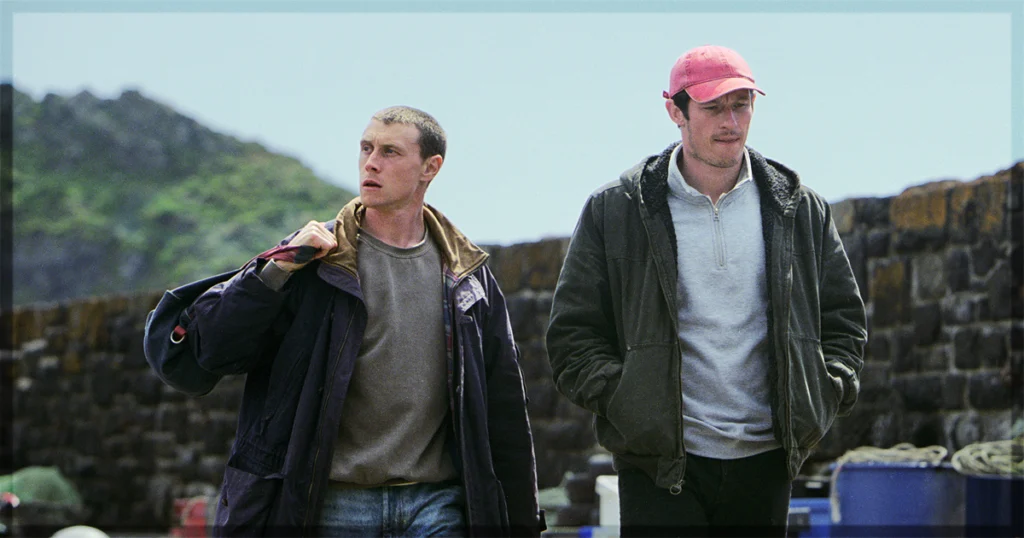
In terms of British films it doesn’t get more original than this; at least not since the days of Powell & Pressburger. Shot in 16mm stock – hand processed in Newlyn, this film feels like an ode to the past of Cornwall and what has long since been forgotten since the county voted for Brexit and stripped itself of its glories – a subject touched on in Rose of Nevada, a ghost story that’s a ghost story for as much as Cornwall itself as its characters. Fishing born and braised siblings Martin and Steven Ward, Edward Rowe and Giles King, are your protagonists – Martin scrapes a living using the old ways with fish and lobster, but Steven has moved on – offering a trade for tourists.
You get the friction between both brothers from the off and there is a sense of unease there – brash and abrasive. That’s even before the trouble begins – Tim and Sandra Leigh have the honour of being newcomers – Simon Shepard and Mary Woodvine playing tourists to perfection. As someone who’s lived in the Southwest in neighbouring county Devon where much of the socioeconomic problems presented in Bait can be transported across down to the rural nature of the landscape; it’s unforgiving country to newcomers at the best of times – you’re often not considered a local until you’ve stayed there for over twenty years, if not longer – and the uneasy friction threatens to boil over here long before that arbitrary mark. To make things more complicated: Isaac Woodvine’s Neil hooks up with Georgie Ellery’s Katie, the Leigh’s daughter; everything that the middle-class London family outwardly despise. Jenkin set out to tell Cornwall’s own stories with this project and he couldn’t have found a more appropriate setting.
The argument is there – and the argument is always there – that Martin didn’t have to sell Sandra the house they’ve moved into. But look at their livelihood, look at Martin’s stubborn dependence on the old ways – it’s something he’s been forced into. It’s not a decision he wanted to make and you could tell it’s eating heavily on him. From the off there’s friction with Martin’s lifestyle and that of the Leighs – you get to see how the housing crisis of Cornwall weighs a heavy mark on the locals and those who live there. It’s a way of life clearly under threat – ravaged by unchecked tourism and the loss of traditional craft – we’ve often seen British films portray the countryside as an ideal; an escape – for eccentrics and for those happily in love as an ideal retirement home. Bait is more akin to the stark reality – sticking to striking silent landscape structures as Jenkin follows the rules of the Silent Landscape Dancing Grain 13.
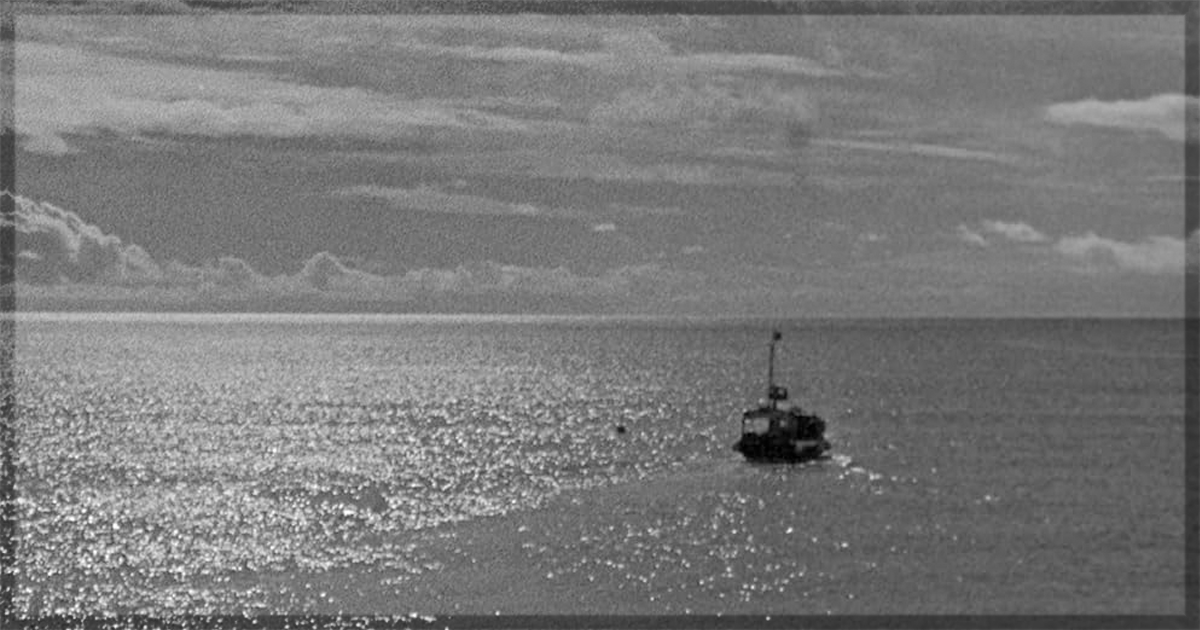
His 13 rules include such strict regulations that they must be presented in black & white – something that he would abandon in future efforts, but the rules for Bait are nonetheless followed – shot silently and synchronised in post and shot utilising only practical lightning and no extraneous grip equipment other than a tripod. This allows for a rugged and hardliner film that’s on edge as much as its characters – avoiding the traditional establishing shots and landscape creation that Hollywood creators use. It allows Jenkin to make an already challenging project harder for himself – exploring the essentials of film and how it exists around Bait; evoking images that could exist outside of any time or place as a result. Its thematic moments couldn’t have been timelier – the housing crisis at the heart of Cornwall is driving the plot – but nothing exists to tie Bait to a place or time. It is timeless and timely in equal measure.
The coastal ambience of the film and the lived in authenticity that comes from Jenkin’s upbringing allows a unique capturing of the lifestyle of them at the pub or in their old-fashioned style labouring; shining in their imperfections. The film makes it clear that those who live in the big city will find the life presented in Bait completely alien and that it is not a uniform experience at all; you can’t just have the same city lifestyle that you wanted when you move out; as the Londoners find out. The conflict is ghostlike and folk-horror-y at times, not surprising giving what would come later; Bait is Jenkin exploring what works and what doesn’t with his more specific Enys Men and Rose of Nevada cornerstones in mind – and to his credit he is able to pull it off from the word go: one of the strongest debuts that I’ve ever seen put to film.
The new home that the Londoners use to rent out to other tourists is a monstrosity and a direct clash of culture with the locals of Martin and Stevne; their harbour-front cottage that used to be their home transformed into a maritime memorabilia-laden room with little care for the currently working fishermen of today. “Ropes and chains – like a sex dungeon,” Martin says; crudely but effective – the insensitivity of his father’s home being turned into a tourist trap couldn’t be more at odds with his lifestyle. The class divide is evident, the communities whose historical economy is on the decline with violence just beneath the surface of the pub scenes feel very instrumental for anyone who’s lived-in small-town communities like these – local fisherman torn between their heritage and the future of a government plan.
His film Golden Burn highlights the issues bluntly: “What’s your Cornwall? Weekend getaway, summer retreat, Cornish pasties and clotted cream, Pixies? Or is it your home? Not your second home – your only home?” this is the idea of Bait – a Cornish civil war for the heart of the country that is never explicitly pro remain or leave, but instead a large swath of ideas boiling over. The film has compassion for everyone: Tim and Sandra have haughty entitlement that comes from a fridge full of food from Waitrose, even the supermarket is a deliberate choice – and the long way that the film goes to establishing this divide down to the miniscule detail really emphasises its approach – some might say too blunt at times; but the line between tradition is as front and centre a struggle behind as in front of the camera.
The fact that Bait is entirely post dubbed with a very vintage budget camera allows for a tight, retrograde and impossibly unique filming – really maximising the minimal resources at Jenkin’s disposal. It feels hypnotic and intoxicating, establishing a sense of otherness in a community that is never really shaken. The documentary-like realism echoes the likes of Paul Shrader and how the director uses them to form and to combine form and subject; non chronological and scattershot. The film’s strengths really work here in its favour – the right blend of experienced and nonprofessional actors allow their performances to stand tall. It’s a towering accomplishment that deserves to be revisited – or even discovered anew for the first time.
Bait is available to purchase or rent at your retailer of choice.
Learn more about the film at the IMDB site for the title.
You might also like…